


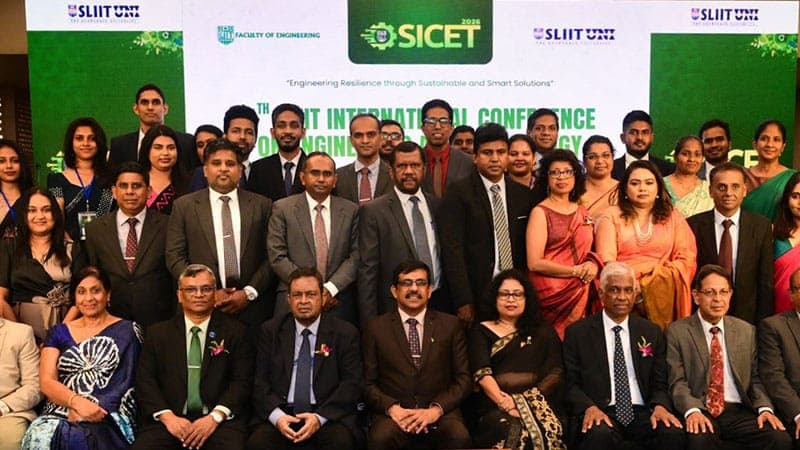
SLIIT Faculty of Engineering concluded the fifth SLIIT International Conference on Engineering and Technology (SICET) 2026, on the timely theme of “Engineering Resilience through Sustainable and Smart Solutions”. Held from 1–4 September, SICET convened researchers, academics, industry professionals, and student innovators for four days of research presentations, workshops, and knowledge exchange. The conference explored advances in engineering, technology, and applied sciences, with a focus on addressing real-world challenges.
Chaired by Prof. Shiromi Karunaratne, SICET featured expert-led workshops and technical tracks covering artificial intelligence, computer vision, robotics, smart manufacturing, biomedical engineering, communications, renewable energy, sustainable infrastructure, and agriculture monitoring.
A key feature of SICET 2026 was the strengthened emphasis on industry-academia engagement. The conference incorporated an Industry Connect Track, providing opportunities for interaction between industry professionals, academics, researchers, and students. In addition, a School Connect Track was introduced this year as a new initiative, creating an opportunity for school students to engage in engineering and technology and showcase their innovative projects and ideas.
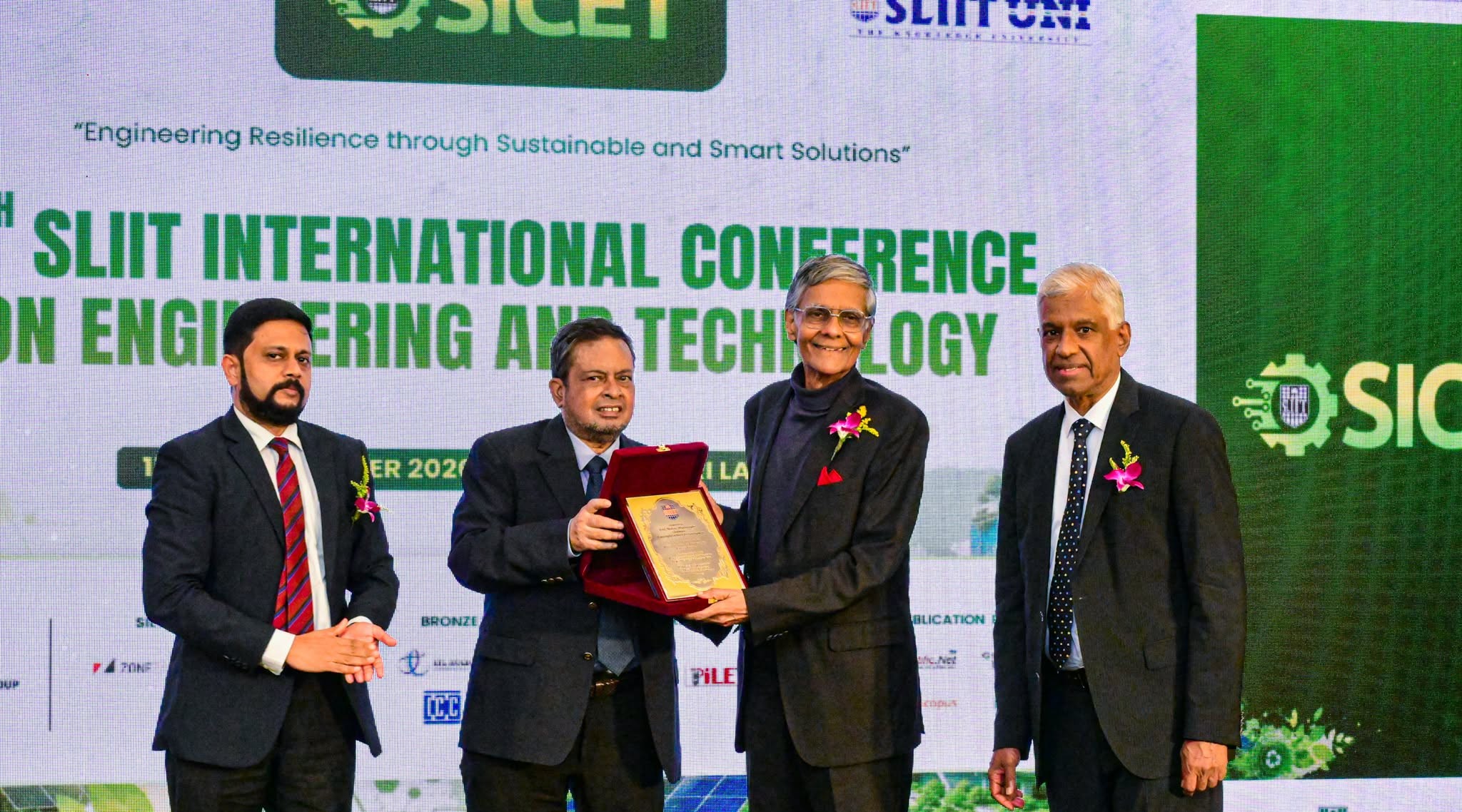
A highlight of the conference was the keynote address delivered by Deshamanya Prof. Mohan Munasinghe, who contributed to the work of the Nobel Peace Prize-winning UN Intergovernmental Panel on Climate Change. His address explored how engineering and technological progress could support a more sustainable and inclusive future.
“The true measure of engineering progress is how it improves lives, reduces inequality, and protects the planet for future generations. Economic prosperity, social equity, and environmental responsibility must advance together. As artificial intelligence and other disruptive technologies reshape our world, engineers must take leadership roles, think across disciplines, and act with a social conscience. Human oversight, transparency, and high ethical standards are essential to ensuring that innovation serves the wider public good,” Prof. Munasinghe said.
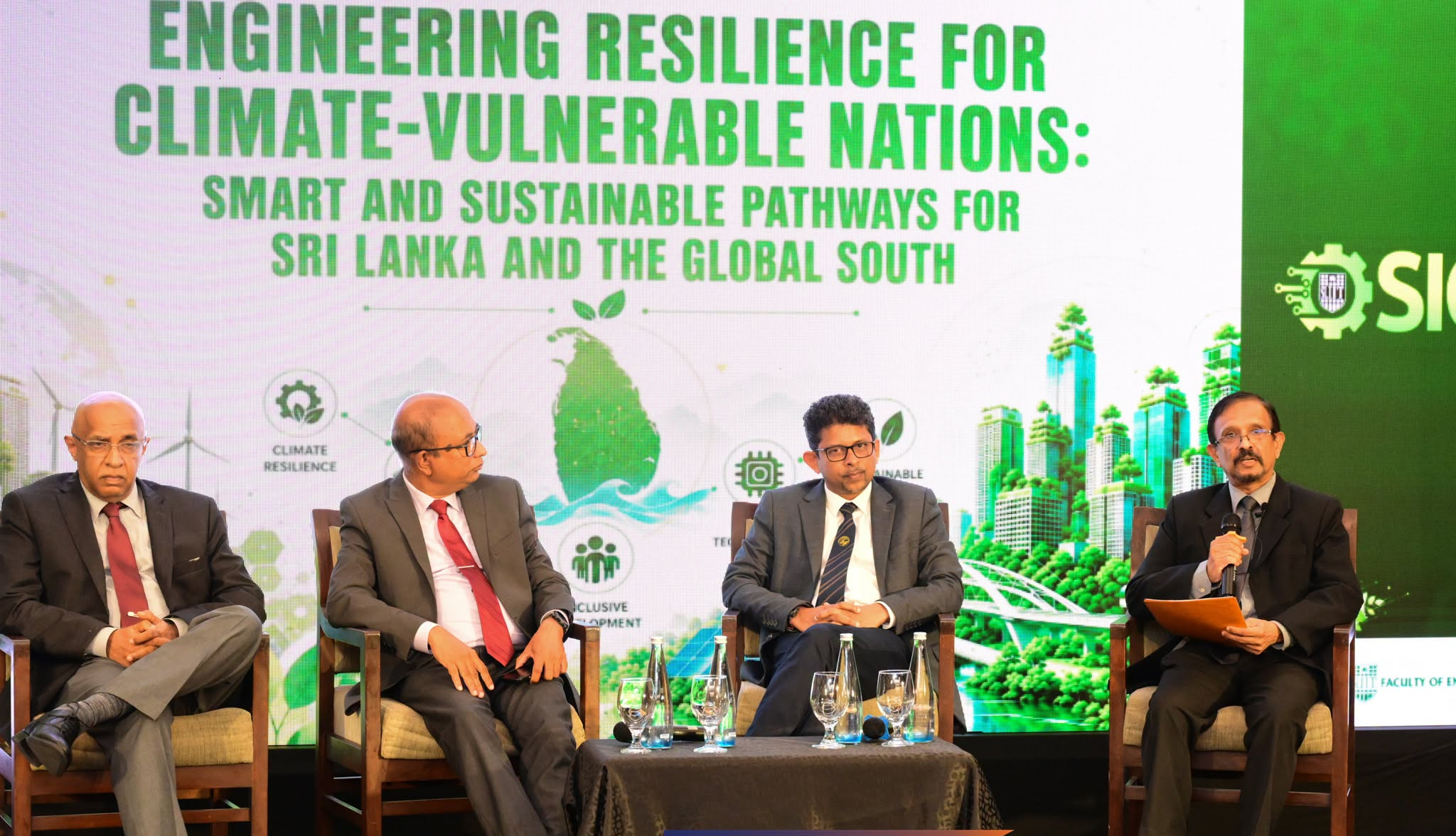
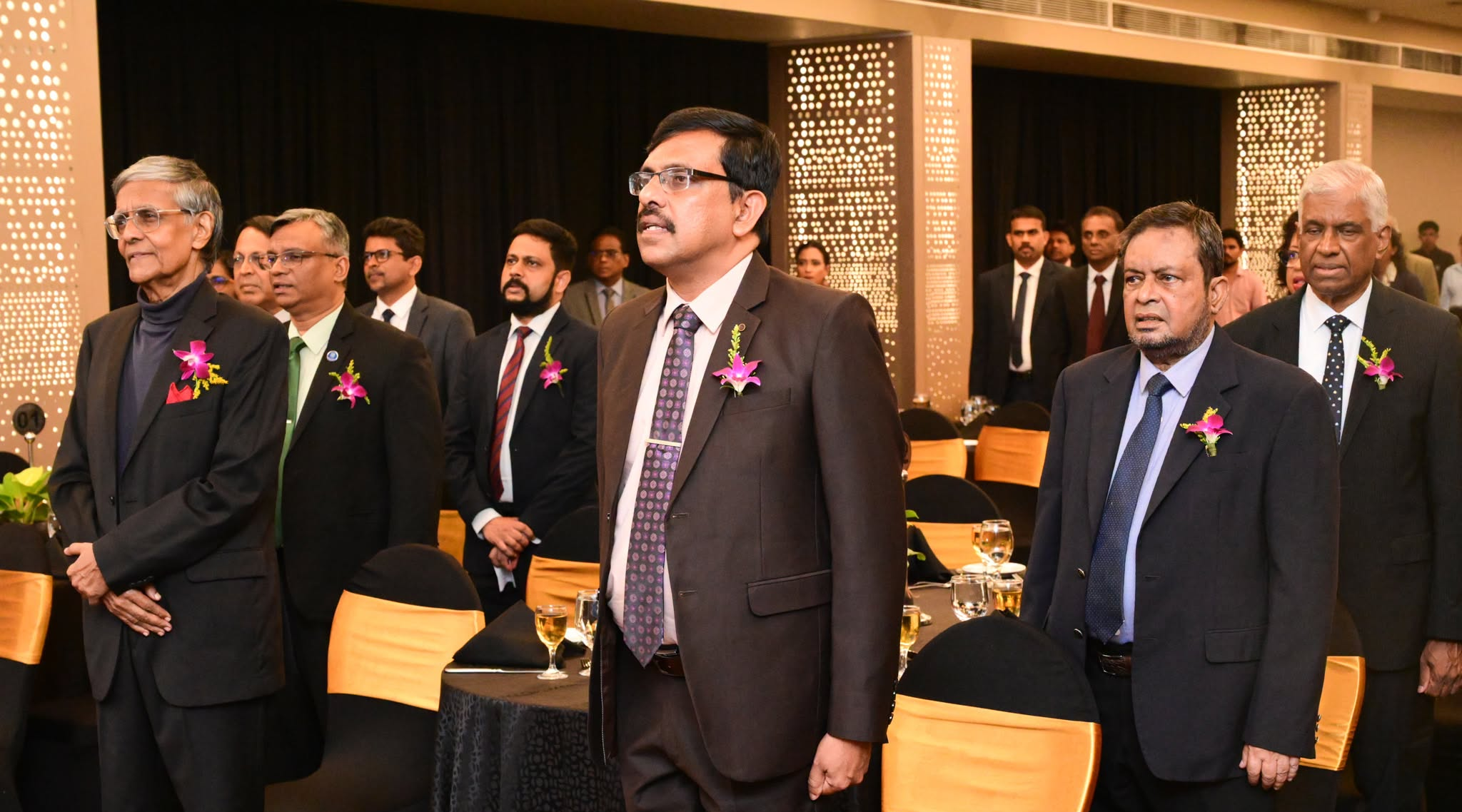
Mr. M. L. Gammampila, the Acting Secretary to the Ministry of Science and Technology, also graced the occasion as chief guest, while Eng. Kosala Kamburadeniya, President of IESL grazed the occasion as the guest of honor. A panel discussion on “Engineering Resilience Through Sustainable and Smart Solutions” featuring Dr. Pradeep Perera, Prof. Nuwan Kodagoda, and Mr. Rohan Cooray, moderated by Prof. Chandana Perera captured the essence of the conference. Academic and industry perspectives were shared on emerging challenges and opportunities in developing resilient, sustainable, and smart engineering solutions. The discussion stressed the importance of collaboration and industry engagement in addressing future societal and environmental challenges.
Through its research presentations, practical demonstrations, and engagement between academia and industry, with participants from over 10 foreign countries and all the local universities in Sri Lanka, SICET 2026 reinforced SLIIT’s role as a platform for research and knowledge exchange, connecting engineering innovation with the needs of society.