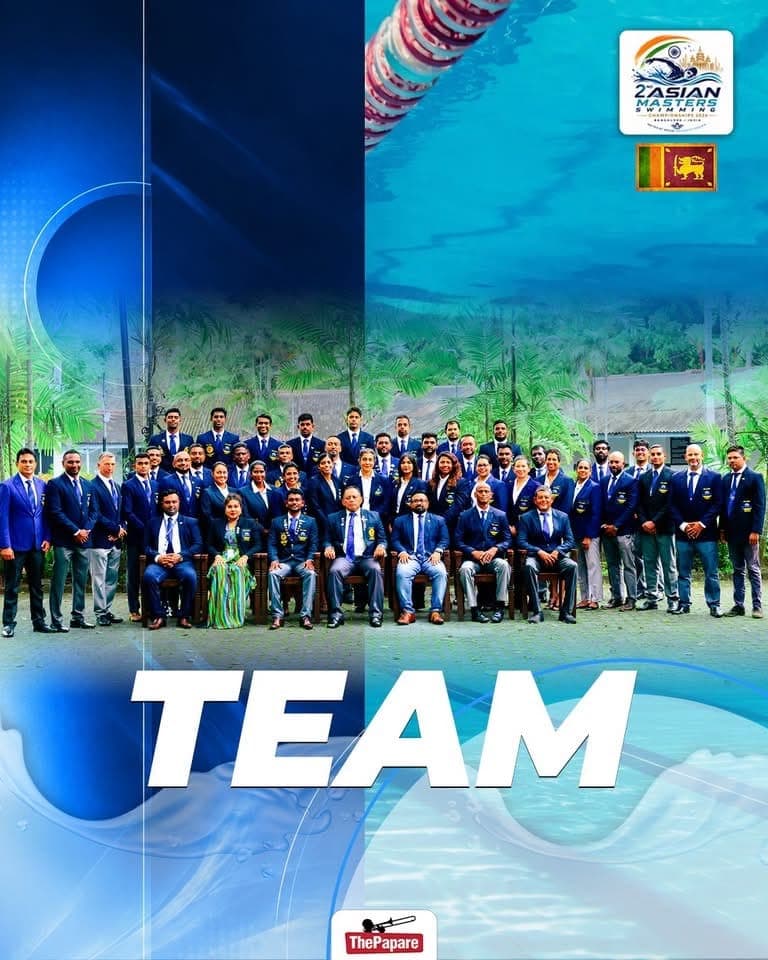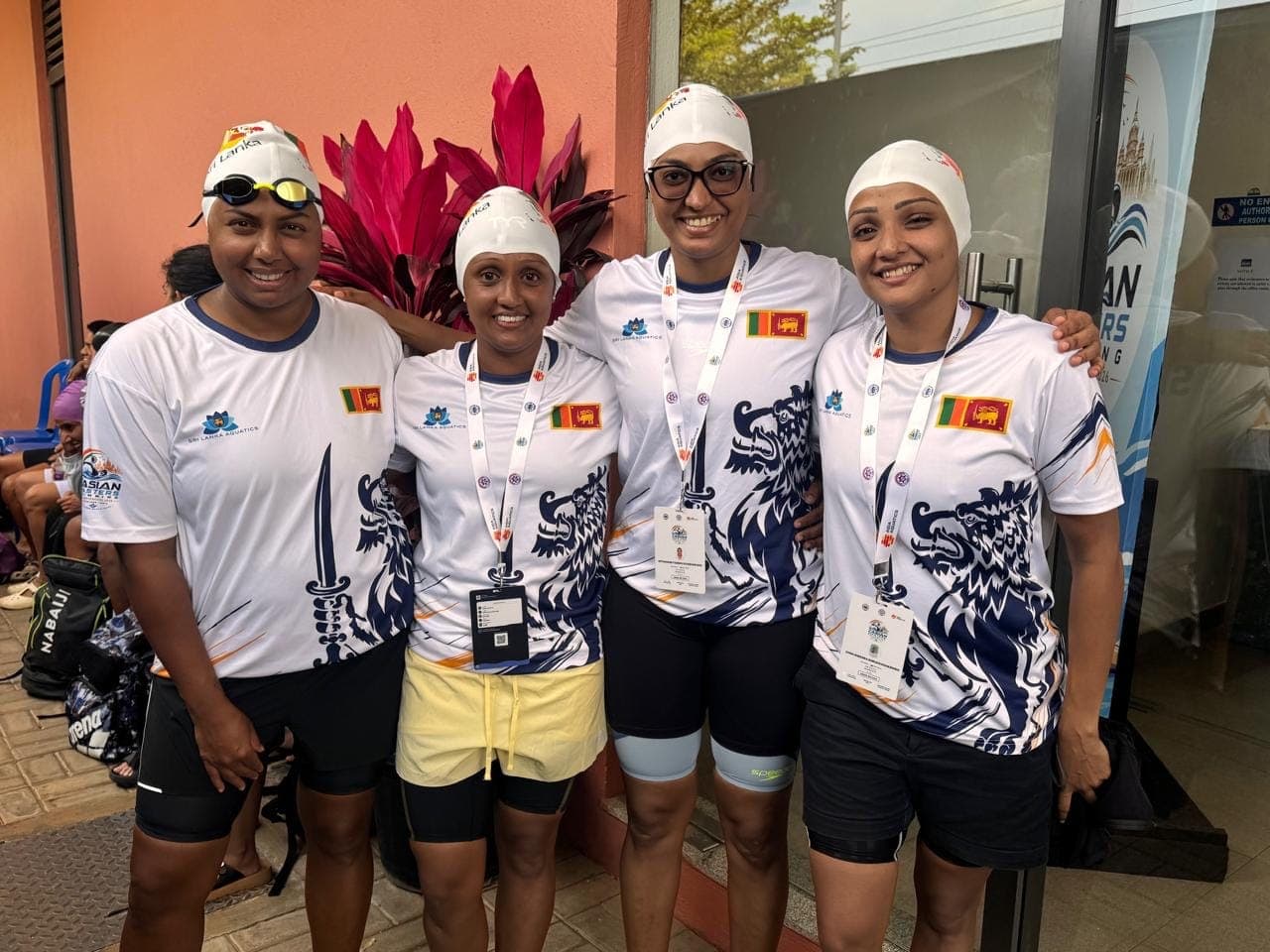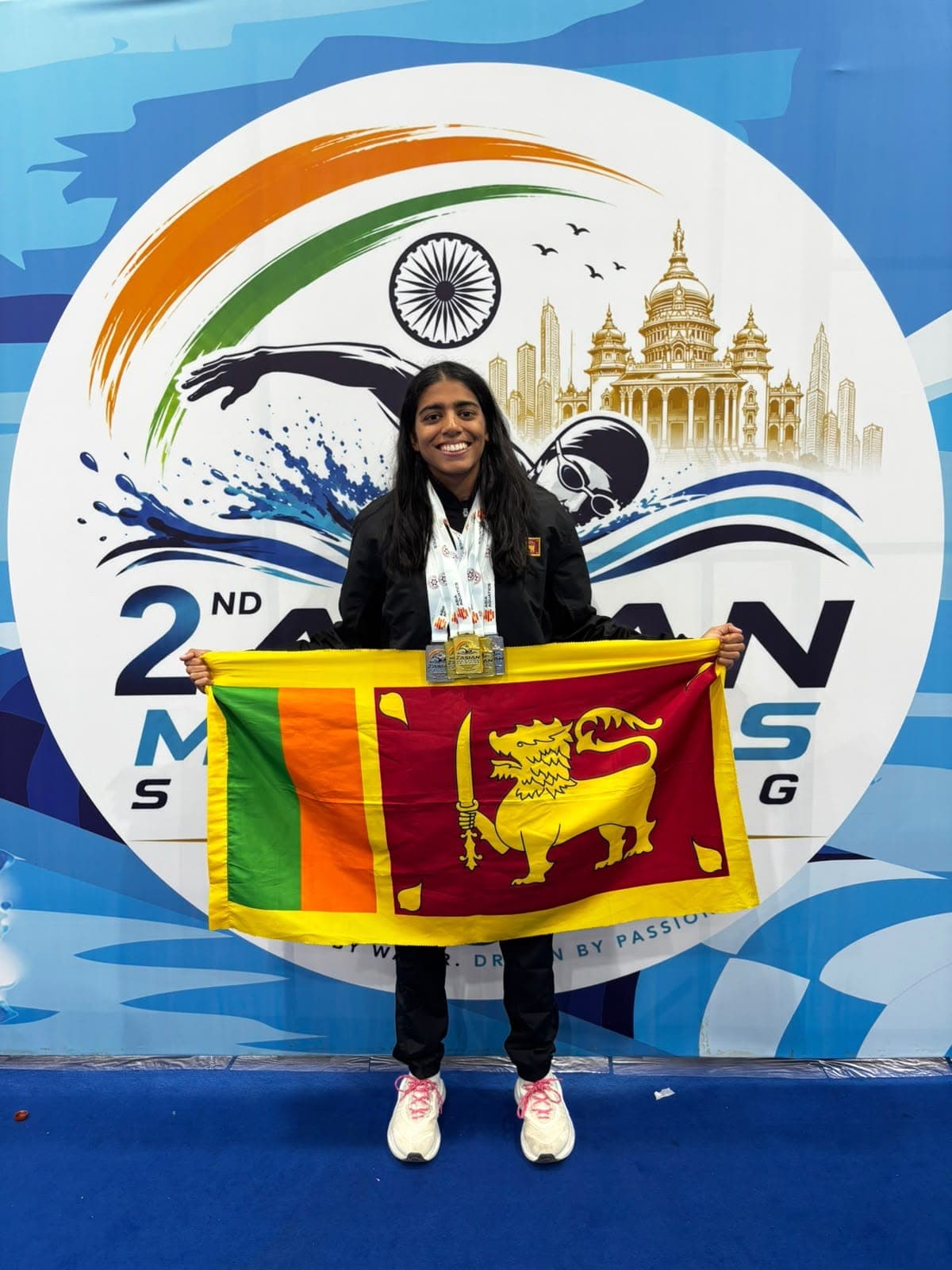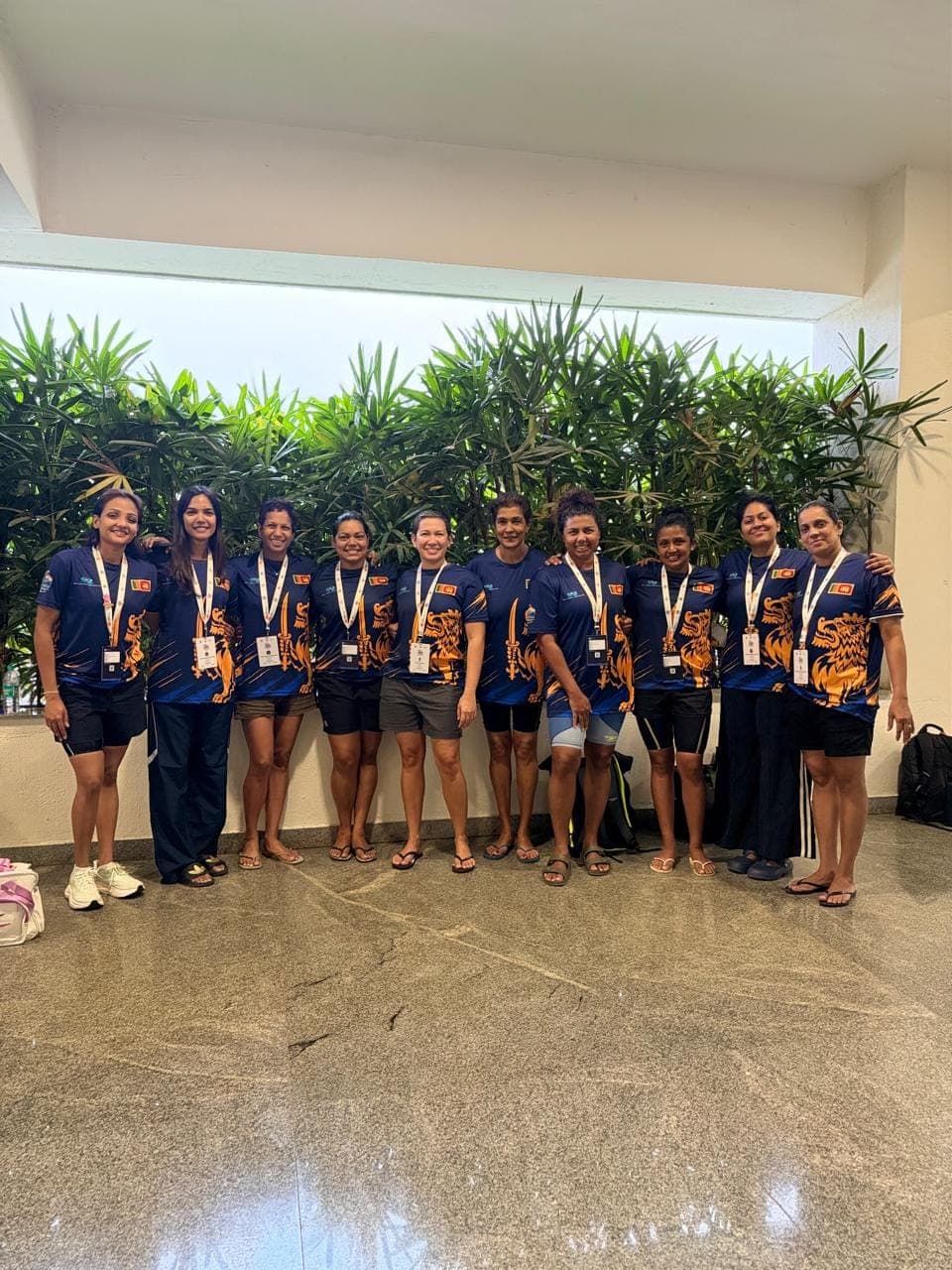


Julian Bolling leads the praise as Sri Lanka celebrates 52 medals at the Asian Masters Swimming Championships in Bengaluru
By Sports Correspondent
For Sri Lankan swimming legend Julian Bolling, returning to international competition after an absence of many years was about much more than racing against the clock. It was an opportunity to reconnect with former swimmers, rediscover the excitement of competition and experience a growing international sporting movement that is challenging conventional perceptions of age and athletic achievement.
“Happy to be part of a competitive tour after many years, perhaps decades and participate alongside many former swimmers and to compete, race and also gain a perspective of the adults or masters swim world and fitness world which will provide a boost and make society a little more healthier,” Bolling reflected following the Asian Masters Swimming Championships 2026 in Bengaluru, India where 1600 swimmers attended.
One of Sri Lanka’s most celebrated swimmers, Bolling also reserved special praise for the two coaches responsible for bringing together the Sri Lankan contingent.
“Hats off to Penuka Wijemanne and Shachil Perera for doing a fabulous job. I have never seen two coaches run an international event so well.”
He added: “They looked so relaxed but obviously put in a lot of effort to get the qualified swimmers together. There was a massive cooperation from the swimmers and look forward to more events like this for the swimming community.”
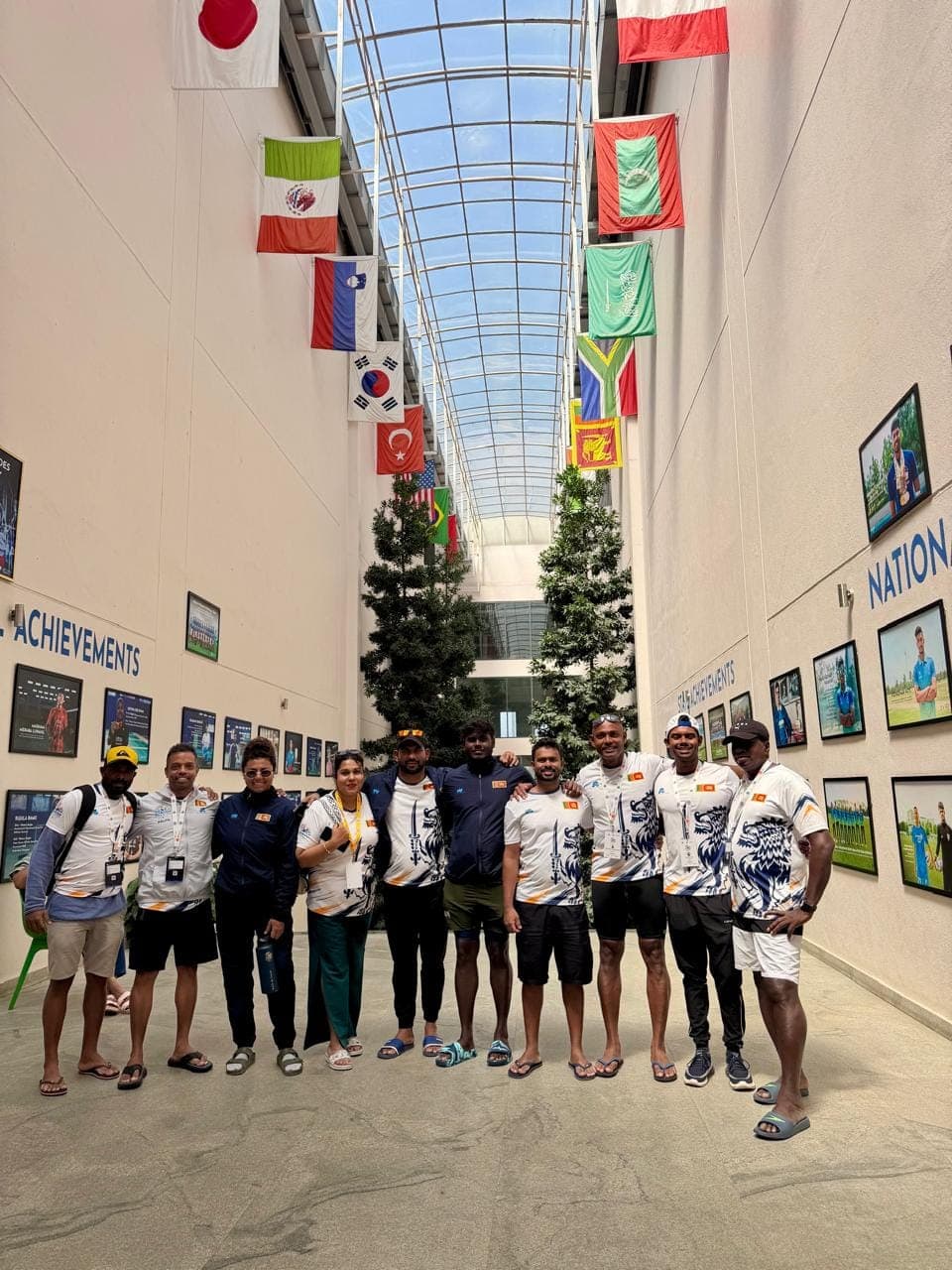
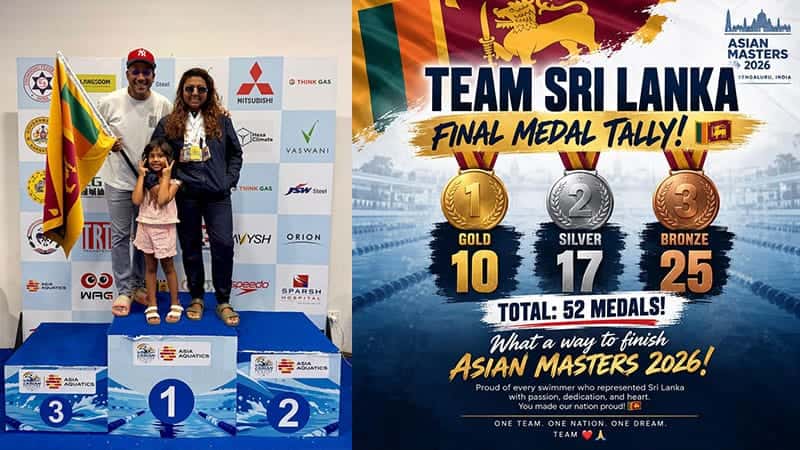
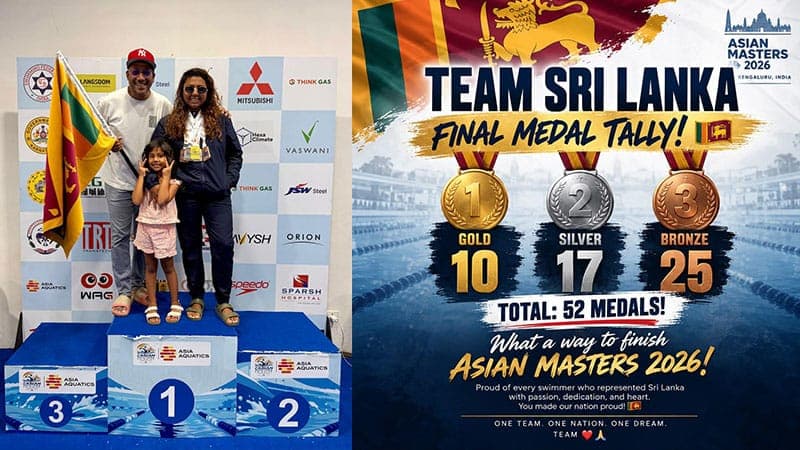
Bolling’s enthusiasm captured the spirit of a Sri Lankan team that returned from Bengaluru with an impressive 52 medals — 10 gold, 17 silver and 25 bronze, and the collective strength of the Sri Lankan contingent.
Yet behind the medals lay a collection of personal stories that perhaps best illustrated the significance of the championships: former national swimmers returning to international competition after decades, athletes balancing demanding professional careers with training, and families sharing the experience of representing Sri Lanka.
For many, Bengaluru was not simply another swimming competition. It was a return to something that had remained an important part of their lives, even during years spent away from the pool.
Returning to the national colours after two decades
For Radiesha Daluwatte, representing Sri Lanka at 42 was a particularly emotional experience.
“Representing Sri Lanka again at 42, after more than two decades away from competitive swimming, was deeply personal. I swam for my country from the age of ten. Returning in Bangalore brought back that familiar pride, alongside a new appreciation for what it takes to begin again.”
Her words reflect a challenge familiar to many former athletes. Returning to competitive sport after a lengthy absence requires not only physical preparation but also the determination to rebuild confidence, fitness and competitive discipline.
For Daluwatte, however, the experience carried another dimension.
“Sharing the pool with swimmers across generations reminded me that ambition and love for a sport can stay with us throughout our lives. Having my daughter there made the experience especially meaningful.”
Her experience also highlighted one of the distinctive features of Masters swimming: the opportunity for athletes to return to a sport they once pursued at national level, without the expectation that competitive achievement must end in early adulthood.
A remarkable comeback from Dubai
Subhani Ranasinghe’s journey back to international swimming followed a different path, but carried a similar message of perseverance.
A former national swimmer, and following her move to Dubai, competitive swimming gradually gave way to professional responsibilities. For the past 15 years, she has worked for the Crown Prince of Dubai.
Despite her lengthy absence from competition, her connection with swimming remained.
With encouragement from Shachil Perera of Cyclone Swimming Academy, Ranasinghe returned to training and began rediscovering the sport that had played such an important role in her earlier life.
Her comeback gathered momentum when she participated in the World Masters Games in Singapore in 2025.
A year later, representing Sri Lanka in Bengaluru, she won three silver medals and one bronze, providing tangible recognition of the commitment required to return to international competition.
For Ranasinghe, however, the medals were only part of the achievement.
“This journey has been about more than medals. It has been about believing in myself, overcoming challenges, and proving that it is never too late to follow your passion.”
What stood out particularly was the sense of belonging within the Sri Lankan contingent.
“You are not just teammates; you are another family to me.”
Her experience is a reminder that the benefits of Masters sport extend beyond competition. The friendships, encouragement and shared experiences can be as meaningful as the medals themselves.
Three gold medals — and a deeper sense of belonging
Dilrukshi Perera returned to competitive swimming after a seven-year absence and emerged from Bengaluru with three gold medals. Yet, for her, the most important rewards were not the medals themselves.
Perera had already established an impressive international swimming career. In 2016, she competed at the South Asian Games in India, the Asian School Games in Indonesia and the South Asian Aquatic Championship in Sri Lanka. The following year, she represented Sri Lanka at the Youth Commonwealth Games in the Bahamas, the World Junior Swimming Championship in the United States and the Asian Age Group Swimming Championship in Uzbekistan.
“I went into this competition with reservations as I hadn’t swum in 7 years but my main goal was to maintain mental health and my relationship with the sport while trusting the process rather than focusing on the results itself.”
“While people will focus on the medals won, I walked away with something that is far more valuable. I had found myself appreciating the community that the masters events built, I saw people attempt and complete events at the age of 85 where the norm is to not even dream beyond the chair you’re seated on at home, I saw people with disabilities not let it define them.”
The experience, she said, gave her a renewed perspective on resilience and a powerful sense of belonging among fellow competitors.
“I walked away with a lot of respect for each swimmer that took part, I felt like I had found my people, my opinions on resilience took new perspective, I left with a lot of gratitude that I got be a part of this amazing Sri Lankan contingent and this event and I left motivated to never stop trying not just in sport but in life.”
As someone passionate about women’s participation in sport, Perera was particularly moved by the women she met within the Sri Lankan team and beyond.
“As a person who is passionate about women in sports this event let me connect with some of the most inspiring women I’ve ever met within the Sri Lankan team and beyond that and it showed why representation matter even as we get older. So yes, the medals were probably the least interesting part of the event for me.”
Her reflections reinforced a theme running through Sri Lanka’s Masters campaign: competition can be a source of connection, representation and purpose at every stage of life.
The special experience of competing alongside family
For Mighara Hulangamuwa, the opportunity to represent Sri Lanka internationally was made even more memorable by the presence of his sister in the national contingent.
“Standing on the international blocks representing home is a feeling unlike any other. It’s a testament to the early mornings, relentless training blocks, and trusting the process—reminding me why I fell in love with this sport in the first place.”
The demands of competitive swimming are considerable, regardless of age. Early morning training sessions, physical conditioning and the discipline required to prepare for international competition must often be accommodated alongside professional and family commitments.
For Hulangamuwa, these sacrifices were rewarded by the opportunity to compete for his country.
“It made it even more special to represent the country alongside my sister.”
“A massive thank you to my family, friends, and everyone who supported me to get here in this journey. And to my teammates—thank you for every cheer, every shared effort, and every memory made.”
His reflections echoed those of other members of the team, for whom the championships represented both an individual sporting challenge and a shared national experience.
Masters swimming: a growing opportunity for lifelong competition
The achievements in Bengaluru highlight the growing relevance of Masters swimming, a form of competitive swimming that enables adults to participate in age-group events throughout their lives.
Unlike conventional elite swimming, where international competition is frequently concentrated within a relatively narrow period of an athlete’s career, Masters swimming provides opportunities to continue competing well into later adulthood.
Swimmers compete against others within designated age categories, allowing them to pursue personal goals and measure their performances against athletes of similar ages.
The attraction is not limited to former national champions.
Masters competitions also welcome adults who discover competitive swimming later in life, providing a pathway into organised sport that might otherwise be unavailable.
This inclusiveness is particularly important at a time when physical inactivity and the health challenges associated with ageing are receiving increasing attention.
Swimming offers a form of exercise that can support cardiovascular fitness, muscular strength, mobility and general wellbeing. Regular participation can also contribute to social engagement and a sense of personal achievement.
Bolling’s observation that Masters swimming could help create a healthier society is therefore particularly relevant.
His comments point towards an opportunity for Sri Lanka to develop a stronger culture of lifelong sporting participation, rather than viewing competitive swimming primarily as an activity for schoolchildren and young adults.
Coaching, organisation and team spirit
Behind Sri Lanka’s medal tally was the considerable work required to assemble and prepare a national contingent for an international championship.
Bolling’s praise for Penuka Wijemanne and Shachil Perera reflected the importance of effective coordination, preparation and leadership.
Organising a Masters team presents particular challenges. Unlike school or university teams, Masters swimmers may be spread across different clubs, cities and countries, with training schedules shaped by professional and family responsibilities.
Bringing these athletes together requires commitment not only from coaches and organisers but also from the swimmers themselves.
The cooperation and camaraderie within the Sri Lankan contingent were recurring themes in the reflections of those who participated.
For swimmers returning after long absences, the support of teammates and coaches was especially valuable.
The relay events also provided an opportunity to compete collectively, strengthening the sense of team identity across different age categories.
With 26 medals recorded in relay events, team competition formed an important part of Sri Lanka’s overall success.
A message that extends beyond the swimming pool
Sri Lanka’s 52-medal performance deserves recognition as a significant achievement by its Masters swimming community.
But the wider importance of the championships may lie in the example set by those who participated.
Their stories challenge the assumption that sporting ambition belongs primarily to the young.
They also raise an important question for Sri Lankan sport: could greater investment in Masters competitions encourage more former athletes, and adults who have never competed before, to embrace regular physical activity?
The potential benefits extend beyond medals and national recognition.
A stronger Masters sporting culture could encourage healthier lifestyles, sustain friendships and sporting communities, and provide meaningful goals for adults at different stages of life.
For younger swimmers, the sight of former national representatives returning to international competition offers another valuable lesson: a sporting career need not have a definitive ending.
The commitment, discipline and enjoyment developed through sport can remain relevant throughout life.
As Sri Lanka celebrates its 10 gold, 17 silver and 25 bronze medals from Bengaluru, the achievements of its Masters swimmers offer a message that reaches far beyond the results board.
The passion to compete does not diminish with age. And sometimes, the most meaningful sporting victories come not from reaching the finish line first, but from finding the courage and determination to return to the starting blocks.