


By Prof. Samitha Hettige
China on its course to be a Carbon neutral country by 2060 is developing an integrated space air ground monitoring system using satellite remote sensing & drones etc. to strengthen biodiversity conservation/ risk prevention in the rainforest of Hainan Island. The recent report on Hainan Tropical Rainforest Conservation indicates how technology is transforming rainforest protection from periodic inspections to continuous perception. The Hainan rainforest national park which covers approx. 4270 SQKM is home to more than 400 species of plants & 651 species of vertebrates (September 2026). Manual patrols have proven insufficient to detect ecological changes due to the park's land area, terrain & conservation targets. Hence to increase extensive monitoring, park authorities are increasingly turning to technology. Satellite remote sensing captures large scale ecological changes, drones conduct inspections in key areas & ground based equipment continuously collect information on wildlife activity & forest fires etc. Infrared cameras monitor & survey key plants providing further insights into species distribution, population changes & habitat conditions. By aggregating & analyzing data from multiple sources, Hainan park better identifies ecological changes, anticipate risks & make informed conservation decisions. These tech advances can be used to strengthen biodiversity conservation & rainforest protection globally (Ref. Report).
Winds of pollution
Due to above acts, the Hainan Gibbon (a flagship species) of the forest has increased from a population between 7 – 9 to 44 individuals by end of 2025. Researchers have also discovered 91 new plant and animal species in the rainforest in recent years. Although Chinese Gibbons aren’t close, ‘Hanuman’ (Monkey God of Ramayana) isn’t a stranger to Sri Lanka. Some even argue that Sinhala word ‘Vandura’ (Monkey) has its roots in the Hindi word ‘Bandhur’ (relation). According to the ‘Ramayana’, Hanuman had set fire to key places in Sri Lanka during the offensive to save ‘Seetha’. There may have been air pollution during those acts of ‘Arson’ but environmentalists believes that recent rise in poor air quality (November 2026) was proven to be linked to the weather patterns of bay of Bengal which pulled polluted air toward Sri Lanka during the North-East monsoon (Ref. CEA).
Transboundary Haze Pollution Act (THPA)
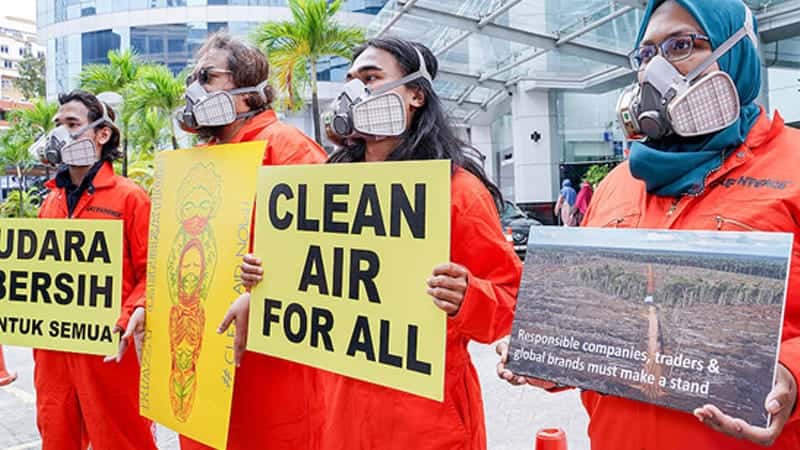
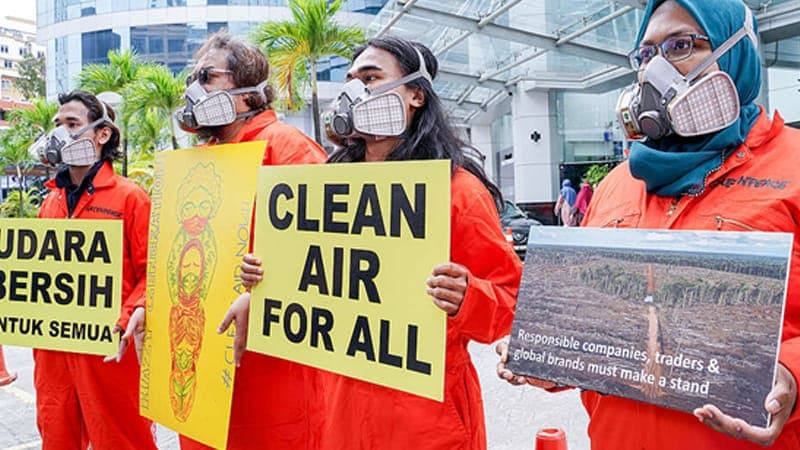
However, the recent air pollution in Indonesia, Singapore & Malaysia also proves that it is no longer a local issue. Those who dream to be like Singapore may study below steps taken by the City State to be safe & stable;
- Urban and industrial planning
- Strict emissions rules
- Real time monitoring &
- Transboundary Haze Pollution Act (THPA) used to address smoke haze from regional land & forest fires when pollution crosses into the country’
Singapore strengthened the act expanding investigative tools, holding supply chains, related firms, & financiers accountable, & restricting business dealings with errant entities etc (Ref. Media). However, Sri Lankans should be more strategic to avoid the repeat of Hanuman style air pollution in the 21st century. The Belt & Road Initiative of China can be a good opportunity to ease the haze.
Author is an Academic & the Executive Director of the Zheng He Center in Colombo.
Views expressed are personal. Photo Source: WWW