

September, 19, 2025

On Sept. 19, 2025, S&P Global Ratings raised its long- and short-term foreign currency sovereign credit ratings on Sri Lanka to 'CCC+/C' from 'SD/SD'. We also affirmed our 'CCC+/C' long- and short-term local currency ratings. The outlook on both the long-term foreign and local currency ratings is stable. The transfer and convertibility assessment remains 'CCC+'.
The stable outlook reflects a balance between our expectation of Sri Lanka's continued economic recovery, supported by fiscal reform and external improvements, and the country's high debt and heavy interest burden over the next one to two years.
We could lower the ratings on Sri Lanka if we see indications of renewed funding and liquidity stresses. Developments that could precede such signs include a rapid rise in inflation, a further rise in the government's interest burden, or significantly weaker fiscal performance, leading to funding pressures.
We could raise the ratings if economic growth continues to be robust and we believe that Sri Lanka's fiscal and external improvements are more entrenched. This would improve the government's ability to manage its large debt.
The upgrade reflects Sri Lanka's recent efforts to complete the restructuring of its remaining commercial debt, including government-guaranteed Sri Lankan Airlines (SLA) bonds, following its December 2024 exchange of most of its Eurobonds. Negotiations on restructuring the SLA debt began earlier this year, with the airline and government making an offer based on comparability of treatment with other external creditors.
We see a possibility that some lenders could become holdout creditors, making a further resolution in the negotiations unlikely, based on the passage of time.
We believe this situation is also unlikely to disrupt or unwind the debt restructuring process, given the principles of comparability of treatment and the most-favored creditor clauses in Sri Lanka's restructured bonds.
The ratings on Sri Lanka are supported by its strong economic recovery, rapid fiscal consolidation and reform (supported by an ongoing IMF program), accumulation of foreign exchange reserves, an improving external position, and sustained progress in reducing fiscal risks from its state-owned enterprises (SOE).
These strengths are counterbalanced by the country's high debt--as most of its high-yielding domestic commercial debt was excluded from the debt restructuring exercise--and a very heavy interest burden of about 50% of general government revenue. These structural vulnerabilities will take time to unwind, particularly as external debt servicing will start to increase in 2029.
The 'CCC+' ratings reflect our views that Sri Lanka's creditworthiness is vulnerable and dependent upon favorable financial and economic conditions, but the government does not face a near-term payment crisis.
The ruling NPP secured a supermajority parliament following the 2024 general elections and also controls a majority of local councils following elections in May. This situation is relatively uncommon for Sri Lanka, which has historically been characterized by frequent political factionalism and crossovers. We believe the government's strong mandate demonstrates improved political stability and policy predictability, despite the NPP's limited record and lack of governing experience.
We anticipate the government will continue the reform agenda under the IMF program, particularly in implementing revenue-based budget repair, cost-recovery pricing for utilities, and other structural reform of public financial and debt management. The government has demonstrated strong commitment to the IMF program, mostly meeting--although some with delay--quantitative indicators and structural benchmarks, even when it involved politically difficult reform.
Sri Lanka has completed four reviews under the IMF program, unlocking about US$1.74 billion in program funding.
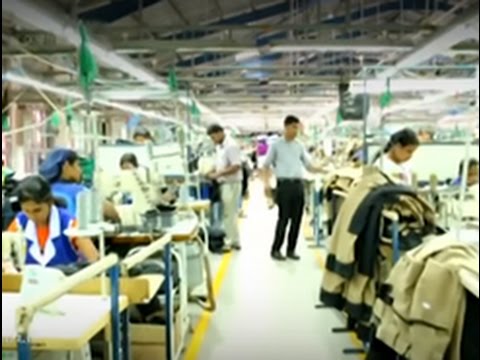
Against this backdrop, we expect Sri Lanka's economic growth to continue its strong recovery this year. Real GDP growth in the second quarter was above expectations at 4.9%, building on strong momentum from 2024. The economy is performing well across sectors including agriculture, textile and garment manufacturing, and tourism, which were previous economic bright spots before the economic crisis.
However, we expect economic momentum to slow in the second half of 2025 as external uncertainties mount. Reduced U.S. reciprocal tariffs on Sri Lankan exports of 20% are unlikely to directly affect export competitiveness, as this rate is consistent with those for regional peers. However, the potential second-order impact on business investment decisions and U.S. final demand is more unpredictable.
We forecast real GDP growth of 4.2% in 2025. Over the next three to four years, supply constraints, particularly given chronic underspending in capital expenditure, could keep growth more subdued at about 3.5%. This would put GDP per capita at US$4,900 in 2025 and 10-year weighted average per capita real GDP growth at 2.2%. Although growth has improved substantially, it remains below the average of peers with similar income levels.
Given the economy's strong performance and an increase in the value of the Sri Lankan rupee, it is likely that the upside threshold in Sri Lanka's macro-linked bonds (MLBs) will be breached. This would trigger higher coupon payouts of 1.75%-2% over 2029-2032 and higher principal payouts of 17%-22%, depending on the bond series.
Sri Lanka's fiscal position has improved tremendously since 2022, when the ratio of revenue to GDP falling to less than 9% in 2021 and 2022. Since the lifting of all vehicle import restrictions earlier this year, customs revenue have risen to become the largest revenue contributor for the first seven months of 2025. This drove a 26.5% increase in overall revenue over the same period in 2024.
Government revenue is well on track to reach budget estimates of 15% of GDP. This means Sri Lanka is likely to run a primary surplus this year, with the overall deficit likely narrowing to 5.4% and further to 4.5% by 2028. We expect the change in net general government debt to average 5.3% from 2025-2028, after factoring in higher payouts on the MLBs.
Sri Lanka's strong fiscal performance reflects sustained fiscal reform just prior to and under the IMF program. These include changes to personal and corporate income tax rates, raising the value-added tax (VAT) registration threshold, removing sector-specific income tax exemptions, raising the withholding tax rate, and introducing taxes on digital services and services exports.
However, this year's outperformance also benefitted from pent-up demand in vehicle imports following a prolonged period of restrictions. This effect may not be repeated in coming years. Further fiscal reform, such as repealing Sri Lanka's simplified VAT system and implementation of property tax, could help entrench the country's improving fiscal trajectory.
According to Sri Lanka Treasury data, Sri Lanka's external debt restructuring would result in an upfront reduction of US$3.7 billion on its US$12.55 billion International Sovereign Bond (ISBs) debt and a 33% reduction in the coupon rate in the MLB baseline scenario. Additionally, official creditors agreed to about US$8 billion in debt relief. However, most of Sri Lanka's domestic commercial debt was excluded from the debt restructuring process. Therefore, compared with other countries that have emerged from similar processes, Sri Lanka's government debt remains high.
We forecast net general government debt, including SOE guarantees, will be about 101% of GDP for 2025. We expect this to decline gradually to about 93.4% in 2028. Additionally, Sri Lankan banks purchase substantial quantities of government debt, with aggregate exposure significantly exceeding 20% of system assets.
Interest expenditure also remains very substantial. We expect interest payments to reach 51% of government revenue in 2025 and to average about 47% from 2025-2028.
Sri Lanka's external position has improved. Its current account balance flipped to surpluses starting from 2023 from sustained structural deficits. While the current account surplus was initially due to wide-ranging import restrictions, it has remained even in the first seven months of this year following the lifting of vehicle import restrictions. This was due to very strong remittance flows from overseas workers, some of whom left the country during the economic crisis.
In addition to the recovery in goods exports, tourism earnings have also rebounded strongly, with tourist arrival numbers surpassing pre-pandemic levels.
Favorable developments in the current account, flows from the IMF program and other multilateral organizations, sustained foreign direct investment inflows even during the crisis, a stronger rupee, and reduced external debt servicing flows have allowed Sri Lankan authorities to rebuild foreign exchange reserves.
We expect gross external financing needs as a share of current account receipts and usable reserves to average 107% from 2025-2028. This compares favorably with the pre-crisis average of more than 120%. We expect external debt net of public and financial sector external assets to average 118% of current account receipts over the same period, compared with the pre-crisis average of more than 130%.
Inflation has been muted in Sri Lanka since late 2023, with growth in the headline Colombo CPI (CCPI) turning negative since September 2024. Prices started to rise again in August 2024, with the CCPI growing 1.2%. Lower price pressures should give the central bank more flexibility to keep policy rates in check, allowing the government to gradually replace high-yielding debt issued during the crisis with cheaper debt.
Even though we continue to view Sri Lanka's monetary settings as a credit weakness, policy credibility will likely improve with a longer record of policy autonomy following the passage of the Central Bank Act in 2023. We also note that extensive foreign exchange restrictions imposed during the previous period have largely been removed. Remaining minor restrictions will likely be phased out in the next two years.
Video Story