

December, 15, 2025
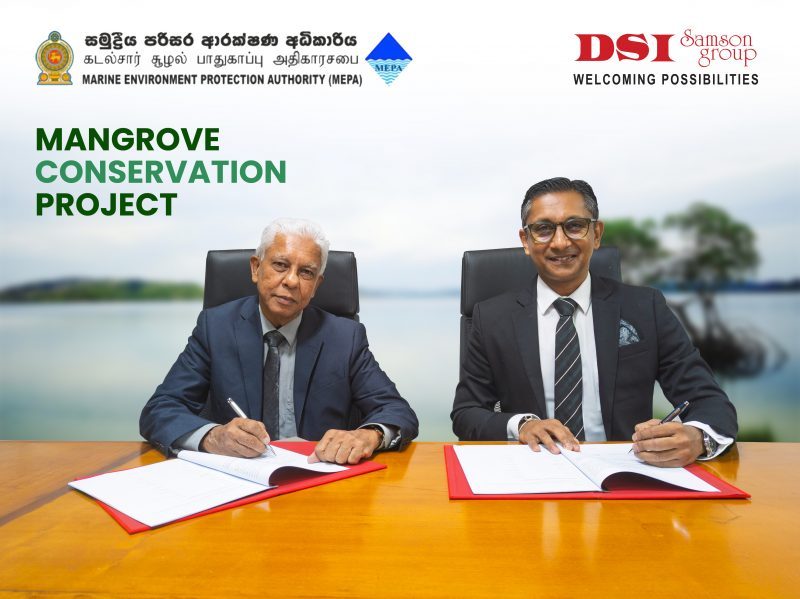
DSI Samson Group today formally signed a Memorandum of Understanding (MOU) with the Marine Environment Protection Authority (MEPA) to launch a nationwide mangrove conservation initiative. The agreement outlines how the two [02] organisations will collaborate to restore and protect critical mangrove ecosystems, why this investment is essential to Sri Lanka’s climate resilience, and how the initiative will support coastal communities while contributing to national sustainability targets.
Sri Lanka’s mangrove regeneration efforts were recently recognised as one of the seven UN World Restoration Flagships, underscoring the global significance of this sector. Following the recent impact of Cyclone Ditwah on multiple coastal districts, the importance of strengthening natural coastal defences has come into renewed national focus. As a long-standing advocate for sustainable community development and zero-waste practices, DSI Samson Group has aligned its Corporate Responsibility vision with the national priority of rehabilitating the country’s mangrove habitats. Through this new partnership, the Group aims to enable measurable, science-backed restoration in regions where mangrove degradation threatens coastal stability and local livelihoods.
Commenting on the partnership, Group Managing Director, DSI Samson Group - Mr. Kasun Rajapaksa stated: “As a Group, we firmly believe that Corporate Responsibility is a crucial element of our business existence. Through this vital partnership with MEPA, we are confident that we can create a positive and long-term impact on our community.”
Speaking at the signing, Chairman, MEPA - Mr. Samantha Gunasekara, noted: “Mangrove ecosystems are among the world’s most powerful natural climate solutions. They store up to four times more carbon than tropical rainforests, protect coastlines from erosion and storm surges, and maintain vital habitats for both marine and terrestrial biodiversity. For Sri Lanka’s fishing communities, thriving mangroves mean stronger fish stocks, safer shorelines, and improved long-term economic security.”
The initiative will roll out in phases, followed by an expansion phase that includes planting 1,000 plants and establishing a nursery, ensuring sustainable restoration aligned with national policy guidelines.
Caption
Video Story