

January, 20, 2026
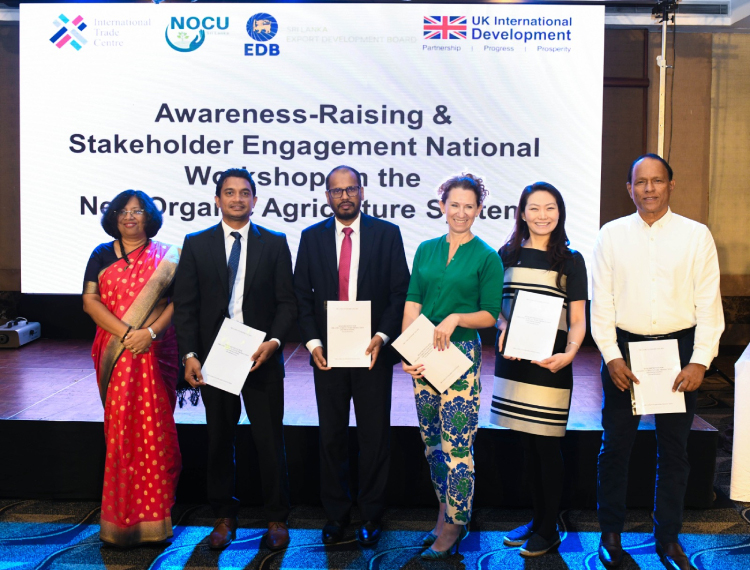
Sri Lanka has a long-standing tradition of environmentally harmonious agricultural practices, rooted in indigenous knowledge systems, mixed farming and biodiversity-rich home garden systems. In recent decades, organic agriculture has gained increasing national importance as a sustainable approach to address soil degradation, environmental pollution, food safety concerns and the growing demand for quality agricultural produce. In this context, the establishment and periodic revision of a national standard for organic agriculture is essential to ensure credibility, consistency and consumer confidence in organically labelled produce and products in Sri Lanka.
Recognizing these national priorities and evolving global developments, the Sri Lanka Standards Institution (SLSI) has recently revised SLS 1324:2025 – Requirements for Organic Agriculture Production and Processing. This revision represents the Second Revision of the standard, originally published in 2007 and previously revised in 2018 and provides a comprehensive and up-to-date framework governing organic production, post-harvest handling, storage, processing, packaging, labelling, transportation and marketing of organic produce and products.
Need for Revision
The revision of SLS 1324 was undertaken in response to significant changes in organic agriculture practices, certification systems, international trade requirements and consumer expectations. Increasing concerns related to misleading organic claims, environmental sustainability, traceability and food safety necessitated a more robust and harmonized standard.
SLS 1324:2025 aligns Sri Lanka’s organic agriculture framework with internationally recognized principles and best practices while ensuring relevance to local agro-ecological, socio-economic and regulatory conditions.
Scope and Coverage
The revised standard applies to a wide range of activities including:
Key Enhancements Introduced
A major enhancement in the revised standard is the introduction of the Organic Management Plan, which requires operators to document and implement systematic procedures covering land use, soil fertility, pest and disease management, record keeping and traceability. This strengthens transparency, inspection efficiency and accountability across the organic value chain.
Greater emphasis is placed on soil-based production systems, biodiversity conservation, crop rotation and agro-ecosystem management. The revised standard explicitly prohibits hydroponic and other non-soil-based systems for organic crop production, reinforcing the foundational principles of organic agriculture.
Updated requirements ensure improved animal welfare, responsible feed management, biosecurity, environmental protection and ethical husbandry practices. Detailed provisions are included to address conversion periods, parallel production risks and permitted inputs.
Significant revisions have been made to processing aids, additives, packaging materials and labelling practices to prevent misleading claims and safeguard organic integrity. These measures enhance consumer confidence and support fair trade practices.
The standard clearly prohibits the use of genetically modified organisms (GMOs), ionizing radiation, nanotechnology and synthetic inputs not expressly permitted. Robust requirements are included in preventing contamination, commingling and loss of organic integrity.
In line with modern sustainability frameworks, SLS 1324:2025 incorporates social justice considerations, emphasizing fair labour practices, worker welfare and ethical business conduct within organic operations.
Benefits to Stakeholders
The revised standard provides clear and consistent guidance to farmers, processors, exporters, certification bodies and regulators. It supports:
By promoting environmentally sound and socially responsible production systems, the standard contributes to long-term food security, environmental conservation and rural development.
As the national standards body, the SLSI remains committed to developing, reviewing and maintaining standards that support national development objectives and protect public interest. The revision of SLS 1324:2025 reflects SLSI’s ongoing efforts to strengthen Sri Lanka’s organic agriculture sector through credible, transparent and internationally aligned standards. SLSI encourages all stakeholders to adopt and implement this revised standard to ensure the integrity, sustainability and continued growth of organic agriculture in Sri Lanka.
The Author
Mrs. Ganiesha Jayamini De Silva serves as Deputy Director of the Agriculture Section of the Standardization Division at the Sri Lanka Standards Institution.
Video Story