

January, 23, 2026
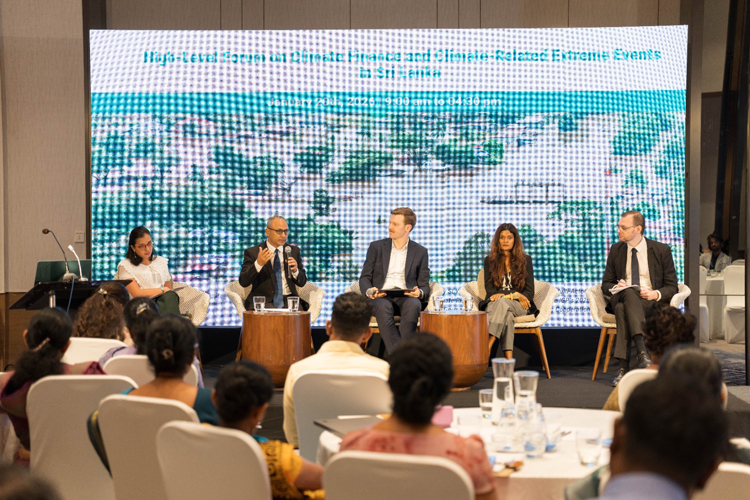
SLYCAN Trust convened a High-Level Forum on Climate Finance and Climate-Related Extreme Events in Sri Lanka on 20 January 2026 in Colombo, as part of its broader work on climate and disaster risk finance, loss and damage, and multi-actor partnerships, bringing together government representatives, international climate finance institutions, UNFCCC-linked mechanisms, development partners, and technical experts.
Sri Lanka continues to face growing risks from climate-related extreme events, most recently highlighted by the impacts of Cyclone Ditwah in late 2025. Against this backdrop, the Forum discussed how Sri Lanka can strengthen access to climate finance for response, recovery, and long-term resilience, with a particular focus on finance for loss and damage and climate disaster risk financing.
In his welcome remarks, Dennis Mombauer, Director: Research & Knowledge Management at SLYCAN Trust, stressed the timeliness of the Forum and its importance particularly in the context of the significant economic and non-economic impacts of Cyclone Ditwah on Sri Lanka and the operationalisation of financing arrangements for loss and damage.
“With the impacts of climate change on the rise, building long-term resilience and responding to loss and damage are urgent challenges. This Forum convenes key actors to identify pathways for accessing finance and managing climate risks, especially in the context of the operationalization of the global institutional landscape on loss and damage,” he said.
Delivering the keynote address virtually, Mathilde Laurans, Deputy Executive Director of the Fund for Responding to Loss and Damage (FRLD), noted that the Fund officially opened its first call for funding requests on 15 December 2025, marking the start of its operational phase under the Barbados Implementation Modalities (BIM). The funding window for this initial call runs from 15 December 2025 to 15 June 2026.
“This milestone means that countries like Sri Lanka can now engage with us for support,” Laurans said, underscoring that the Fund is designed with people at its core and responds to both economic and non-economic loss and damage.
K.K.A. Chamani Kumarasinghe, Additional Director at the Climate Change Secretariat of the Ministry of Environment of Sri Lanka, in her opening remarks highlighted the extensive damage caused by Tropical Cyclone Ditwah to human life and physical infrastructure, and the urgent need to strengthen systems for response and recovery.
“Against this backdrop, the Ministry of Environment strongly appreciates the initiative by SLYCAN Trust at this moment to focus this forum on climate finance for loss and damage. We commend SLYCAN Trust for its continuous support and initiatives in creative platforms that connect global processes with national realities and priorities,” she said.
A key feature of the Forum was two panel discussions featuring representatives from international climate finance institutions, technical experts, and practitioners.
The first panel brought together Angela Rivera, Co-Chair of the Santiago Network Advisory Board; Thibyan Ibrahim, Advisor to the Board Members of the Fund for Responding to Loss and Damage and Green Climate Fund; Amjad Abdullah, Board Member of the Green Climate Fund (GCF) and Member of the UNFCCC Standing Committee on Finance; and Mohammed Hafijul Islam Khan, Co-Chair of the Executive Committee of the Warsaw International Mechanism.
The panel discussion highlighted the urgent need for developing nations to strengthen access to climate finance for loss and damage by addressing persistent institutional, technical and procedural barriers. The panelists emphasised the importance of robust national needs assessments that capture economic as well as non-economic losses. The discussion also noted the importance of simplifying access, strengthening institutional readiness, and improving coordination across national systems. They also stressed that timely, flexible support is essential to ensure that finance reaches affected communities and supports response, recovery and long-term resilience.
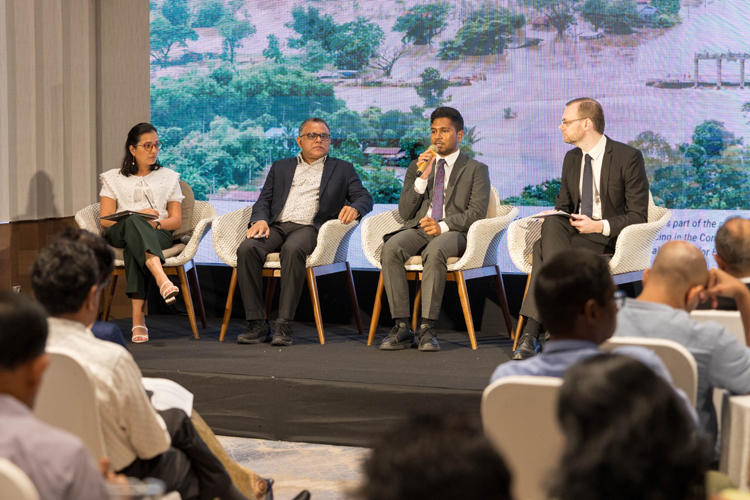
The second panel comprised Dr. Maheshwar Dhakal, Board Member of the Fund for Responding to Loss and Damage; Aileen Niyaz, Technical Expert at SLYCAN Trust; Kay Tuschen, Head of Climate Resilience Solutions at CelsiusPro Group; and Angela Rivera, Co-Chair of the Santiago Network Advisory Board.
This panel focused on practical approaches and emerging good practices for accessing climate and disaster risk finance to support disaster response and long-term resilience. Discussions addressed enabling conditions for effective access to finance, including the role of public-private partnerships, national preparedness, and institutional coordination, and considered how evolving loss and damage finance can complement existing disaster risk financing tools.
Both panel discussions were moderated by Dennis Mombauer, Director: Research & Knowledge Management at SLYCAN Trust.
The second half of the Forum centred on grounding global discussions in Sri Lanka’s national context and identifying practical priorities for strengthening climate resilience. Participants reflected on how existing institutional arrangements and response plans have functioned during recent extreme events and discussed lessons that can inform future preparedness. These exchanges were complemented by expert inputs on climate and disaster risk finance, with a focus on improving local-level access and strengthening national readiness.
The Forum concluded with an interactive World Café session, where participants identified key gaps, capacity needs, priority partnerships, and short-, medium-, and long-term actions to enhance Sri Lanka’s preparedness and climate finance readiness, followed by reporting back and closing reflections by SLYCAN Trust’s Executive Director Vositha Wijenayake.
The Forum identified key priorities to strengthen Sri Lanka’s readiness to access climate finance, including addressing institutional and capacity gaps at the local level, improving coordination across actors and clarifying practical pathways for engaging international mechanisms for loss and damage and disaster risk finance.These outcomes are expected to inform ongoing national recovery efforts, resilience planning, and Sri Lanka’s engagement with international climate finance processes, as the country continues to face increasing climate-related risks.
From left: Angela Rivera, Co-Chair of the Santiago Network Advisory Board; Thibyan Ibrahim, Advisor to the Board Members of the Fund for Responding to Loss and Damage and Green Climate Fund; Amjad Abdullah, Board Member of the Green Climate Fund (GCF) and Member of the UNFCCC Standing Committee on Finance; and Dennis Mombauer, Director: Research & Knowledge Management at SLYCAN Trust
From left: Angela Rivera, Co-Chair of the Santiago Network Advisory Board; Dr. Maheshwar Dhakal, Board Member of the Fund for Responding to Loss and Damage;Kay Tuschen, Head of Climate Resilience Solutions at CelsiusPro Group; Aileen Niyaz, Technical Expert at SLYCAN Trust; and Dennis Mombauer, Director: Research & Knowledge Management at SLYCAN Trust
Video Story