

February, 6, 2026
For generations, Sri Lankan cooking knowledge moved through homes by observation—watching a mother temper spices, learning the feel of dough by hand, remembering measurements by instinct rather than instruction. Recipes were not written down so much as absorbed.
But everyday cooking today looks different. Kitchens are faster, diets more varied, and time more limited. Increasingly, when Sri Lankans want to cook—whether it’s kevum for Avurudu, a quick rice and curry after work, or a keto-friendly dinner—they are not reaching for a cookbook. They are reaching for TikTok!
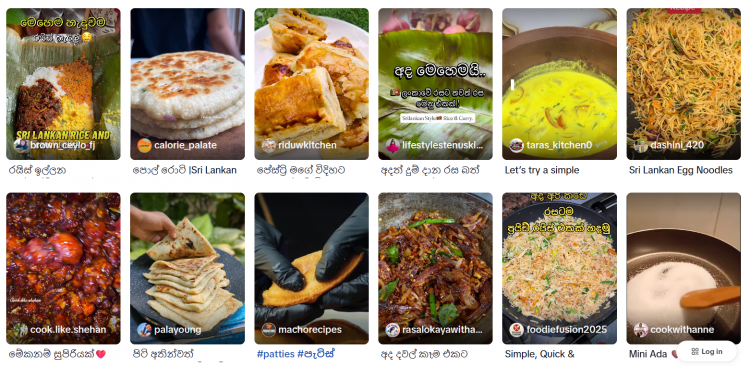
Through Search on TikTok, cooking has become visual, immediate, and deeply practical. People are no longer searching for perfect recipes; they are searching for how it looks, how long it takes, and whether it fits their lives. From traditional dishes to diet-specific meals, TikTok is quietly reshaping how Sri Lankans cook, adapt, and experiment in their own kitchens.
Skipping the browser: why recipes are now searched on TikTok
How many of us—or the younger ones in our homes—no longer open a browser when we want to cook something new? Instead, we go straight to TikTok. More often than not, it feels easier to type “kevum recipe,” “quick rice and curry,” or “keto dinner ideas” into TikTok than to sift through long articles, pop-up-heavy websites, or recipes that assume time we don’t have.
TikTok works for cooking enthusiasts in Sri Lanka because it shows the answer immediately. You see the texture of the batter, the colour of the oil, the size of the flame, the moment something is done. There is no need to interpret instructions or scroll endlessly to find the one detail you’re unsure about. For everyday cooking—especially after a long workday—this visual clarity matters more than perfect formatting or exhaustive explanation.
Search on TikTok also reflects how people actually cook. Under a single dish, you’ll find dozens of variations: a traditional kevum made slowly for Avurudu, a shortcut version for busy kitchens, a healthier adaptation, a small-batch recipe for someone cooking alone. Instead of one “correct” way, you see many lived-in approaches. That range makes cooking feel accessible rather than intimidating—and it explains why, increasingly, Sri Lankan kitchens are turning to TikTok first.
Festive cooking, demystified through short-form video
Festive cooking in Sri Lanka has always been expansive and communal, shaped by many calendars and many kitchens. Avurudu sweetmeats sit alongside biriyani prepared for Ramadan evenings; Pongal dishes mark Thai Pongal in Hindu homes; Christmas cakes are baked weeks in advance in Christian households. These are not casual recipes. They involve timing, texture, sequencing, and an understanding of when to wait and when to act. For young Sri Lankans today, the desire to cook these dishes remains strong, but the approach has evolved. Instead of relying on a single remembered method, they now turn to search as a way of checking, confirming, and learning in real time.
When people search for festive recipes on TikTok, they are met with more than one answer. Under a single dish—whether it is biriyani, kevum, Pongal, or Christmas cake—Search on TikTok surfaces dozens of short videos, each focusing on a different part of the process. One clip shows ingredient prep, another focuses on texture, another on timing, another on common mistakes. Some are filmed as step-by-step walkthroughs, others as quick tips, time lapses, or close-up shots of critical moments. Instead of watching a single 50-minute video and hoping it covers everything, users piece together understanding from multiple short videos, each answering a specific question.
Search on TikTok also brings in multiple perspectives: home cooks, professional bakers, experienced elders, and first-timers attempting the dish for the first time. That range reduces pressure and bias. It reassures young cooks that variation is normal, adjustment is part of the process, and tradition allows room to learn.
From home food to health food: how diet-driven searches are shaping Sri Lankan kitchens
Diet-driven cooking is becoming part of everyday life in Sri Lanka, shaped by health goals, lifestyle changes, and growing awareness around nutrition. Keto, low-carb, high-protein, vegetarian, and diabetic-friendly meals are no longer niche interests—they are practical concerns for young professionals, gym-goers, and families alike. What people are searching for is not a departure from Sri Lankan food, but ways to adapt it. Through TikTok, users look up diet-specific ideas that still feel familiar, grounding new eating habits in food they already know.
Search on TikTok surfaces short videos that show these adaptations clearly: rice swapped for alternatives, curries adjusted for portion or protein, breakfasts redesigned without losing flavour. Under a single search, multiple creators offer different approaches—some cautious, some experimental—allowing viewers to compare, choose, and adapt. The visual format removes guesswork and lowers resistance, turning dietary change into something practical and achievable rather than restrictive. In this way, Search on TikTok helps Sri Lankan kitchens evolve without losing their identity.
Everyday creators as the guides of modern Sri Lankan kitchens
What is even more captivating about cooking on TikTok is how many real people you end up learning from. People who burn things. People who adjust midway. People who say, “this didn’t work the first time, so here’s what I changed.” Experts can teach you the right way to cook a dish. Real people teach you what not to do—and often, how they’ve found a way that works better for their own kitchens. On TikTok, that honesty is what draws people in.
Through search, these everyday creators surface naturally because their videos answer the questions most home cooks actually have. One shows how to fix a curry that’s gone too salty. Another explains why a cake cracked and how to avoid it next time. Someone else demonstrates a quicker method when time runs short. These aren’t lessons delivered from a pedestal; they’re shared experiences. Over time, these creators become guides not because they claim expertise, but because they reflect reality. They cook the way most people do—imperfectly, adaptively, and with care—and that makes them the voices Sri Lankan kitchens trust most.
Why this shift matters for how we cook — and how we pass it on
What is happening through cooking on TikTok is not a replacement of tradition, but a quiet rebalancing of how knowledge moves. Through Search on TikTok, everyday cooking knowledge is no longer confined to one household, one generation, or one “right” way of doing things. It becomes visible, shared, and adaptable. A young person learning to cook for the first time can search a dish, watch how it looks at each stage, compare approaches from different kitchens, and choose what works for their own—drawing from tradition and modern needs at the same time.
What emerges is not a single version of Sri Lankan cooking, but many honest ones. Food shaped by region, religion, health, time, and circumstance. In kitchens across the island, people are learning, correcting, experimenting, and passing things on—not through formal instruction, but through curiosity. And increasingly, that curiosity begins in one simple place: on TikTok, with a search that turns everyday questions into shared experience.
Video Story