

February, 16, 2026
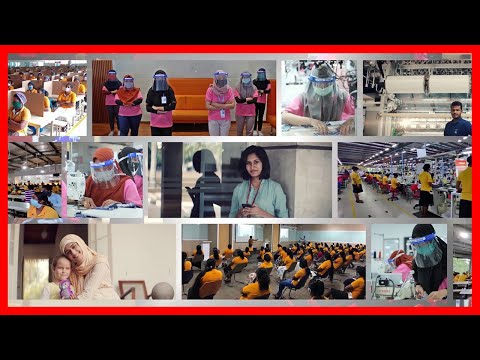
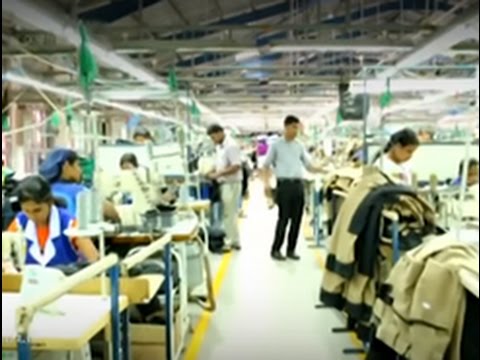
With Omega Line entering its 28th year in Sri Lanka, the company operates as part of Oniverse Group (formerly the Calzedonia Group), a global fashion business with an integrated model spanning design, retail, and manufacturing across multiple international brands. The Group says Sri Lanka remains a key pillar of its manufacturing network, supported by the country’s long-established capability in intimate apparel, especially technically demanding products such as bras that require specialised skills, precision, and consistent quality. In this Q&A, Group President Dr. Sandro Veronesi speaks on why Sri Lanka continues to matter, the constraints that need attention, and what will shape the next wave of investment.
Q: As Group President of Oniverse, with Omega Line now in its 28 year in Sri Lanka, how would you describe Sri Lanka’s role in your global manufacturing network today, and how has that role evolved?
A: Sri Lanka plays a specialised role for us, particularly in underwear and bras, which are among the most difficult products to make consistently well. Our model is somewhat different from many competitors because we integrate design, retail, and manufacturing, which demands stronger know-how and higher professionalism. Sri Lanka has supported that approach by offering the right ecosystem, skilled capability, and supplier depth for intimate apparel, helping us maintain quality and product differentiation as we have scaled globally.
Q: Felix Fernando was Omega Line’s first employee in 1999 and has just been elected Chairman of JAAF. What does this trajectory say about what you have built together and the depth of local leadership Sri Lanka can offer?
A: It reflects continuity, capability, and the strength of local leadership built over time. We have grown significantly as a group, from a small retail base to nearly 6,000 shops across brands, and that growth depends on leaders who understand both global standards and local execution. Sri Lanka has that depth. While labour costs are higher than some markets, professionalism and consistency here are not easy to replicate elsewhere, and that is what supports premium and medium-premium manufacturing.
Q: From an operator’s perspective, what are the biggest constraints in Sri Lanka that affect lead times, cost-to-serve, and consistency, and how would you rank them?
A: Logistics is a major constraint today. Lead times to Europe have lengthened substantially significantly compared to the pre-COVID period, influenced by global shipping disruptions and transit constraints, and Sri Lanka’s position as an island adds pressure when fewer ships call than before. The second issue is manpower, which is a challenge globally, but it is still a key factor in ensuring stability, capacity, and quality over time. Cost pressures are also real, because consumer spending on garments is under strain in developed markets and brands cannot increase prices freely.
Q: Omega Line supports brands like Calzedonia, Intimissimi, Tezenis, and Falconeri. How do product complexity, seasonality, and speed-to-market shape what you need from Sri Lanka as a manufacturing base? Which categories does Sri Lanka suit best today?
A: Product complexity increases the need for precision, specialised skills, and reliable processes. That is where Sri Lanka has strong capability, especially for bras and intimate apparel where fit, structure, and material handling are critical. Speed-to-market and seasonality add pressure on lead times and supply chain coordination, so the advantage comes when manufacturing locations can respond with consistency and flexibility. For us, Sri Lanka’s strongest fit remains technically demanding intimate wear and products where quality and workmanship are decisive.
Q: With European buyers and consumers placing more weight on traceability, responsible sourcing, and compliance, how is that changing the way you invest in manufacturing locations, including Sri Lanka? What capabilities must Sri Lanka strengthen to stay ahead?
A: Compliance expectations are shaping investment decisions across the industry, but Sri Lanka is well equipped to meet these requirements. On safety, chemicals, and sustainability standards, the industry is capable and ready. The priority is to maintain that level consistently and support it with reliable systems, stable operations, and supply chain discipline, so Sri Lanka remains competitive as regulations evolve.
Q: Looking ahead 3–5 years, what would a “next wave” of investment in Sri Lanka look like for Oniverse, and what needs to happen for that to be viable?
A: We are already moving into the next wave through a major investment: a new plant in Sri Lanka to produce a capsule used in bras. The investment is about EUR 30 million. The aim is to raise technology standards and improve safety across the board, including worker safety, fire safety, and stronger controls on potential pollution linked to materials. For long-term viability, the fundamentals matter: predictable operating conditions, stable policy and fiscal environments, and a business climate that supports multi-year investments.
Q: If you could deliver one practical message to Sri Lankan policymakers and industry leaders on making the country more attractive for long-term apparel investment, what would it be?
A: Provide stability in regulations, especially fiscal and operating rules. It becomes difficult for investors when regulations change during an investment cycle or while running long-term operations. Companies plan around predictable scenarios. When the rules shift unexpectedly, it adds risk, cost, and uncertainty. A stable framework supports sustained investment and job creation.
Conclusion
For Oniverse, Sri Lanka’s value lies less in being the cheapest option and more in being a specialised, professional manufacturing base for complex intimate apparel, supported by experienced local leadership. As global uncertainty and compliance expectations reshape sourcing decisions, the company’s message is clear: Sri Lanka can compete strongly in premium segments if it protects its strengths, addresses logistics and workforce constraints, and maintains stable, investor-friendly policy conditions.
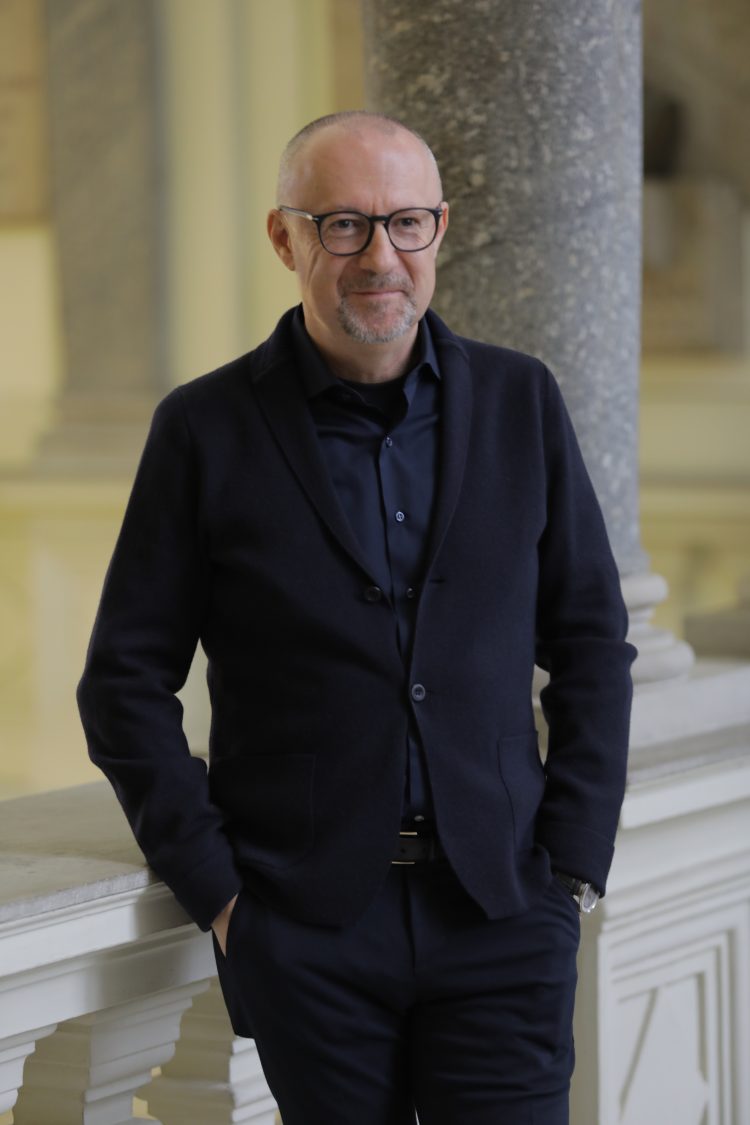
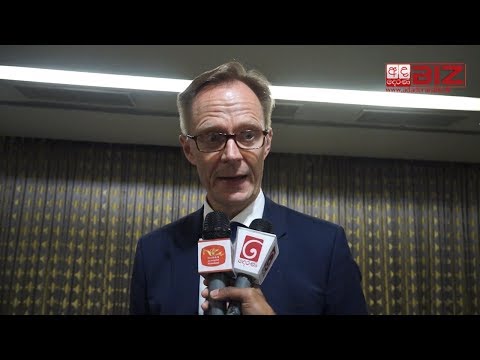
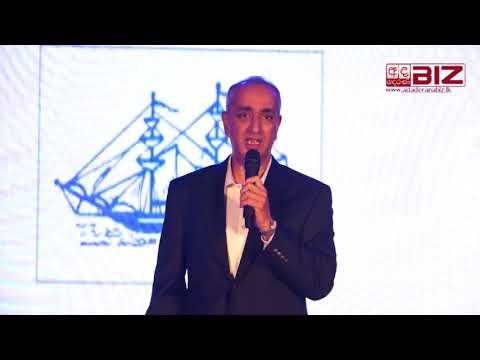
Photo caption : Dr. Sandro Veronesi, President, Oniverse Group (formerly the Calzedonia Group)
Video Story