


February, 24, 2026
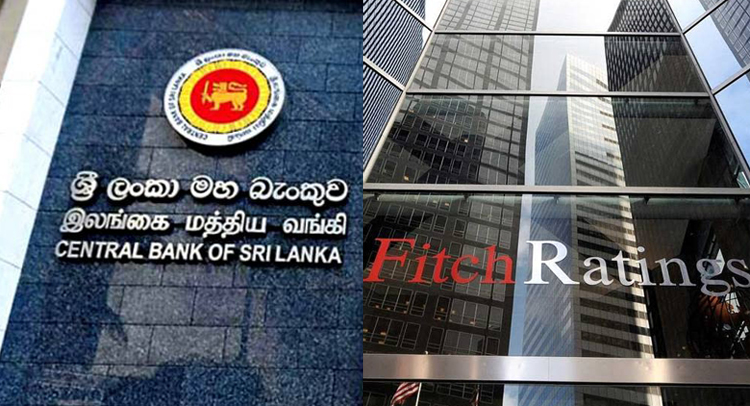
Fitch Ratings - Fitch Ratings believes the Central Bank of Sri Lanka’s (CBSL) reintroduction of a consolidation framework for the banking sector is broadly positive for sector credit profiles. Consolidation should strengthen franchises, create better-capitalised banks and support compliance with tightening single-borrower limits, particularly as higher post-merger capital can enable banks to take larger exposures within revised regulatory caps.
Fitch expects the initiative to also support market confidence if executed credibly, although outcomes will depend on the quality of merger partners, the scale of required re-capitalisation and the availability of regulatory incentives for acquiring banks.
CBSL previously set out a Master Plan for the Consolidation of the Financial Sector in early 2014, covering both banks and finance and leasing companies. The renewed focus on banks comes after earlier efforts to encourage consolidation through higher minimum capital requirements. Most banks met those requirements via retained earnings and/or capital injections, helped by extended regulatory timelines, which limited merger-driven restructuring.
Sri Lanka’s banking sector comprises 19 domestic banks, of which 13 are licensed commercial banks and the remainder licensed specialised banks. The current consolidation plan targets licensed banks with assets below LKR400 billion. Seven Fitch-rated banks fall within this framework, but they account for less than 5% of sector assets, suggesting the immediate system-wide impact could be modest.
Two of these banks — Housing Development Finance Corporation Bank of Sri Lanka (HDFC, BB+(lka)/Rating Watch Positive) and State Mortgage & Investment Bank (SMIB, BB(lka)/Rating Watch Positive) — are already expected to be acquired by Bank of Ceylon (BOC, CCC+/AA-(lka)/Stable) and People’s Bank (Sri Lanka) (PB, AA-(lka)/Stable), respectively. These proposed deals indicate some momentum for transactions under the broader policy direction.
CBSL’s framework includes a scoring system combining evaluations by banks themselves and the central bank. Banks scoring below 60% during the assessment period from 1 January 2026 to 31 December 2027 could be subject to mandatory consolidation. CBSL used a similar approach in the finance and leasing sector, where consolidation helped reduce the number of finance companies, demonstrating that structured regulatory pressure can catalyse sector rationalisation.
We believe mergers are most likely to be credit-positive when smaller banks combine with larger, more established banks. Smaller institutions often have more concentrated or niche business models and higher risk profiles than larger peers, which can limit the benefits of “peer-to-peer” combinations for stability and franchise strength. Consolidation could also improve cost efficiency through branch rationalisation, which may ultimately support banks’ profitability and reduce costs for borrowers.
Execution risks remain. Even where targets are small, recapitalisation needs and restructuring costs can be meaningful relative to an acquirer’s buffers, particularly if asset quality issues or integration complexity are underestimated. The framework’s success may therefore depend on whether CBSL provides clear incentives for acquiring banks to offset near-term capital and earnings pressure, while maintaining prudent underwriting and governance standards.
Video Story