

March, 30, 2026
By Prof. Samitha Hettige
Finance Minister J.R. Jayawardena (JRJ) (1906 - 1996) was 45 years old when he proposed to pardon Japan at the 1951 San Francisco Peace Conference. Even he wouldn’t have imagined that Japan would reciprocate the honour with the Sri Jayawardenepura General Hospital (SJGH) with 1001 beds 27 years later. At the hospital opening media personnel were curious to know why 1001 beds. President JRJ told reporters that 1000 beds were for the public & the one was for him. Since then it was known as the ‘Presidential Suite’. Although JRJ never used it & breathed his last at a private hospital in Colombo aged 90, SJGH grabbed public attention on many occasions. Due to its close proximity to the parliament, those injured during parliament grenade attack got immediate medical attention at the SJGH (Ref. Nihal Seneviratna). Some felt that clear directives weren’t given to the helicopter to land at SJGH when Lt. Gen. Denzil Kobbekaduwa was flown in after the fatal bomb explosion to delay medical attention. Latest spot light fell when President AKD directed officials to allocate the Presidential Suite also for public use (Ref. Media). Political opponents may be critical but only grass root citizens (especially senior citizens) who suffer without beds in public hospitals would know that the act indeed is noble.
Robot - Care Givers
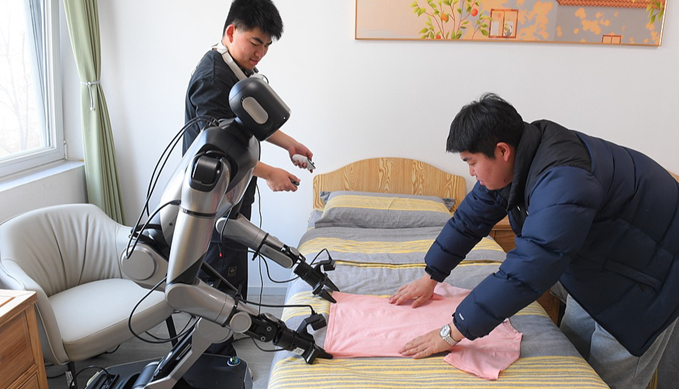
China which lost more than 300,000 peasants during Japanese occupation in 1945 donated South Asia’s largest Kidney hospital (at Polonnaruwa) during the rule of President Sirisena. As a result of China’s economic liberalizations foreign investors are now allowed to open private hospitals in mainland China. Taking another step forward in health care, China launched world’s first smart elder-care service robot station in Beijing last week. It is expected to offer residents an opportunity to experience how technology can transform daily life & senior care.
The four-story facility of approx about 1100 SQ meters provides basic elder-care services with more than 40 types of robots to help senior citizens in dining, recreation, healthcare & rehabilitation. A pancake making robot possessing an official food service license prepares freshly made pancakes in few minutes while cooking robots prepare dishes according to preset standards. The delivery robots move between tables, creating a largely automated dining experience. One floor is dedicated for family interaction for the elders. Grand children of residents can play with robots combining entertainment with education while their parents visit grandparents. Most popular is the floor where the health & recreation center is located. The reception robot guides visitors to rehabilitation & wellness services. Robots in the therapy area are generally busy offering equipment for physical rehabilitation & health monitoring.
The Moxibustion (a traditional Chinese medicine therapy) robots automatically locate acupuncture points & control temperature to prevent burns. Health-testing devices measure multiple indicators while Exoskeleton (an artificial external supporting structure) robots help seniors perform assisted movement & rehabilitation exercises. Seniors live in model apartments equipped with smart wheelchairs, companion robots & age friendly features like barrier-free layouts, anti-slip flooring & intelligent monitoring systems. The centre is expected to serve thousands of residents in the neighborhood with a daily capacity of over 300 visitors (Ref. Chinese media). Elder care will be an important social need in the years to come. Sri Lankans can get the latest developments to benefit from the ‘Silver Economy’ along the Belt & Road Initiative which passes Sri Lanka to trade with the world.
(Views expressed are personal/ Photo source www)
Video Story