

April, 27, 2026
By Prof. Samitha Hettige
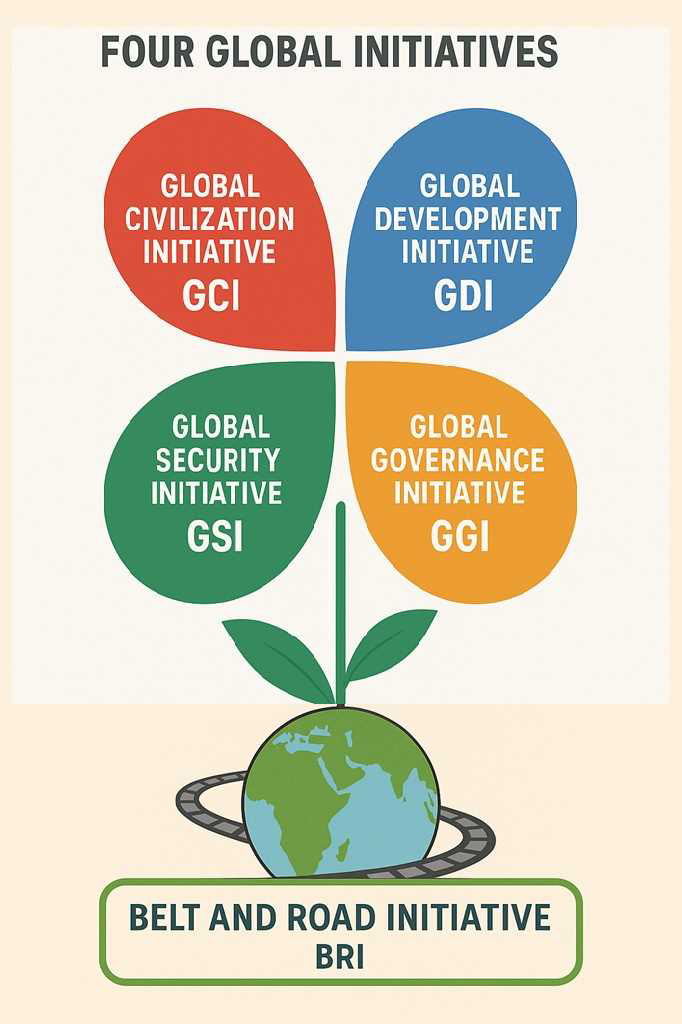
China which has never maintained colonies is one of the permanent members of the United Nations Security Council (UNSC). Among other members (i.e. USA, UK, France and Russia) it is the only one to practice one country many systems of government. The Global Security Initiative (GSI) China proposed in April 2022 focused on resolving and preventing global conflicts addressing the root causes to strengthen global security governance. By 2026 (4 years later) the GSI is quoted in more than 140 internationally acknowledged inter/ intra state documents and endorsed by more than 130 countries and international organizations (Ref. Media). Especially in the present context where military might is irresponsibly used in anti human ways, China’s GSI is being referred by nearly 75% of the global community as a stabilizing force which stresses peaceful dialogues and win-win cooperation.
The unprecedented need
Peace loving majority may still question the real objectives of the ‘Arab Spring’ which took place more than 15 years ago. It was an era which strategic human resource management was used to de-establish many stable Arab states such as Egypt, Libya & Iraq etc. especially using online tools. It may have been to obstruct the birth of new economic powers. It’s not clear why Iran was spared then but with the latest developments GSI seems to be the global majority’s obvious choice to ensure global security stability. It promotes sustainable security and a comprehensive common vision with multilateralism as its core. As the GSI aligns with the principles of the UN Charter and advocates strengthening the role of the UN to enhance cooperation for the global governance framework which China fully supports, it’s worth studying the 20 priorities of the GSI priorities mentioned below;
Views expressed are personal/ Photo source www
Video Story