

May, 7, 2026
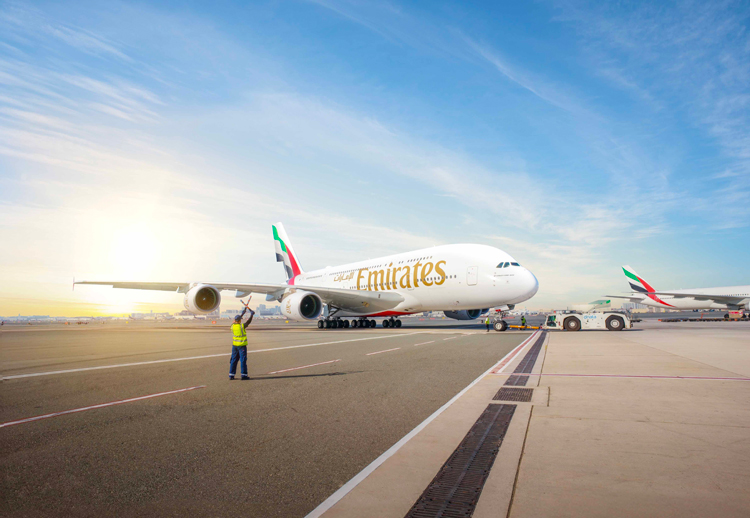
Emirates remains the world’s most profitable airline
The Emirates Group today released its 2025-26 Annual Report, achieving new record profit, revenue, and cash balance levels, despite a disruptive and challenging 12th month in its financial year.
Emirates is the world’s most profitable airline in the 2025-26 reporting period.
For the financial year ended 31 March 2026, the Emirates Group reported:
Emirates retains its place as the world’s most profitable airline, reporting:
dnata delivered solid growth and performance across its business units, reporting:
The Group declares a dividend of AED 3.5 billion (US$ 1.0 billion) to its owner, the Investment Corporation of Dubai (ICD).
The UAE corporate tax rate applied to the Emirates Group increased from 9% to 15% this year, due to the adoption of Pillar Two tax rules in the UAE. After accounting for the tax charge, the Group’s profit after tax is AED 21.0 billion (US$ 5.7 billion), up 3% from 2024-25.
His Highness Sheikh Ahmed bin Saeed Al Maktoum, Chairman and Chief Executive, Emirates airline and Group said: “These outstanding results, despite significant challenges in the last month of our financial year, reaffirm the strength and resilience of the Emirates Group’s business model, which is rooted in safety, excellence, innovation, people and partnerships.
“For the first 11 months of 2025-26, the picture across the Group was very positive. Strong demand for our products and services was driving revenue, and we were achieving healthy margins thanks to our sustained investments in product, people, technology and brand. Month after month, we were surpassing our targets.
“On 28 February, military activity massively disrupted global commercial air traffic in the Gulf region, including in the UAE. Emirates and dnata quickly mobilised to support our people and affected customers, protect our assets, and ensure business continuity.
“We are fortunate to be based in Dubai, where years of infrastructure investments and a cohesive aviation ecosystem has enabled the government to quickly secure safe corridors for commercial flights. Emirates and dnata have since gradually restored operations at DXB. Although we are still operating at a lower passenger capacity than pre-disruption, cargo operations have ramped up to support the movement of essential goods into and through the UAE.”
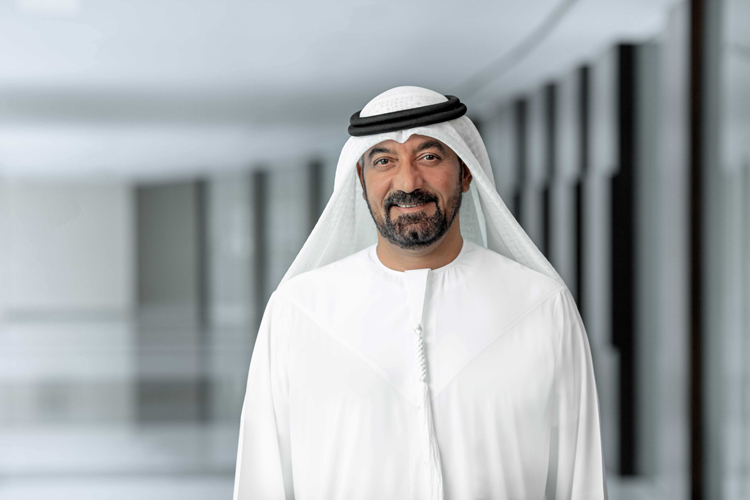
HH Sheikh Ahmed added: “The Emirates Group has navigated crises and disruptions before. Each time, we placed our focus on our customers and our people, and each time, we have bounced back stronger.
“Our people are a big part of our success, enabling us to respond with agility in a dynamic operating environment. I’d like to thank all our employees – they have truly exemplified the qualities that set the Emirates Group apart during testing times.
“I am grateful to HH Sheikh Mohamed bin Rashid Al Maktoum, and his sons HH Sheikh Hamdan and HH Sheikh Maktoum, for their stewardship of Dubai and unshaken support for aviation - the Emirates Group is proud to contribute to Dubai’s strategy under their leadership. Also, a big thank you to all our ecosystem partners who keep global aviation moving. Their collaboration and solidarity are invaluable and reflect the spirit of partnership that is central to how the Emirates Group operates.”
In 2025-26, the Group collectively invested AED 17.9 billion (US$ 4.9 billion) in new aircraft, facilities, equipment, and the latest technologies to support its growth plans.
The Group’s total workforce grew by 8% to 130,919 employees, as Emirates and dnata continued recruitment activity around the world to support its expanding operations and boost its future capabilities. The Group’s UAE national workforce also grew to surpass 4,000, showing the success of its programmes to attract, grow and retain local talent.
Commenting on the outlook for 2026-27, Sheikh Ahmed said: “Right now, military activities between the US, Israel and Iran are paused under a ceasefire agreement. We hope for a clear resolution to the hostilities soon, and a return to market stability. But in the meantime, we are not sitting on our hands.
“From a fuel perspective, Emirates is well-hedged until 2028-29; and we have worked with our suppliers to secure the volumes required to support our current operations and our scaling up to pre-disruption levels. At dnata and across the Group, our business streams, scale, portfolio mix, and years of investments give us the resilience and agility to address any near-term challenges.
“The Emirates Group enters 2026-27 with very strong cash reserves, which enable us to progress with our plans to strengthen our business without knee-jerk cost control measures. Our aircraft deliveries and retrofit programme will continue apace, as well as our planned investments in new facilities and equipment. Emirates and dnata will stay focused on offering industry-leading products and customer experiences, differentiating ourselves on the global stage, attracting the best talent, and delivering value to the communities we serve.
“Our fundamentals are strong. The Emirates Group’s proven business model is unchanged. Dubai’s place at the nexus of global commerce, trade and travel flows is unchanged. Our ambition to be the best in the world, and to be of service to the world, is unchanged.”
Emirates performance
Emirates’ total passenger and cargo capacity grew 1% to 60.6 billion ATKMs in 2025-26.
During the year, Emirates launched four new destinations – Da Nang, Hangzhou, Siem Reap and Shenzhen; and added services to existing destinations to meet customer demand. By 31 March, Emirates’ global network spanned 152 cities in 80 countries. Emirates also grew its partnerships to 32 codeshare and 117 interline partners, providing customers smooth access to over 1,700 cities beyond its network.
Emirates grew its passenger fleet with the delivery of 15 Airbus A350 aircraft this year, enabling the airline to offer even more customers its latest products, including the popular Premium Economy Class and a new-generation inflight entertainment system. By 31 March, Emirates had 19 A350s in its fleet flying to 21 destinations.
Total fleet count at year end was 277 units, with an average fleet age of 10.8 years.
At the 2025 Dubai Airshow, Emirates announced further fleet investments worth US$ 41.4 billion at list prices – for 65 more Boeing 777-9s and 8 more A350-900 aircraft. At 31 March, Emirates’ order book had 367 aircraft, comprising of: 54 A350s, 270 Boeing 777x, 35 787s, and 8 777Fs, with deliveries scheduled through to 2038.
By strategically deploying capacity to serve surging demand across markets, Emirates’ total revenue for the financial year increased 2% to AED 130.9 billion (US$ 35.7 billion). Currency fluctuations in some of the airline’s major markets positively impacted the airline’s profitability by AED 332 million (US$ 90 million).
Emirates’ strong commercial performance delivered an operating cash flow of AED 32.0 billion (US$ 8.7 billion) in 2025-26 – this enables the airline to sustain its business growth plans.
Total operating costs increased by 2% from last financial year. Fuel and employee cost were the airline’s two biggest cost components in 2025-26, followed by cost of ownership (depreciation and amortisation). Fuel accounted for 29% of operating costs compared to 31% in 2024-25. The airline’s fuel bill decreased slightly to AED 31.2 billion (US$ 8.5 billion) compared to AED 32.6 billion (US$ 8.9 billion) the previous year, as lower average fuel price (down 7%) offset a higher uplift of 1% from increased flying.
Due to strong travel demand across market segments, and the airline’s ability to earn customer preference through its strong network, high quality products and services, Emirates hit a new record profit after tax of AED 19.7 billion (US$ 5.4 billion), exceeding last year’s AED 19.1 billion (US$ 5.2 billion) result with an outstanding net profit margin of 15.0%. This is the best profit performance in the airline’s history, and in the airline industry for the reporting year 2025-26.
Emirates carried 53.2 million passengers (down 1%) in 2025-26, with seat capacity down by 1%. The airline reports a Passenger Seat Factor of 78.4%, a marginal decline from 78.9% last year. Passenger yield was higher by 4% at 38.1 fils (10.4 US cents) per Revenue Passenger Kilometre (RPKM).
Emirates continued to invest in delivering ever better customer experiences. In November, the airline announced a deal with Starlink to equip its fleet with high-speed Wi-Fi. Emirates quickly rolled out Starlink deployment, and by 31 March, 21 aircraft were already fitted and offering best-in-sky connectivity to customers, with more to follow.
During the year, the airline’s US$ 5.0 billion retrofit programme continued at pace. To date, 91 aircraft (out of 215 units earmarked) have completed a full cabin refresh, to feature Emirates’ latest inflight products including the popular Premium Economy seats.
On ground, Emirates First - a new exclusive check in lounge dedicated to First Class customers and Skywards Platinum members was opened at Emirates Terminal 3 in Dubai; complimentary Chauffeur Drive services for First and Business Class customers were introduced in Tokyo Narita and Kansai International, and complimentary bus services for Economy Class customers in Clark.
Emirates launched a new “Accessible and Inclusive Travel Hub” on emirates.com to help travellers with varying accessibility requirements plan their journey. It also introduced new onboard sensory products and fidget toys for children and adults, and organised “travel rehearsals” at dozens of airports around the world to help ease travel anxiety for children with autism and their families.
This year, Emirates signed an agreement with Dubai Investments Park to secure a site for Emirates’ Cabin Crew Village, a multi-billion dirham residential community for 12,000 crew when completed; opened a new flight crew training centre to support the airline’s fleet growth; and launched the Emirates Centre of Hospitality to provide world-class hospitality training for its 25,000-strong cabin crew.
Emirates Skywards marked its 25-year anniversary with a high-visibility campaign and enhanced reward opportunities for members during the year. Highlights included: offering Classic Rewards redemptions on all flydubai flights in all cabins; Classic Rewards and Upgrade Rewards redemptions in Emirates Premium Economy; and the charity auction of 7 rare Skywards membership numbers with Platinum tier status.
Emirates SkyCargo delivered an outstanding year, carrying 2.4 million tonnes of goods around the world, up 3% from the previous year.
The delivery of 5 new Boeing 777 freighters during the year enabled the division to grow its freighter capacity by 13%.
Emirates SkyCargo reported a solid revenue of AED 16.2 billion (US$ 4.4 billion), contributing 12% to Emirates’ total revenue. Cargo yield per Freight Tonne Kilometre (FTKM) decreased by 3%, due to market pressure, and the impact of tariffs on trade particularly in eCommerce.
Overall, Emirates SkyCargo’s performance reflects the division’s ability to win customer preference through its suite of specialist logistics solutions, the power of Emirates’ global network, Dubai’s world-class intermodal logistics capabilities, and its ongoing investments in digital technology, infrastructure, and products.
During the year, SkyCargo expanded its freighter network to 44 points with the addition of Bangkok, Budapest, Liege, and Tokyo Narita; added frequency to existing freighter routes; and grew its trucking network.
The division continued its strategy of offering tailored cargo solutions as a key differentiator and value proposition. This year, it launched Emirates Courier Express – an innovative door-to-door cross border delivery solution; and a new Aerospace and Engineering suite of specialist services to transport time-critical components for the aviation, engineering, defence and space industries.
At the end of March, Emirates’ SkyCargo’s total freighter fleet stood at 13 Boeing 777Fs, with 8 more units pending delivery.
In addition to 20 new aircraft deliveries during the year, Emirates also bought out 29 A380s and 5 Boeing 777s at the end of their leases. To support the fleet programme, Emirates raised AED 10 billion in aircraft financing via local and international markets, including Japanese operating leases, insurance‑backed financing, French Tax Lease and Export Credit Agency–backed structures.
With a strong cash balance and operating cash flow, Emirates fully met all contracted obligations during 2025-26, including aircraft pre-delivery payments and financing liabilities as they become due, utilising our cash reserves which stood at AED 54.9 billion (US$ 15.0 billion) as of 31 March.
Emirates continued to deploy simple forward contracts to hedge against Brent crude oil and refining margins; and used long-term interest rate hedges to mitigate the impact of interest rate fluctuations. With significant currency exposure due to its global presence, Emirates continued to manage foreign exchange rate risk through currency options, forward contracts, and natural hedges. Its systematic approach ensures cash flow predictability against volatile market shifts, reinforcing financial stability.
Under Emirates Group companies and subsidiaries, Emirates Flight Catering (EKFC) and MMI/Emirates Leisure Retail (ELR) reported notable contributions in 2025-26.
EKFC grew revenue from external customers by 12% to AED 1.2 billion (US$ 329 million), uplifting 16.2 million meals during 2025-26 for its 100+ airline customers in Dubai, and winning catering contracts for complex, large-scale global events such as the Dubai Airshow and Dubai Rugby Sevens.
MMI/ELR posted a revenue of AED 2.9 billion (US$ 803 million), down 5% due to a challenging market for its international business, and the rollback of the municipality tax waiver in the UAE. During the year, ELR acquired the remaining 25% stake in Air Ventures LLC, securing full ownership of the entity which operates airport retail and F&B outlets in the US. ELR & MMI also opened new locations across its F&B portfolio, expanded partnerships with homegrown brands, and strengthened its digital platforms to improve customer service and engagement.
dnata performance
dnata increased its profit before tax by 2% to AED 1.6 billion (US$ 437 million) in 2025-26, with all business divisions reporting a solid performance, and notable contributions from its airport operations and catering and retail divisions. dnata’s profit after tax stood at AED 1.3 billion (US$ 367 million), a 4% decrease, which is primarily due to a higher UAE tax rate applied in 2025-26.
dnata's total revenue increased by 12% to hit a new record of AED 23.6 billion (US$ 6.4 billion), driven by increased flight and travel activity across the world, particularly in its major markets: Australia, Europe, the UAE, UK, and US.
dnata’s international businesses account for 77% of its revenue, up 2% points from the previous year.
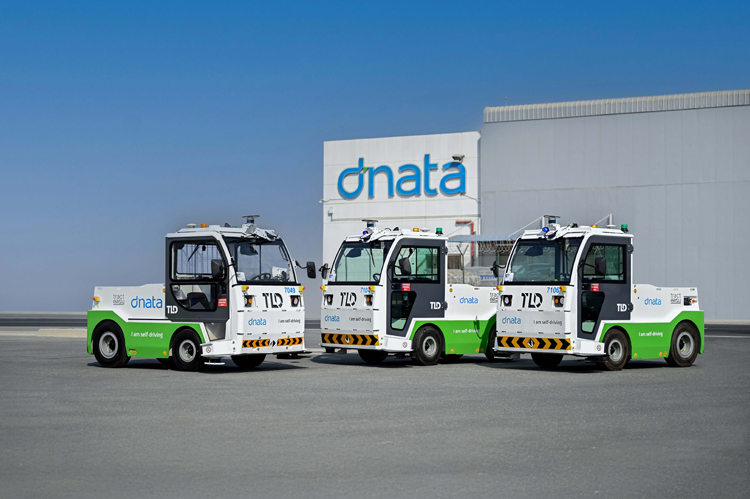
Growing its future capabilities and capacity to meet customer needs, dnata’s investments in 2025-26 amounted to AED 858 million (US$ 234 million). Significant investments during the year included: new catering facilities in Perth and Western Sydney, a new cargo facility in Amsterdam, and new electric and hybrid ground support equipment for its airport operations as part of its environmental strategy.
dnata also acquired Wymap Group, an air cargo trucking specialist in Australia and New Zealand; and a 7% stake in WonderMiles, a New Distribution Capability (NDC)-enabled booking platform to strengthen our corporate and business travel offering.
dnata continued to actively manage its diverse portfolio of business interests in line with its corporate strategy. This year, dnata disposed of its 75% stake in Super Bus, which operates sightseeing tours in the UAE; and in Germany, it exited cargo operations in Cologne/Bonn.
In 2025-26, dnata’s operating costs increased by 13% to AED 22.1 billion (US$ 6.0 billion), in line with expanded operations in its Airport Operations, Catering & Retail, and Travel divisions.
dnata’s cash balance increased by AED 1.0 billion to AED 4.7 billion (US$ 1.3 billion), primarily due to operating cash flow. The business saw a positive operating cash flow of AED 2.4 billion (US$ 658 million) in 2025-26, reflecting healthy revenue contributions from its business divisions.
Revenue from dnata’s Airport Operations, including ground and cargo handling increased to AED 11.2 billion (US$ 3.1 billion).
The number of aircraft turns handled by dnata globally grew by 12% to 888,793; and cargo handled increased by 2% to 3.2 million tonnes, reflecting new contracts won, and increased flight activity by dnata’s airline customers across markets, particularly in its international operations.
This year, dnata announced a joint venture agreement to launch ground handling and cargo operations in Azerbaijan when the new Alat International airport opens in late 2027.
In Amsterdam, dnata opened a new and fully automated cargo facility, one of the largest of its kind with an annual capacity of 600,000 tonnes, representing a €70 million investment.
In Italy, dnata integrated all its ground operations under its brand and business organisation after fully acquiring its local subsidiary. It also committed a further €20 million to procure modern ground service equipment (GSE) in Rome, and €25 million to build a new cargo facility in Milan. In Manchester, dnata launched its signature marhaba meet-and-greet services.
dnata’s Catering & Retail business accounted for AED 8.1 billion (US$ 2.2 billion) of dnata’s revenue, up by 13%, reflecting the success of its strategy to focus its service portfolio on strategic customer segments. The inflight catering business uplifted 115.3 million meals to airline customers, a 1% increase from last year.
The division won 22 contract renewals and 13 new customers in 2025-26, including a 5-year agreement to manage Aer Lingus’ inflight retail programme. It also expanded into Indonesia via a long-term management contract to provide expert catering support at Denpasar International Airport.
Revenue from dnata’s Travel Services division grew by 5% to AED 4.1 billion (US$ 1.1 billion), with strong contributions from its UK travel business and Destination Asia.
Total transaction value (TTV) of travel services sold increased by 3% to AED 10.1 billion (US$ 2.7 billion), reflecting the division’s ability to deliver relevant B2B and B2C travel products across customer segments globally.
Throughout the year, the Travel division continued to strengthen its product portfolio, expand its partnerships and products for B2B and B2C customers, and enhance its technology to better serve customers and optimise operations. Notably, in 2025-26, Imagine Cruising officially launched in the US; Destination Asia introduced a specialist service for expedition cruising, and its Events and Cruise Asia brands opened a new office in Seoul; and dnata Representation Services launched a new B2B online booking portal for its GSA products for travel trade partners.
In the UAE, dnata Travel signed on new corporate clients and new airline GSA contracts; while Arabian Adventures launched Nomad Garden, a new luxury desert experience, and enhanced its presence in Oman with bespoke itineraries.
In the UK, after completing a strategic review of its travel businesses, dnata announced the divestment of its online travel brands - Travel Republic and Netflights.
Sustainability
The Emirates Group continued to invest resources, and work with partners to reduce its impact on the environment and grow engagement with communities.
Highlights of the Group’s environmental initiatives in 2025-26 include:
Highlights of the Group’s community engagement initiatives in 2025-26 include:
More details on the Group’s environmental, social and governance initiatives can be found in the full 2025-26 Emirates Group Annual Report.
The 2025-26 Annual Report of the Emirates Group – comprising Emirates, dnata and their subsidiaries - is available at: www.theemiratesgroup.com/annualreport.
US$ figures are converted at 1US$ = 3.67AED and are based on the AED figures rounded off in millions.
Video Story