

June, 9, 2026
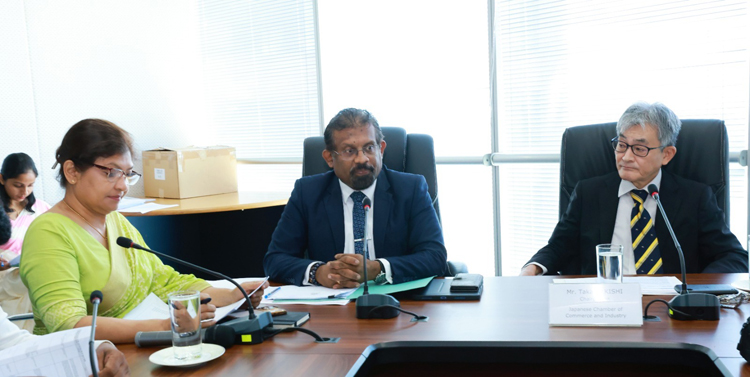
In a reaffirmation of the enduring economic partnership between Sri Lanka and Japan, the Board of Investment (BOI) of Sri Lanka convened the Fourth Working-Level Meeting of the Japan–Sri Lanka Committee on Business Environment on 2 June 2026 in Colombo. Organized in close collaboration with the Embassy of Japan, the Japan External Trade Organization (JETRO), the Japan International Cooperation Agency (JICA), and the Japanese Chamber of Commerce and Industry of Sri Lanka (JCCI-SL), the session marked another milestone in a sustained diplomatic and commercial dialogue between the two nations.
At its core, the quarterly working-level committee serves as a structured mechanism for frank, solution-oriented dialogue between Sri Lanka’s government and Japanese businesses operating on the island. Far from ceremonial, these meetings are designed with a practical mandate: to review progress on previously raised investor concerns, examine persistent structural challenges, and forge actionable remedies that enhance Sri Lanka’s investment climate.
This working model — bridging diplomatic formality with commercial pragmatism — has become increasingly valued by Japanese businesses that require not just policy assurances, but visible, verifiable follow-through. In an era when global investors weigh regulatory predictability as heavily as market potential, the committee’s track record of structured engagement sends a strong signal about Sri Lanka’s commitment to investor relations.
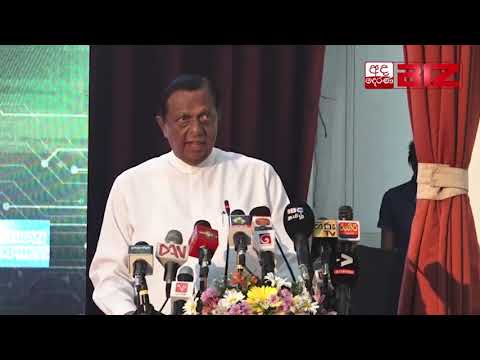
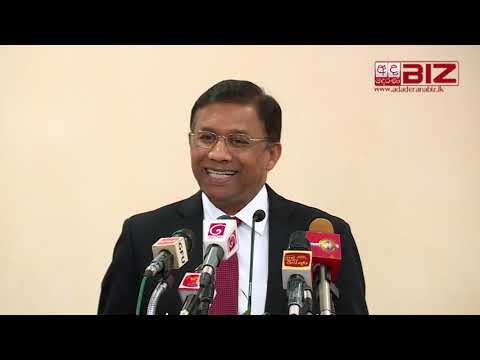
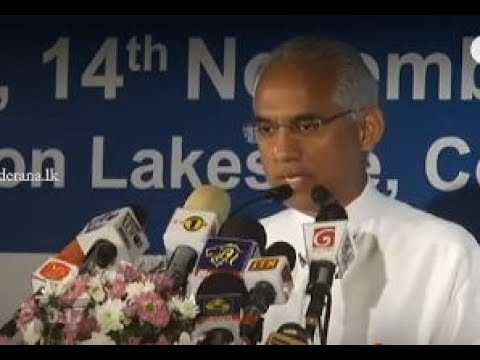
Opening the proceedings, Dr. Sulakshana Jayawardena, Acting Chairman of the BOI, used the occasion to reinforce Sri Lanka’s ambitions as a competitive investment destination within the broader South and Southeast Asian region. Acknowledging the depth of the Japan–Sri Lanka economic relationship, Dr. Jayawardena underscored that regular, candid engagement with the Japanese business community is not a diplomatic courtesy — it is a strategic necessity. Resolving investor pain points promptly, he argued, is inseparable from Sri Lanka’s wider goal of attracting and retaining high-quality foreign direct investment.
Speaking on behalf of the Japanese business community, Mr. Kishi Takashi, Chairperson of the JCCI-SL, echoed these sentiments with measured optimism. He commended the committee as an effective vehicle for constructive dialogue and acknowledged the cooperative spirit extended by Sri Lankan government agencies. Yet his central message carried a clear expectation: that investor confidence is built not through dialogue alone, but through the timely resolution of the issues raised within it. His remarks carried the quiet weight of a business community that has invested in Sri Lanka and is watching closely.
Japan’s economic relationship with Sri Lanka is among the island’s most historically significant. From large-scale infrastructure development financed through Official Development Assistance to private sector investments spanning manufacturing, tourism, pharmaceutical cosmetic and services, Japanese capital and expertise have shaped much of modern Sri Lanka’s productive landscape. JICA and JETRO remain deeply engaged — the former through development co-operation, the latter through trade and investment facilitation — while the Embassy of Japan provides the diplomatic framework that enables such engagement to proceed with mutual trust.
Against the backdrop of Sri Lanka’s ongoing economic recovery and reform agenda, this relationship assumes renewed importance. Japanese businesses tend to take a long view — they invest for stability, quality, and regulatory consistency. The fact that they continue to operate, expand, and engage through formal channels such as this committee is itself a vote of confidence in Sri Lanka’s trajectory.
What distinguishes this committee from many other bilateral engagement formats is its built-in accountability mechanism. Each session opens with a review of issues documented in previous meetings — creating a rolling record of commitments made and progress achieved. For Japanese companies, accustomed to precision and follow-through in their home market, this structure resonates. It transforms dialogue from aspiration into process.
This approach also benefits the BOI and participating government ministries, providing a clear record of investor concerns and a public benchmark against which performance can be measured. In the competitive arena of foreign direct investment attraction — where Sri Lanka vies with regional peers for Japanese capital — such demonstrated accountability is not a minor virtue. It is a differentiator.
As Sri Lanka continues to position itself as an open, reform-oriented economy in a rapidly evolving regional landscape, partnerships of this nature are not optional — they are foundational. Japan represents both a development partner of long standing and a commercial relationship with substantial room for growth, particularly in areas such as technology transfer, green industry, and high-value manufacturing.
The BOI’s continued stewardship of the Japan–Sri Lanka Committee on Business Environment — alongside the proactive participation of JETRO, JICA, the Embassy of Japan, and the JCCI-SL — ensures that the investment relationship is guided not by assumption, but by active, evidence-based diplomacy. For investors, this is exactly the assurance they need. For Sri Lanka, it is the foundation of a credible investment narrative.
Video Story