

July, 3, 2026
In the highly competitive global Foreign Direct Investment (FDI) landscape, multinational apparel brands and institutional investors are radically pivoting. The primary criteria for selecting manufacturing destinations have evolved past cheap labor and rapid throughput; today’s market demands uncompromising environmental stewardship, supply chain traceability, and flawless regulatory compliance.
This shift is heavily underscored by the mandate of the recent World Environment Day, which focused globally on "Climate Action" and was observed locally in Sri Lanka under the theme "Let us take action to mitigate the impacts of climate change." The core objectives of this global milestone, accelerating emissions reductions, transitioning to circular/closed-loop systems, eliminating industrial waste, and embedding ecosystem restoration directly into macroeconomics, are no longer optional values; they are existential imperatives for international trade.
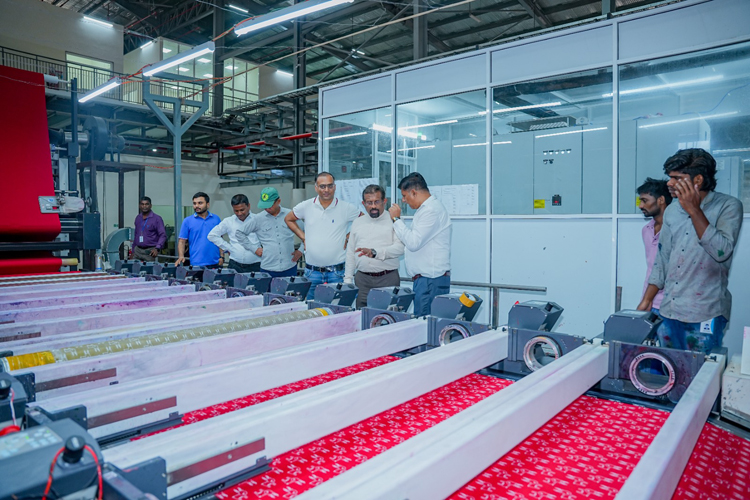
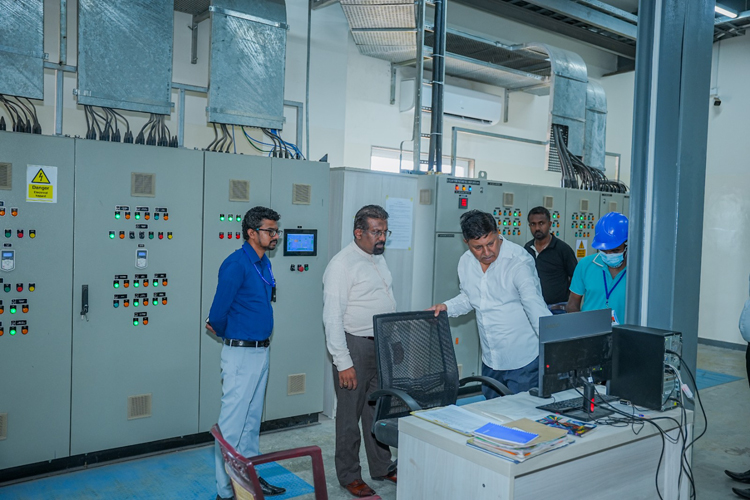
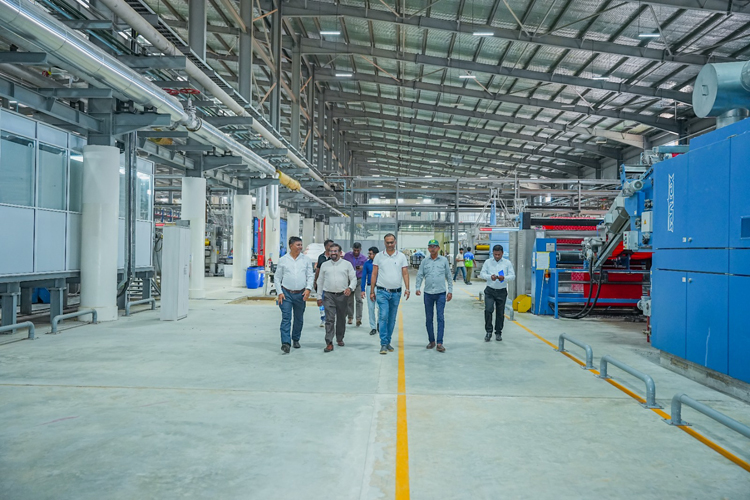
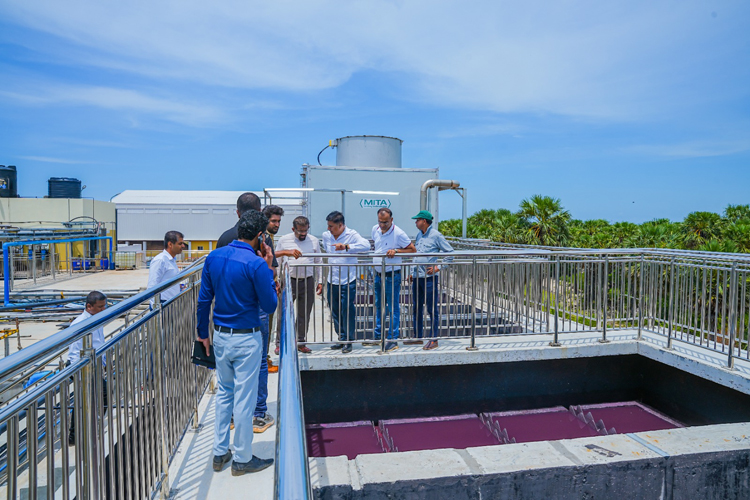
During a recent visit to the Eravur Fabric Park, the Director General of the BOI, Dr. Sulakshana Jayawardena, toured the facilities of Jay Jay Mills — the zone’s pioneering anchor investor — gaining first-hand insight into the company’s significant investment in advanced water purification infrastructure. Impressed by the scale and sophistication of Jay Jay Mills’ effluent treatment systems, Dr. Jayawardena commended the company’s commitment and emphasized that:
“An enterprise that secures BOI approval is, by definition, operating within the country’s strictest environmental safeguards. Eravur is where we have put that principle into a physical, verifiable system. It is not a claim we are asking investors to take on faith — it is a framework they can inspect, measure, and audit.”
In this paradigm, the Board of Investment of Sri Lanka (BOI) has established an ironclad national benchmark: BOI approval is not merely an administrative license to operate; it is a seal of absolute compliance with the country's strictest environmental safeguards. If an enterprise operates within any BOI jurisdiction, its very existence implies that it inherently fulfills the nation's most rigid environmental laws. Across the island, all BOI industrial zones strictly adhere to these uncompromising national environmental compliance frameworks, ensuring zero ecological degradation. Representing the absolute pinnacle and blueprint of this standard is the newly established Eravur Fabric Park (the Textile Manufacturing Zone at Punnaikudah, Eravur) in the Eastern Province.
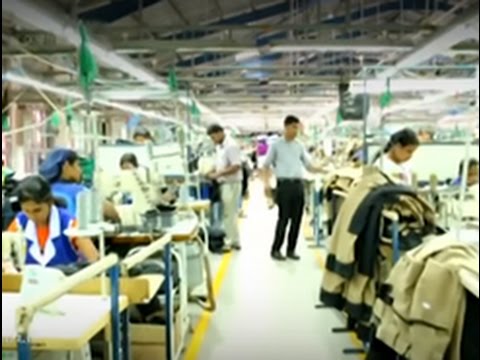
The 260-acre Eravur Textile Manufacturing Zone was conceived as a highly strategic intervention to strengthen and vertically integrate Sri Lanka’s world-class apparel sector. Traditionally dependent on imported fabrics, local fabric manufacturing allows Sri Lanka to capture higher value within the supply chain, aggressively attracting foreign fabric mills and multinational investors who prioritize localized, low-carbon sourcing.
Crucially, the Eravur project serves as a beacon for economic revitalization and employment generation in the Eastern Province. By introducing heavy industrial investments to regional areas, the BOI ensures that economic growth is distributed equitably across the island, providing thousands of skilled jobs while maintaining an unyielding grip on ecological preservation.
To balance rapid economic expansion with ecosystem preservation, the BOI has transformed the Eravur Fabric Park into a showcase of world-class pollution control and technological governance. The park proves that entering the Sri Lankan manufacturing ecosystem under a BOI approval mandates total compliance with an advanced, multi-tiered defensive framework:
Before development commenced, the zone underwent an exhaustive Environmental Impact Assessment (EIA) in strict compliance with the National Environmental Act, securing comprehensive clearance recommendations from the Central Environmental Authority (CEA). Comprehensive hydrodynamic and dispersion modeling executed by the Lanka Hydraulic Institute (LHI) scientifically verified that treated industrial wastewater could be discharged into marine waters safely with zero adverse impacts. Even under extreme scenarios of discharging up to 15,000 cubic meters per day, the pollutant concentrations at the edge of the discharge plume were found to be completely negligible, ensuring the coastal ecosystems of Punnaikudah remain pristine.
Under the BOI standard, wastewater treatment is handled through an uncompromising dual-layer system:
Compliance under the BOI standard is not verified by faith or occasional manual testing; it is enforced through continuous, automated digital surveillance. The Eravur Fabric Park utilizes a revolutionary dual-monitoring system:
Directly aligning with the objectives of World Environment Day, the BOI uses the Eravur benchmark to actively steer the manufacturing sector toward a circular economy. Companies operating within the zone are strongly incentivized to implement progressive wastewater recovery and closed-loop reuse mechanisms within their own facilities. This intense focus on resource conservation minimizes raw water extraction, reduces the overarching environmental footprint, and satisfies the strict sustainability mandates of modern global fashion houses.
The Textile Manufacturing Zone at Eravur stands as irrefutable proof of Sri Lanka's modern manufacturing ethos. It sends an unambiguous message to foreign direct investors and global consumer markets: Sri Lanka does not compromise its environment for industrial growth. By ensuring that all BOI zones rigidly adhere to the country's most stringent environmental compliance, and by setting Eravur as the absolute standard of excellence, the BOI guarantees that industrial growth is synonymous with climate action and environmental stewardship. For international investors, sovereign funds, and global brands, a BOI-approved operation in Sri Lanka represents the ultimate pinnacle of sustainable manufacturing.
Video Story