

July, 10, 2026
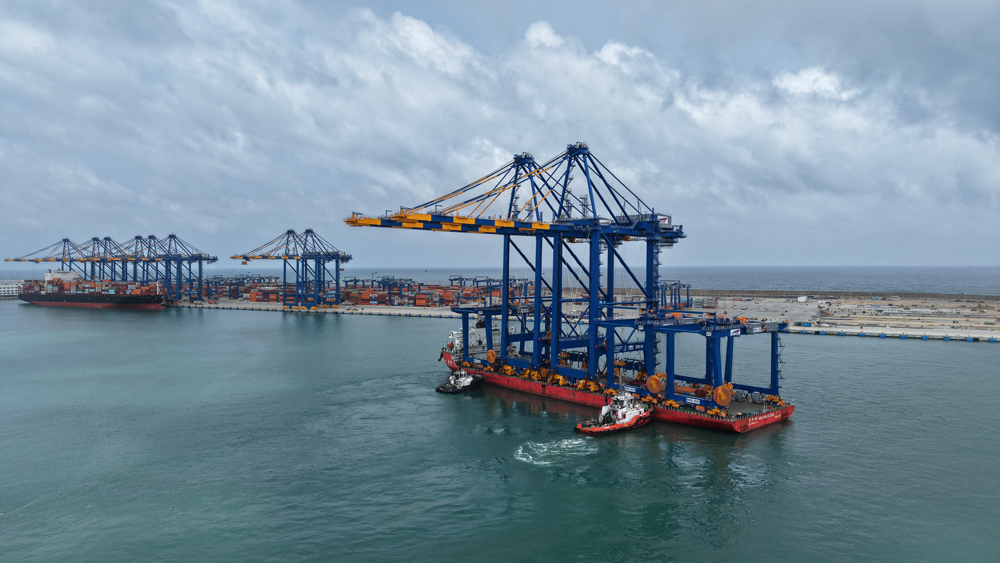
Colombo West International Terminal (Private) Limited (CWIT) is fulfilling its unwavering commitment towards providing a game-changing experience for the maritime community. CWIT, in line with its aspirations for shaping the futurity of shipping has reached another significant milestone with the timely arrival of Two (2) Ship-to-Shore electric cranes and Seven (7) Cantilever Rail Mounted Gantry Cranes officially commencing its Phase 2 capacity development Stage. The cranes, being the tallest in the region are the best in its Genre and is a major investment in modern port infrastructure. This investment reinforces CWIT’s commitment towards delivering faster, smarter, and more sustainable cargo handling operations while providing schedule integrity and reliable connections for the shipping industry.
The latest equipment arrives at the back of an exceptional first year for the terminal, during which CWIT handled one million twenty-foot equivalent units (TEUs), the fastest any terminal at the Port of Colombo, has reached the one-million-TEU milestone during its inaugural year of operations. This achievement reflects the terminal’s operational excellence, advanced technology, and the confidence placed in CWIT by leading global shipping lines.
The arrival of the new cranes marks another important step in expanding the terminal’s capacity while supporting Sri Lanka’s ambition of strengthening its position as a leading maritime and logistics hub in the Indian Ocean. This capital investment augments the region’s connectivity and enhances Port of Colombo as an Optimum hub, amidst the disruption in trade flows, due to the uncertainty in the Middle East.
Located in the Port of Colombo, CWIT is one of Sri Lanka’s most significant maritime infrastructure projects. Developed with an investment of approximately USD 800 million,
the terminal is a public-private partnership between Adani Ports and Special Economic Zone Limited, John Keells Holdings PLC (JKH), and the Sri Lanka Ports Authority (SLPA).
The project combines international expertise, local leadership, and strategic investment to create a world-class container terminal capable of serving the largest shipping lines in the world. Since commencing operations, CWIT has played a key role in enhancing the Port of Colombo’s competitiveness while supporting economic growth, regional trade connectivity, and employment opportunities for the island nation.
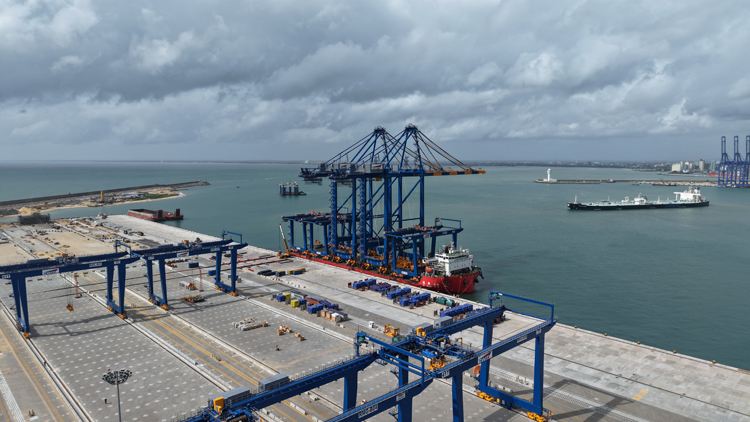
CWIT is the first fully automated deep-water container terminal in Sri Lanka. Equipped with advanced automation, electrified cargo handling systems, and intelligent digital technologies, the terminal has been designed to surpass the current needs of global shipping and is geared to the futurity of shipping
Featuring a 1,400-metre quay, 20-metre water depth, and an annual handling capacity of approximately 3.2 million TEUs when completed, the facility can accommodate the world's largest container vessels, 3 in number, concurrently while delivering faster turnaround times and improved operational efficiency.
The arrival of this batch of cranes further strengthens these capabilities. Designed for precision, productivity, and energy efficiency, the cranes will enhance cargo handling capacity while supporting greener operations through reduced emissions and electrified technology. The investment reflects CWIT’s commitment to building future-ready infrastructure that improves operational performance while contributing to sustainable port development.
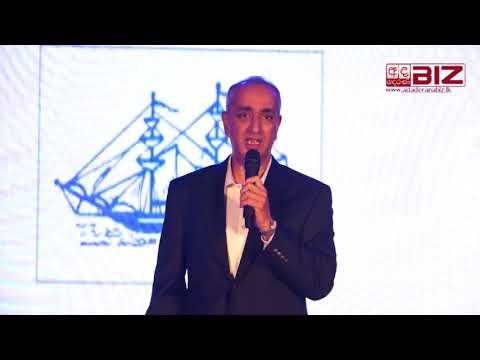
Commenting on the latest milestone, Munish Kanwar, Chief Executive Officer of Colombo West International Terminal (Private) Limited, said the arrival of the new cranes reflects CWIT’s long-term vision of creating one of the region’s most advanced container terminals.
"The arrival of these new electric cranes marks another important milestone in our Phase 2 development journey. They are not only the tallest in the region but also represent our continued investment in world-class technology that supports faster, smarter, and more sustainable cargo handling operations."
He noted that CWIT’s success in handling one million TEUs within its first year demonstrates the terminal’s operational capabilities and the dedication of its workforce.
"Our greatest strength is our people. The commitment, professionalism, and expertise of our employees have enabled us to achieve record-breaking performance in our first year of operations. As we continue expanding, we remain confident that Sri Lankan talent will continue to drive innovation, operational excellence, and exceptional customer service."
Kanwar added that Phase 2 represents another step towards delivering greater efficiency for customers while supporting Sri Lanka’s growing role in global maritime trade. He reaffirmed CWIT’s commitment to investing in sustainable technologies, strengthening regional trade connectivity, and delivering service excellence through continuous innovation.
The arrival of the two Ship-to-Shore (STS) cranes and seven new Cantilever Rail Mounted Gantry Cranes (CRMGs) is more than the delivery of new equipment—it represents another milestone in the ongoing transformation at the Port of Colombo. With a further four STS cranes and five CRMGs expected to arrive by the end of September, CWIT's equipment fleet will expand to 14 STS cranes and 30 CRMGs, substantially enhancing the terminal's capacity to handle growing cargo volumes. By combining cutting-edge automation, sustainable infrastructure, and strategic partnerships, CWIT continues to strengthen the Port of Colombo's ability to serve the evolving demands of global shipping.
Building on the record achievement of becoming the fastest terminal in the Port of Colombo to handle one million TEUs during its first year, CWIT is now well positioned to further enhance terminal capacity, improve operational efficiency, and support greener cargo handling operations. As Phase 2 progresses, the terminal will continue to augment the Port of Colombo’s capabilities, strengthen Sri Lanka’s position as a regional maritime and logistics hub, and contribute to the country’s long-term economic growth through world-class port infrastructure and service excellence.
Video Story