

August, 1, 2026
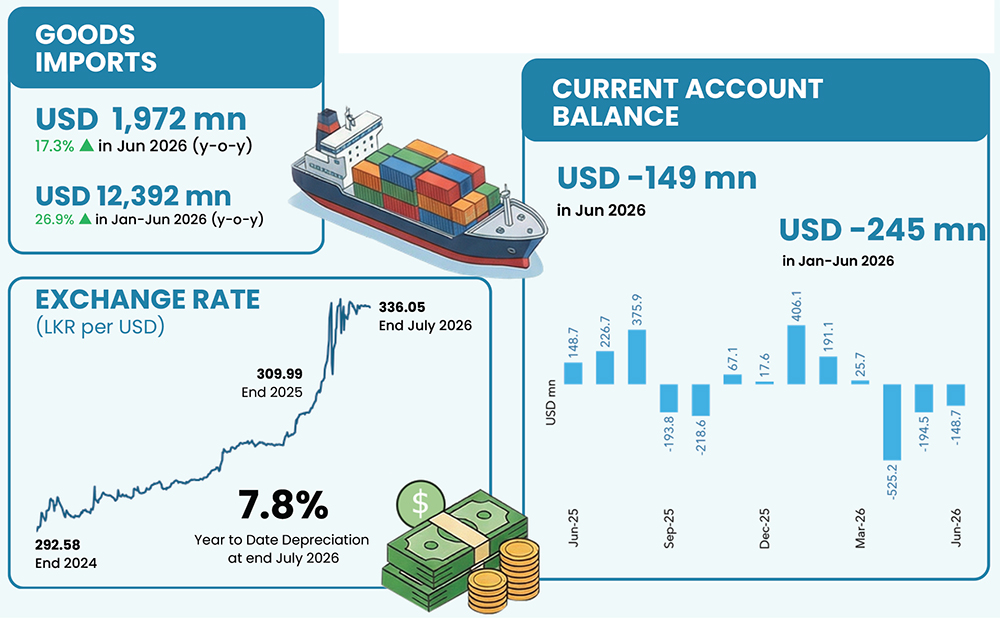
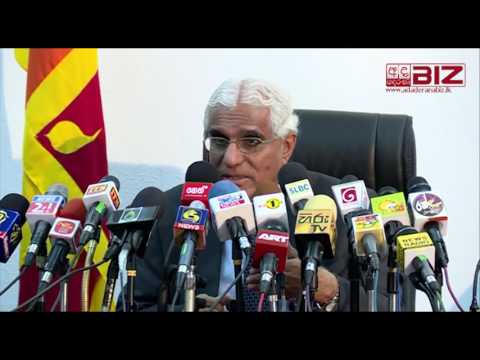
Sri Lanka’s external sector continued to face significant pressure in June 2026, primarily driven by ongoing developments in the Middle East. The Central Bank of Sri Lanka reported a monthly current account deficit of US$ 149 million for June, marking the third consecutive month the account has remained in the red.
For the first half of 2026, the cumulative current account deficit reached US$ 245 million, a sharp reversal from the surplus recorded during the same period in 2025. This downturn is largely attributed to a widening merchandise trade deficit, which expanded to US$ 5.5 billion in the first half of the year, compared to US$ 3.3 billion a year earlier. While expenditure on motor vehicle imports declined by 27.1% month-on-month in June, fuel import costs surged by 40.2% year-on-year, though they have begun to moderate from peaks seen earlier in the quarter.
The tourism sector remains one of the hardest-hit areas due to the Middle East conflict, with arrivals dropping 9.9% year-on-year in June 2026. Earnings from tourism also contracted by 10.8% during the month, falling to US$ 151 million.
In contrast to these challenges, workers' remittances provided a vital buffer for the economy. Inflows for June rose by 9.3% year-on-year to US$ 695 million, bringing the cumulative total for the first half of 2026 to US$ 4.6 billion—a 23.2% increase over the previous year.
On the financial front, Gross Official Reserves stood at US$ 6.5 billion at the end of June 2026, a figure that includes the swap facility with the People’s Bank of China and accounts for significant external debt service payments made during the month.
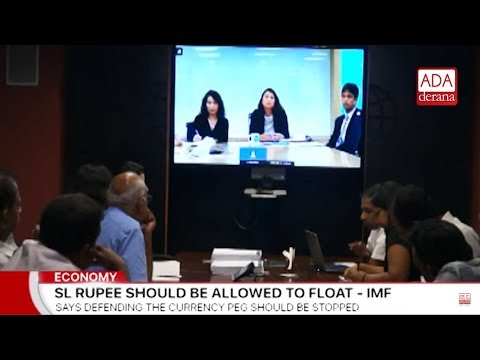
The Sri Lanka rupee has felt the weight of these external pressures, depreciating by 7.8% against the US dollar on a year-to-date basis by the end of July 2026. However, the Central Bank noted that the pace of depreciation has recently moderated and volatility has decreased following the implementation of various monetary, fiscal, and macroprudential policy measures.
Video Story