

August, 4, 2026

Sri Lanka’s labour shortage is becoming a concern across multiple sectors of the economy, with the export sector facing challenges in attracting, training, and retaining talent with the skills required to meet industry demands. Recent public discussion around proposals to recruit foreign talent for the construction sector has brought attention to the issue once again. Much of that conversation has focused on a single industry, but labour shortages extend well beyond construction.
This is not simply a matter of filling vacancies as it poses questions about workforce participation, skills development, labour mobility, and how prepared Sri Lanka’s workforce actually is for what industry will require in the years ahead. Addressing these questions is necessary if the country is to expand its export earnings and sustain economic growth.
Central to this is the balancing act between domestic labour needs and overseas employment. In 2026 thus far, 143,087 Sri Lankans have left for overseas employment, while the The Sri Lanka Bureau of Foreign Employment (SLBFE) intends to secure overseas employment opportunities to 250,000 Sri Lankans during 2026 alone. Moreover, Sri Lanka has over 1.07 million registered migrant workers employed globally, with the United Arab Emirates, Saudi Arabia, and Kuwait hosting the largest share. While migration as such is not to be discouraged, what is missing is the other half of that equation, which is about paying adequate attention to who is left to keep businesses in Sri Lanka running . Figures from within the export sector indicate the same gap. In the National Chamber of Exporters itself, which represents around 700 member companies, a large share of members are currently struggling to recruit staff, across skill levels and job types. That is a striking figure for a sector Sri Lanka depends on for foreign exchange earnings.
According to the Sri Lanka Labour Force Survey for the first quarter of 2026, the country’s labour force participation rate stood at 49.2%, while the unemployment rate was 3.7%. The total employed population was estimated at 8.1 million persons, with the services sector accounting for 50.4% of employment, followed by industry at 25.9% and agriculture at 23.7%. Youth unemployment among those aged 15 to 24 years stood at 16.1%, while female unemployment stayed higher than male unemployment across all age groups.
These figures offer only a partial picture. Businesses across sectors report ongoing difficulty sourcing talent with the skills they require and keeping employees for any length of time, which suggests the shortage has as much to do with changing labour market trends and specific skill requirements as it does with numbers.
Global labour migration patterns have also changed. Countries today compete for talent and, increasingly, for specialised knowledge and professional expertise. This has made labour mobility a more complicated matter than it was a decade ago, and requires governments to weigh domestic labour needs against how inward migration is managed.
Recognising this , the Ministry of Labour has received Cabinet approval to draft an inward labour migration policy. The policy is expected to set out a clearer mechanism for inward migration, including assessing professional qualifications and issuing work permits before visas are granted, while also identifying specialised skills that are not readily available locally and giving priority to local labour wherever possible. Such a mechanism could also support longer-term workforce planning. Knowing which specialised skills industries need today can help shape human resource development for the future, allowing policymakers and industry stakeholders to anticipate labour requirements and prepare talent for occupations that will matter more over the next five to ten years.
At the same time, where a business can only fill a fraction of its vacancies from the local labour pool there should be a way to bring in overseas talent for the remaining posts so that operations are not held back. The intent is not to replace Sri Lankan workers, but to keep businesses functioning where the domestic supply falls short. For Sri Lanka’s own export sector, these labour shortages create a distinct set of challenges. Exporters operate in international markets where productivity, technical expertise, and specialised skills carry much weight, and the concern comes down to whether Sri Lanka is preparing its workforce for what these industries will actually require.
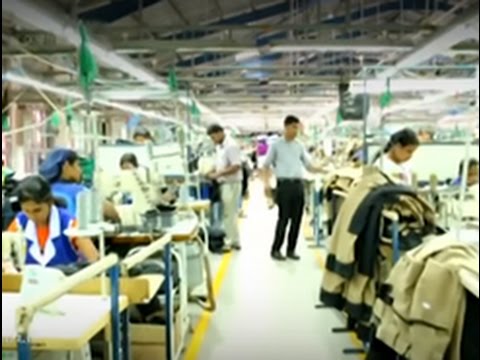
Many export-oriented industries depend on specialised skills that need industry-focused training. Manufacturing enterprises require technical personnel suited to their specific operations, while agricultural exporters need particular expertise across production and value-added processes. Building these capabilities calls for closer ties between industry, education, and vocational training.
Moreover, retention is another significant issue as employee turnover is increasingly common, with talent moving on after relatively short periods, leaving businesses to keep investing in recruitment and training while still managing day-to-day operations. Where specialised expertise cannot be sourced locally, industries need access to overseas talent for specific periods to maintain continuity in their operations. Such arrangements should complement efforts to build local capacity rather than substitute for it. Developing specialised skills among Sri Lankan talent is central to any lasting solution to these labour market challenges.
The extent of the problem becomes clearer when looked at from an operational standpoint. A business running at around half its required staff can barely function, and if that number drops further, closing down becomes the only realistic option. Under those conditions, it is difficult to see how export targets are to be met.
These concerns are not new. Exporters have been raising them for a long time, with little visible change on the ground. If the shortage goes unaddressed and industries begin to struggle as a result, another question that follows is who is answerable when that happens? This is not about establishing where responsibility lies before the damage becomes difficult to reverse.
Addressing immediate labour needs has to go hand in hand with longer-term investment in skills development, workforce planning, and worker retention. For Sri Lanka to grow its export economy, building a labour force equipped to meet changing industry needs will be an important part of supporting both economic activity and future employment.
Video Story