

August, 10, 2026
By Haridhu Abeygoonaratne, Managing Director/COO – SimCentric /Vice Chair – SLASSCOM

At first glance, it seems improbable that a company developing advanced military simulation technologies for organisations such as the US Marine Corps, the US Military Academy, the UK Ministry of Defence and armed forces across NATO and Commonwealth countries would have its engineering nerve centre in Colombo. Yet, that is precisely the story of SimCentric! Over the past seventeen years, our venture has evolved into a globally recognised defence technology company, specialising in the development of innovative commercial off-the-shelf (COTS) products that are transforming training and operational effectiveness worldwide, driven from Sri Lanka.
People often ask how we managed to scale from a small engineering team into a business serving some of the world’s most demanding customers. Truth be told, it took years of building capability, refining products, earning trust and delivering consistently. My experience has profoundly shaped the way I think about business growth and economic development. Whether you’re building a company, creating a new industry or positioning a country as an investment destination, the early years are spent establishing foundations that are largely invisible from the outside. Looking back, one of the best decisions we made was choosing to build from Sri Lanka rather than treating it as a temporary base before relocating elsewhere.
Personally, the most important business lesson extends well beyond our own growth. SimCentric’s journey demonstrates that Sri Lanka is not simply capable of supplying talent to the world; it is capable of creating globally competitive intellectual property, pioneering advanced technologies and building businesses that expand internationally.
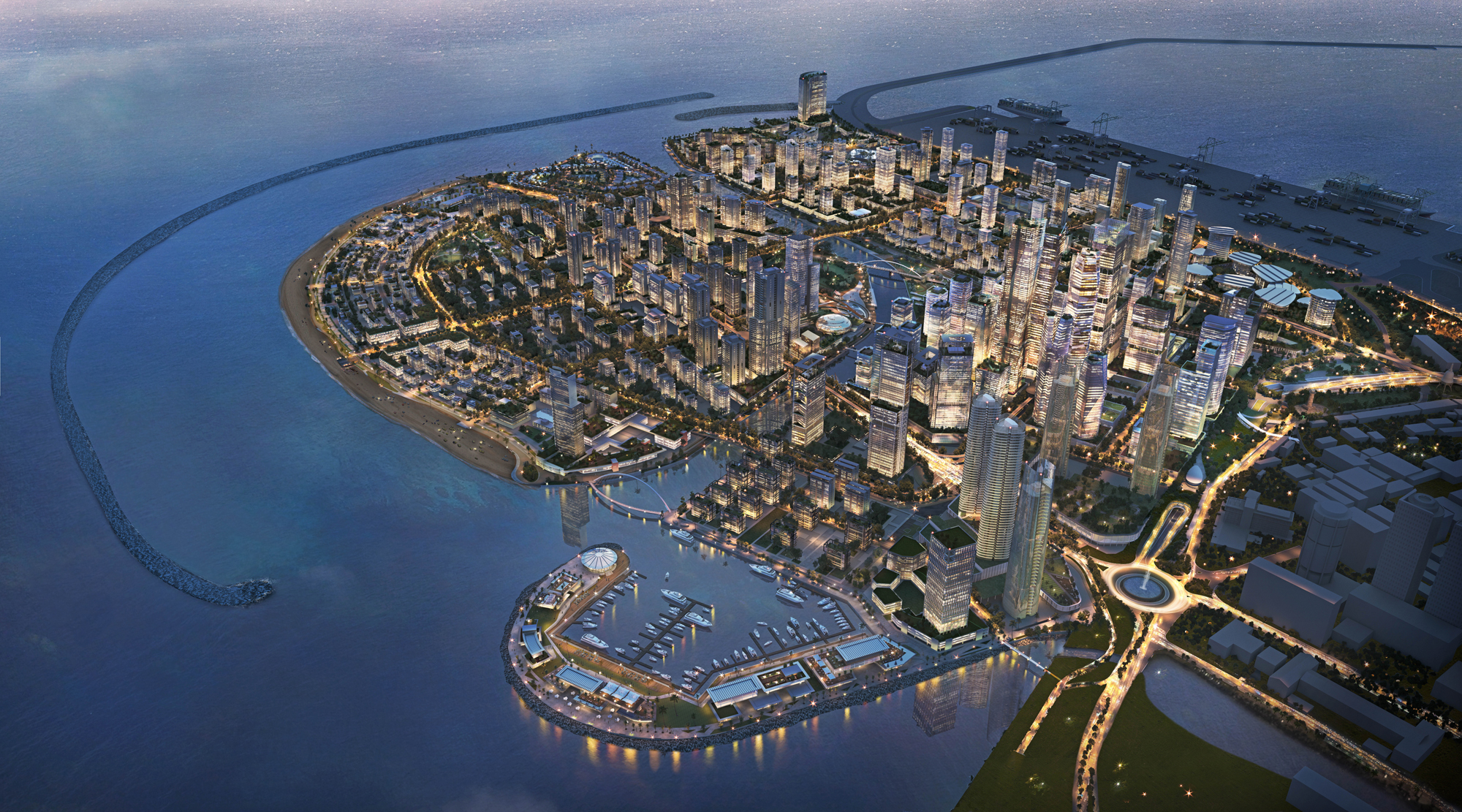
We recognised early on that the country possessed something far more valuable than a cost advantage. Today, every core product developed by SimCentric is engineered in Port City Colombo. Our software powers training environments used by some of the most sophisticated defence organisations in the world, yet the engineers behind those products are graduates of local universities and schools. This fact should fundamentally change the conversation we have about our country. For a company such as ours, serving defence and technology customers across multiple jurisdictions, the ability to operate within an internationally oriented business environment directly affects how quickly we can hire, contract, transact and expand.
Sri Lanka’s digital economy has reached a defining moment. The Export Development Board now ranks ICT services as the country's third-largest export sector, comprising more than 400 companies and a workforce of 140,000+ professionals. According to the Sri Lanka Association for Software and Services Companies (SLASSCOM), overall export value of the sector is currently at US$2 billion and growing. In my official capacity with SLASSCOM where I regularly engage with founders, technology leaders and international investors, the conversations have evolved noticeably over the past few years. Increasingly, the discussion centers on how we create an environment that allows those companies to innovate faster, commercialise ideas more efficiently and scale globally without relocating elsewhere. And this is where Port City Colombo begins to take on far greater strategic significance than it is given credit for. The next ambition for Port City Colombo should be to create more globally recognised product companies, more research and development centres, and more businesses that own valuable intellectual property rather than simply providing technical services to overseas clients.
One of the realities of building globally competitive technology businesses is that success increasingly depends on the quality of the environment surrounding the company as much as the quality of the company itself. Talent remains fundamental, but today’s innovation economy also requires rapid access to specialist expertise, sophisticated supply chains, international capital and regulatory certainty. This is where Port City Colombo can provide a springboard.
Too often, it is viewed primarily as a physical development or assessed through short-term investment figures. Instead, I see Port City Colombo as a platform to create an environment where globally connected businesses can operate with greater speed, confidence and flexibility than has traditionally been possible. For companies operating in knowledge-intensive sectors, those advantages are highly practical. The ability to transact freely in major international currencies, attract specialist global talent, operate under internationally familiar regulatory frameworks and access long-term investment with greater certainty all contribute to making Port City Colombo a competitive place from which to build internationally. These are not isolated incentives: together they create an operating environment that aligns with how modern global businesses function.
My involvement with SLASSCOM has reinforced this perspective that, for investors while evaluating fiscal incentives, their decisions are shaped just as strongly by predictability, transparency and confidence. They want assurance that regulatory frameworks will remain stable, that business can be conducted efficiently, and that the country has a long-term vision extending beyond political or economic cycles.
Compared to established financial centres elsewhere in the world, Port City Colombo presents a distinctly different investment proposition. Its greatest strength lies in being an emerging international business destination, offering investors the rare advantage of entering at the ground floor of a purpose-built ecosystem designed for the future. As an entrepreneur, what matters to me is not a long list of incentives. What matters is whether a business can move quickly, hire internationally, transact efficiently and plan with confidence. For global businesses looking beyond mature markets, it offers the potential for higher long-term value creation and the opportunity to shape a new regional financial hub from its inception. Rather than simply participating in an established ecosystem, investors have the chance to help build one.
Developments such as Port City Colombo play an important role in that journey, not because they guarantee success for individual businesses, but because they help create the conditions in which many different businesses can succeed.
If we succeed in creating those conditions, the most enduring legacy of Port City Colombo will be reflected in the companies that choose to build from Sri Lanka, the ideas that are transformed into globally recognised products and the generations of local and global entrepreneurs who see Port City Colombo as the best place in the region to build their future.
Video Story