

September, 21, 2026
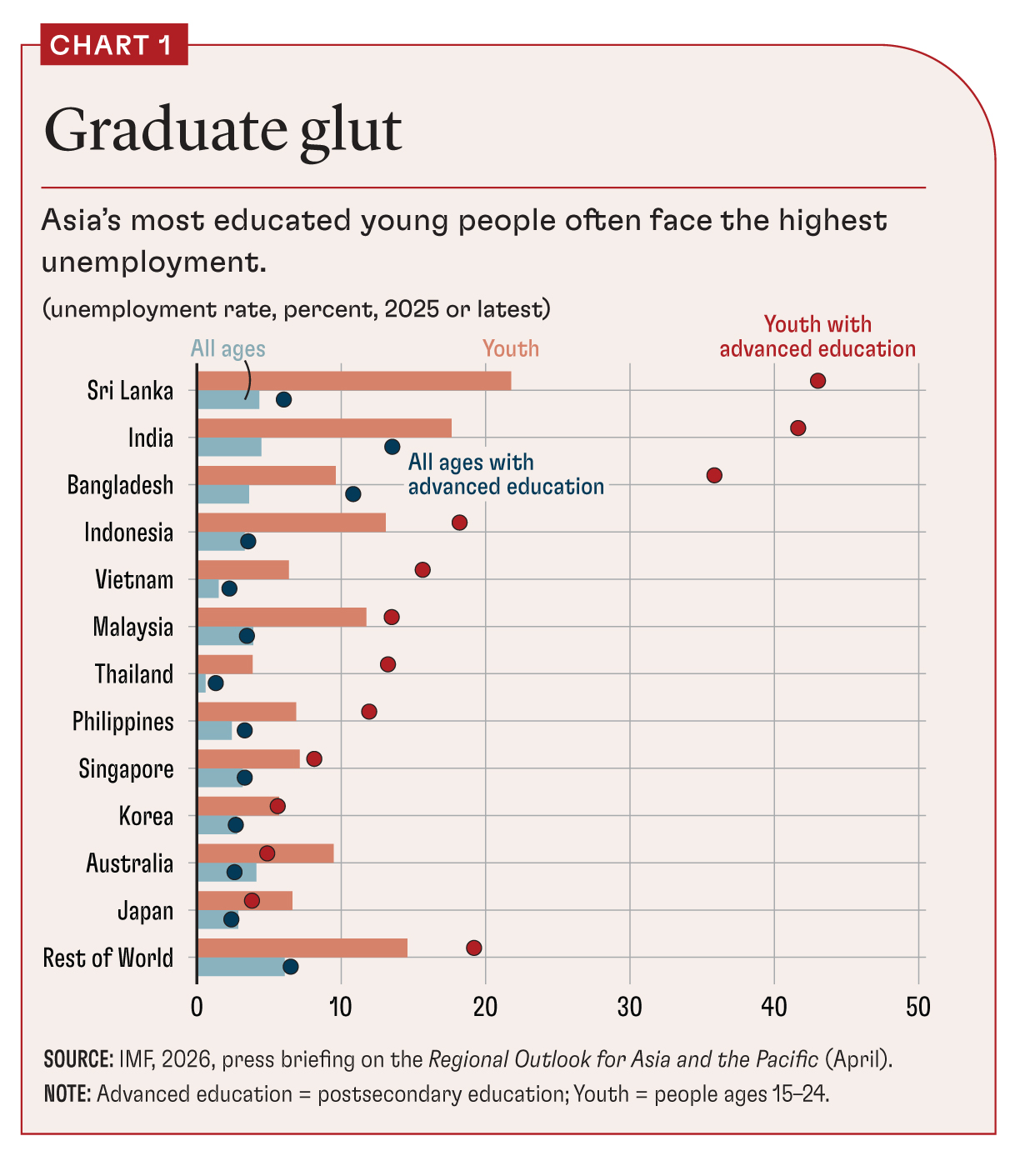
Young people in Sri Lanka are entering one of the most daunting job markets in recent history, confronting Asia's highest rate of educated youth unemployment alongside severe emergency economic restrictions.
According to International Monetary Fund (IMF) research, joblessness among young people (ages 15–24) with advanced or postsecondary education in Sri Lanka has reached 43 percent. This places Sri Lanka at the top of regional charts for educated youth unemployment, exceeding rates in neighboring South Asian economies like Bangladesh (36 percent) and India, as well as Southeast Asian nations.
Across Asia, youth unemployment is elevated, but the burden is disproportionately borne by those with the highest qualifications. Krishna Srinivasan, director of the IMF’s Asia and Pacific Department, highlighted that highly educated young workers are struggling to secure positions that match their qualifications. This is driven largely by a persistent mismatch between university qualifications and employer skill requirements.
At the same time, technological shifts such as rapid artificial intelligence (AI) integration threaten to intensify labor market pressures if adoption outpaces skills development. While AI offers potential productivity gains, there are mounting concerns that complex entry-level tasks traditionally assigned to recent graduates are increasingly being automated, shrinking the pool of junior roles.
The employment squeeze follows a series of global economic shocks, including pandemic-era inflation, geopolitical conflict, and volatile energy markets, that have severely depressed global growth and squeezed spending power across Asia.
Video Story