

October, 5, 2026
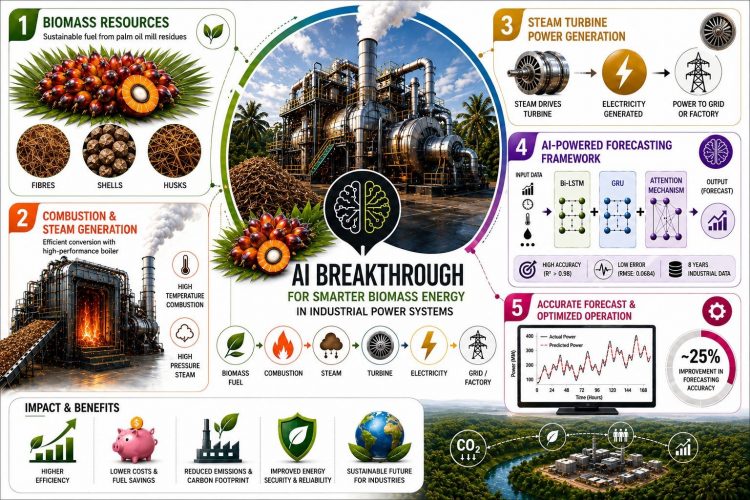
SLIIT researchers have developed an advanced artificial intelligence framework that improves power forecasting in biomass-fuelled steam turbines. This innovation offers industries a more practical way to reduce energy waste, lower operating costs and strengthen sustainable energy management. The study, published in Energy Conversion and Management, a Top 2% Elsevier journal, focuses on biomass energy use in palm oil production, where agricultural by-products can be converted into renewable industrial power.
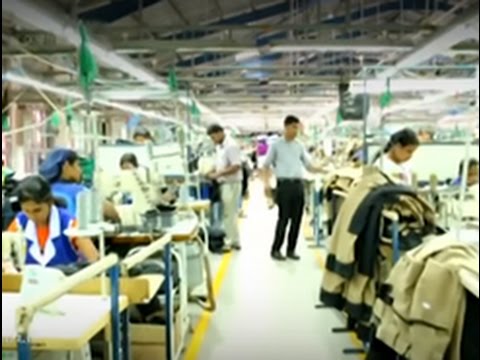
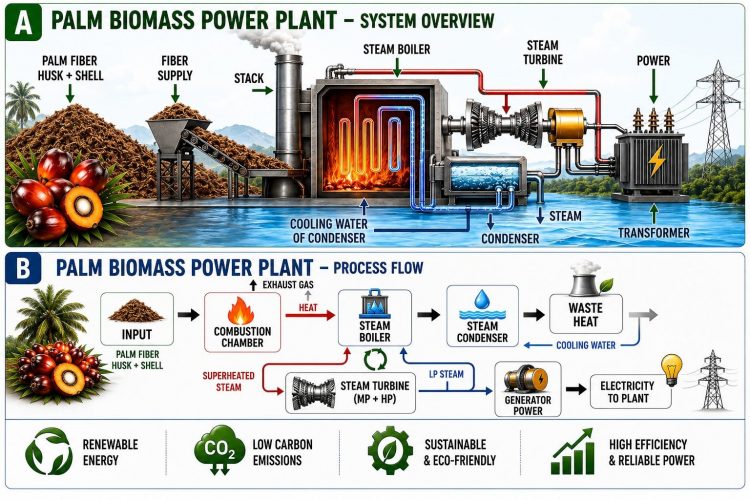
In palm oil manufacturing, by-products such as fibres, shells and husks are commonly used as biomass fuel to power steam turbines. However, factories often face difficulty in producing the right amount of energy at the right time. If energy demand is overestimated, valuable biomass can be wasted; if it is underestimated, factories may have to draw more electricity from the national grid, increasing operational costs and reducing the overall efficiency of renewable energy use.
To address this issue, the research team developed an AI-based forecasting system capable of learning from industrial operating patterns and predicting future energy demand more accurately. Using an extensive eight-year industrial dataset, the model achieved approximately 25% greater forecasting accuracy than benchmark methods and demonstrated strong predictive performance under real operating conditions.
This improved forecasting can help factories plan biomass usage in advance, match steam turbine output more closely with actual demand and make better use of available renewable resources. For industries with high energy requirements, even small improvements in forecasting accuracy can support more efficient fuel use, better cost control and more reliable production planning. It also gives plant operators clearer information for day-to-day decisions, helping them balance productivity with sustainability goals.
The research was led by Miss Himaya Perera, an Electrical and Electronic Engineering graduate of SLIIT who is currently pursuing a Master of Engineering in Electronics at La Trobe University, Australia, on a full scholarship. The study was conducted in collaboration with Prof. Eranga Wijesinghe of the Department of Electrical and Electronic Engineering at SLIIT, and Prof. Bhagya Nathali Silva of the Department of Information Technology at SLIIT. The research team also included international collaborators Mr. Shalitha Jayasekara, an Electrical and Electronic Engineering graduate of SLIIT who is currently pursuing a PhD in Electrical Engineering on a full scholarship, and his PhD supervisor, Prof. Honnyong Cha of Kyungpook National University, South Korea. The collaboration brings together engineering, computing and international research expertise to address a practical industrial energy challenge, while highlighting the growing contribution of Sri Lankan researchers to applied energy innovation.
The relevance of the study extends beyond a single factory or sector. Sri Lanka is increasingly seeking ways to improve industrial energy efficiency while expanding the productive use of renewable resources. By turning agricultural waste into a more predictable and efficiently managed energy source, the research supports both industrial competitiveness and environmental sustainability. It also aligns with the wider national need to strengthen local research capacity in areas that directly affect energy security, manufacturing efficiency and resource management.
The study also demonstrates the expanding need for research research-led solutions for real economic and environmental needs. As industries move towards smarter operations, the work carried out by SLIIT and its partners shows how artificial intelligence can help convert biomass from a traditional fuel source into a more intelligent, data-driven energy resource for the future of industrial energy.

Himaya Perera

Shalitha Jayasekara

Prof. Eranga Wijesinghe

Prof. Bhagya Nathali Silva
Video Story