

October, 13, 2026
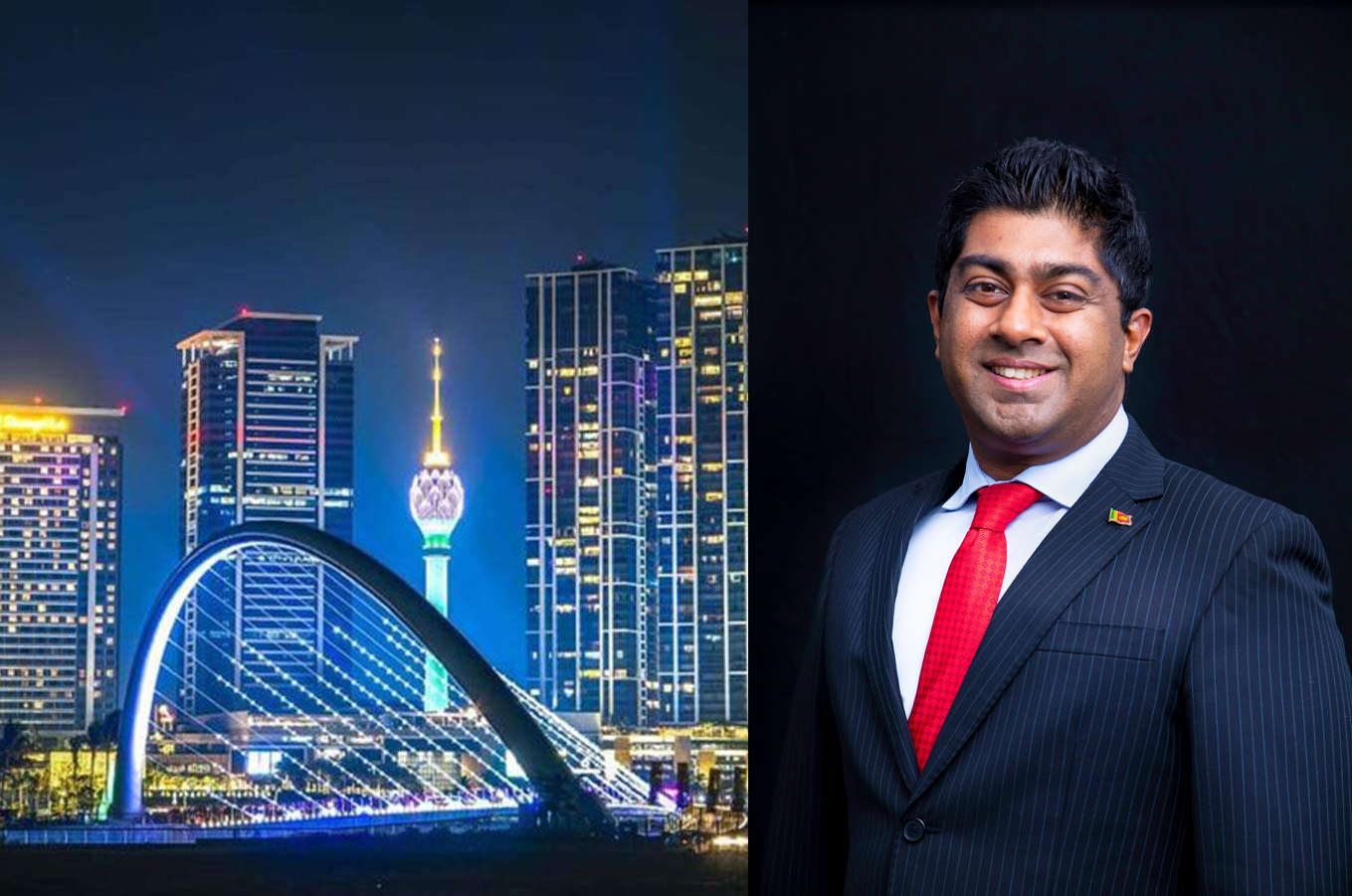
By Lakshan Madurasinghe — Founder/CEO Solutions Ground, Corporate Strategist & Investment Facilitator
The global economy is entering a period where resilience and long-term competitiveness matter as much as growth. Supply chains are diversifying and geopolitical tensions are reshaping investment decisions, with businesses now looking for jurisdictions that offer continuity amid uncertainty.
Having spent two decades working across business strategy, sustainability and investment facilitation, I've come to believe we are asking the wrong question about development. Too often we ask whether a project is sustainable. The more important question is whether it strengthens a country's long-term competitiveness. Sustainability, in its truest sense, is about whether a nation can build institutions and infrastructure that remain resilient long after the ribbon-cutting ceremony is over.
That is why I believe the conversation around Port City Colombo should extend well beyond land reclamation or real estate. The project presents Sri Lanka with a once-in-a-generation opportunity to reposition itself within a rapidly changing global economy.
Sri Lanka sits at the centre of one of the world's busiest maritime corridors, with nearly half of global container traffic moving close to its shores. Yet geography alone has never been enough to create economic success. This is a point I often make when discussing foreign direct investment: every nation has a story to tell, but only those with a deliberate strategy become investment destinations.
The discussion around sustainable development is often reduced to environmental protection alone. While environmental stewardship matters, sustainable development is fundamentally about whether growth can be supported over the long term through sound planning, resilient infrastructure and inclusive economic participation.
Having worked in sustainability and CSR for many years, I've also become increasingly skeptical whenever the word “sustainable” is used too casually. The real distinction is whether it genuinely shaped decisions at the outset, and whether those decisions are upheld years after construction is complete.
Port City Colombo's significance is not simply the scale of investment, but the planning philosophy underpinning it. Rather than treating sustainability as a collection of environmental initiatives, the project has integrated urban planning, environmental safeguards, commercial development and public infrastructure within a single long-term framework. That systems approach is what deserves attention. The city has been planned not as a real estate development but as an integrated economic ecosystem - financial services, commercial and residential districts, hospitality, healthcare and logistics within a master-planned environment.
Features such as controlled zoning, coordinated infrastructure and coastal protection measures may appear less visible than iconic buildings, but they often determine whether a city keeps functioning effectively decades into the future. Allocating significant space for environmental and public use from the outset reflects a philosophy - one that recognises economic value and quality of life as complementary, not competing, objectives.
Geography is an asset. Competitiveness is a choice. For decades, Sri Lanka has spoken about its strategic location as though geography alone guarantees economic success. It doesn't. Countries convert that potential into value through deliberate positioning, sound policy and sustained investor confidence.
This is why I often describe geopolitical neutrality as a commercial advantage rather than a political concept. Businesses today want locations that let them engage confidently across regions without being drawn into any single geopolitical sphere. Sri Lanka has long maintained relationships with diverse global partners, and if managed wisely, Port City Colombo can strengthen that position -reinforcing the country's reputation as an open, connected and trusted economy.
Around the world, impressive developments have struggled because governance or market positioning failed to keep pace with physical infrastructure. Investors, ultimately, do not invest in skylines. They invest in certainty.
One of the questions I am most frequently asked by investors is whether they can rely on Sri Lanka -whether policies are stable, governance is consistent, and commitments will survive political cycles. Increasingly, they also ask whether sustainability commitments are measurable and embedded into governance.
In that context, Port City Colombo is an opportunity to show that Sri Lanka can plan, govern and execute at internationally competitive standards - with success depending as much on transparency as on the investment itself. A third of PCC's reclaimed land is earmarked for green space and public use, while its Gazetted Development Control Regulations offer developers a 5% GFA incentive for top-tier green building standards.
There is a broader lesson here too. Too often we have viewed infrastructure as the destination rather than the foundation. Roads and ports are essential, but their real value emerges only when supported by capable institutions and clear national positioning.
Port City Colombo is often described as one of Sri Lanka's most ambitious developments. I believe its long-term significance extends beyond its physical footprint - it represents an opportunity to show how thoughtful planning, environmental responsibility and international collaboration can come together within a single vision for national development.
Twenty years from now, the real question will not be how impressive Port City Colombo looks, but whether it helped create better jobs, attract globally competitive businesses, retain talented professionals and strengthen Sri Lanka's standing in the international economy.
Equally, credibility cannot be assumed. Like every major development, it should expect to be measured continuously - its governance, environmental stewardship and commitment to public value must keep evolving as the city grows. That willingness to be held accountable is what separates globally respected developments from those that gradually lose public confidence.
Sri Lanka has always possessed real advantages - a strategic location, a skilled workforce and strong maritime connectivity. The challenge has been translating them into sustained value through consistent policy and a clear long-term strategy. This is why I believe Port City Colombo is not an end in itself, but an opportunity to rethink how we compete internationally and present ourselves to the world.
And when we look back on Port City Colombo two decades from now, my hope is that it is remembered as the moment Sri Lanka demonstrated it could think long-term- that it dared to compete globally and convert its greatest natural advantage, its position in the Indian Ocean, into lasting economic opportunity.
Video Story