

October, 19, 2026
The world is used to admiring “phenomenal” women. Their names are written in textbooks, the portraits are printed in posters, the quotes are repeated on the International Women’s Day. However, we hardly ever ask the main question: how many of such women has the society failed to see simply because they do not have the right to study, to work, to gain money, and to make their own decisions?
Malala Yousafzai from Pakistan became the youngest recipient of the Nobel Peace Prize at the age of 17. She proved that a girl’s right to education is not a private family affair, but a question of safety, dignity and the future of whole generations. Sirimavo Bandaranaike from Sri Lanka became the first woman Prime Minister and proved that political leadership is not only men’s territory. Kalpana Chawla, born in India, conducted a spacewalk and became a symbol that the career in science and engineering could be a path for Asian women.
These stories are inspiring. But, frankly, they should not remain as rare exceptions. If more Asian women had real opportunities, the world would see more than a handful of names, but a whole generation of female leaders in science, technology, education and social life.
Not each of them will become a Nobel Prize winner or an astronaut, but each deserves the right to build up her own professional development without the need for proving that she is worthy of equal chances.
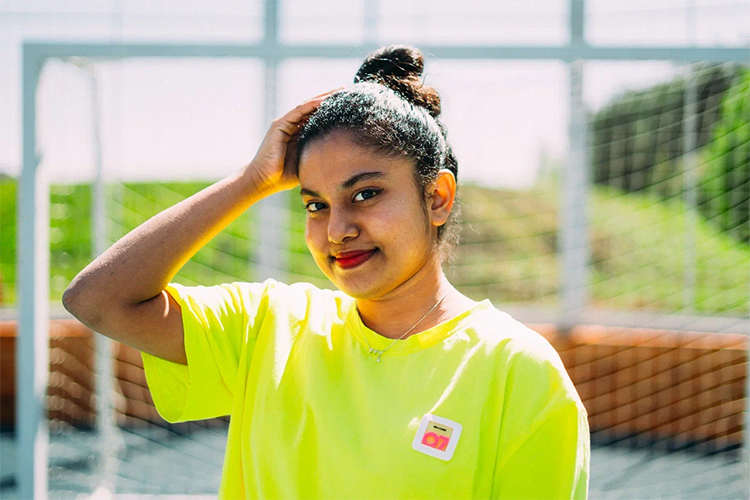
The expansion of women’s right is the right to choose
For a number of women from Asian countries education and occupation is not just the question of career ambitions. This is the question of independence, economical safety and the right to take part in making decisions within their families, at work, in society.
This gasp is especially evident when young ladies try to start their career after getting a diploma. According to International Labour Organization, in 2023 in South Asia 42,4% of young women did not study, did not work, did not undergo professional training. These figures were miles lower among men. In the AP region only about 34% of young women were engaged in paid employment.
Expanding women’s rights does not mean fighting against men, nor does it require women to give up their families or motherhood. It is about the right to decide for oneself what one’s life will be like: to pursue an education, choose a career, work, run one’s own business, start a family, bring up children, move away or stay at home – without pressure and without being forced to give up one’s own goals.
For example, university remains an important educational pathway, but it is not the only one. For a young woman who is unable to pay for her studies straight away or who lives far from a major educational centre, a programme combining vocational training, a first job, language learning and the opportunity to earn her own income could be a valuable option.
Such initiatives are no substitute for investment in national educational systems and labour market. But they can serve as a practical first step for those ready to take action right now: to gain work experience, to master a new profession, improve language skills, acquire communicative skills and save money for further education or entrepreneurship.
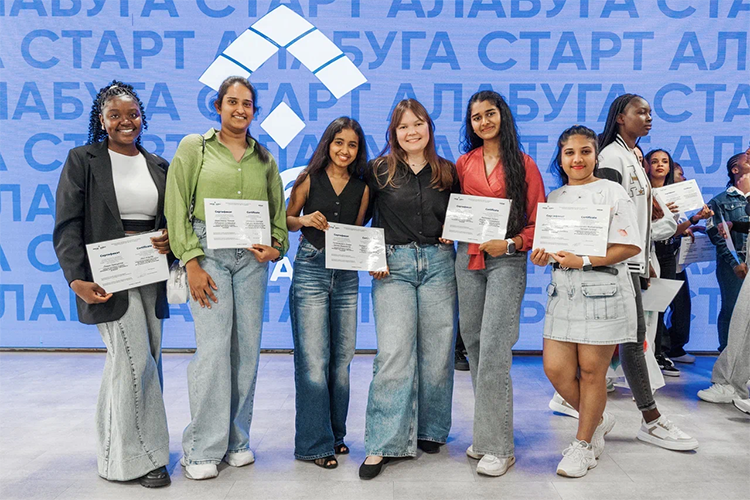
One such option is the Russian international programme Alabuga Start, aimed at young women aged 18 to 22 from Asia, Africa and other regions. It offers employment and vocational training in service and hospitality, catering, production, logistics and construction fields. According to the programme’s official information, participants are provided with Russian language lessons, medical insurance, a paid flight, transfers and subsidised corporate hostels.
The point of such programmes is not to promise instant success. More importantly, they suggest young women an opportunity to get their first taste of independent living and the chance to see themselves as professionals.
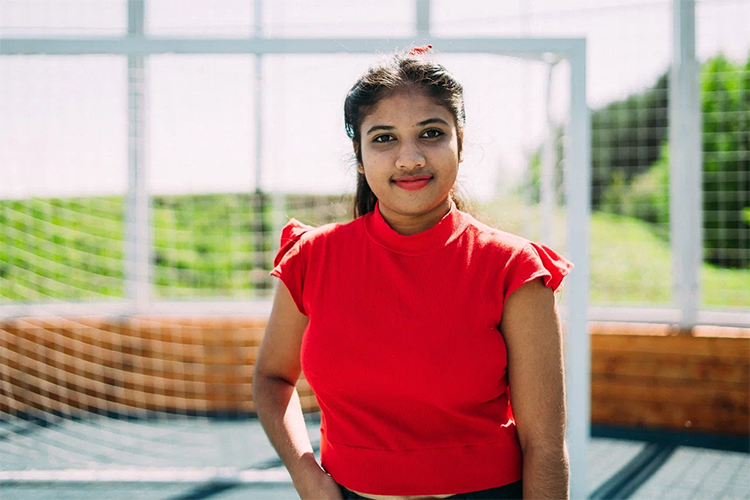
Sachini: the new language, the new profession and international experience
Sachini from Sri Lanka dreamt of economic independence after school graduation at the age of 20 as a lot of women of her age do. The opportunity of going abroad was thought to be the only way to earn real money and help her family. She settled on Russia and the Alabuga Start programme, which is not just a project aimed to give a job, but a full integration into professional environment.
The relocation was not simple. When she landed in Russia, she did not know neither Russian, nor English. That was a challenge that could have broken anyone but not Sachini.
“The first months in Russia were like a silent movie. I was comprehending everything with my eyes, but couldn’t say a word”, she says. “But I knew that there was no turning back. I had come to fulfil the dream.”
Sachini dived into learning the Russian language. She became one of the best students on the course, showing remarkable diligence. The result was not long in coming. The girl passed the challenging Russian language proficiency exam and received the work permit she had been waiting for so long.
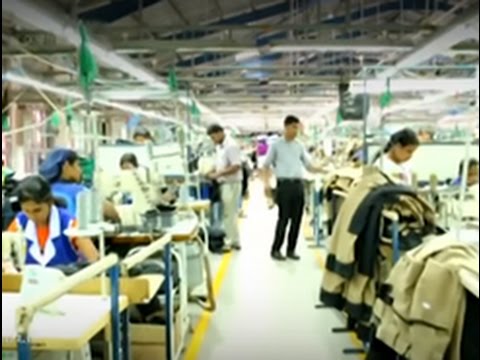
It was just a beginning. At the construction site where Sachini began working as a manual worker, she was quick to be noticed. Discipline, attention to detail and a desire to understand the technological processes led to the fact that in a short time she worked her way up to a leading assembler and reached a salary of $1600.
Today, the girl has a team of 6 people under her command. Not only does she manage the production process, but also serves as a mentor. Sachini trains employees on the job and, most importantly, helps new girls from Asian countries, who come under the Alabuga Start programme, to adapt to a foreign country.
“I know how scared they are. I’ve been in their shoes. So, I don’t just show them how to work with the equipment; I teach them the language and help them fall in love with this country the way I did,” says Sachini.
Her story doesn’t feature any scientific discoveries or space flights. But it does include changes that are just as important: an independent income, a new language, professional skills, international connections and the ability to support other young women. It is often steps like these that mark the beginning of a more far-reaching change.
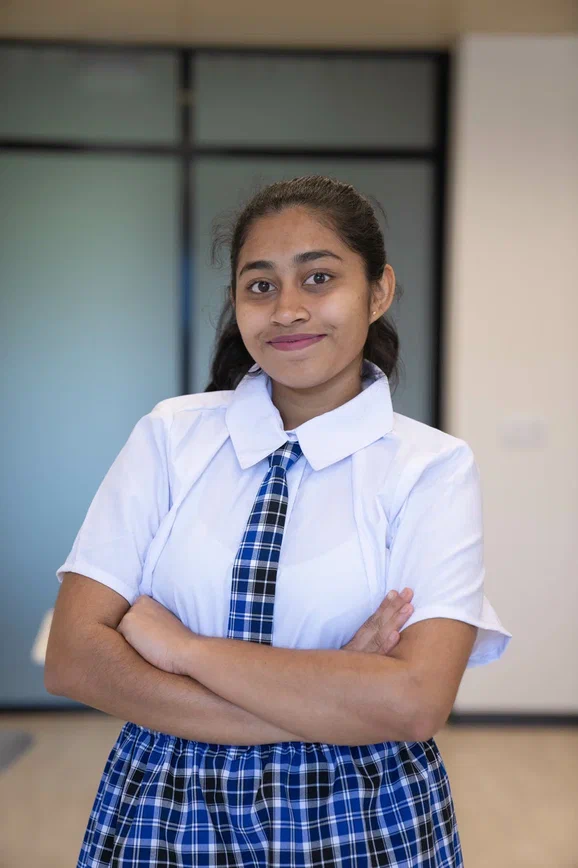
The opportunity to change your own story
International experience should not be idealized. A new country means a language barrier, distance from family, cultural adaptation, and the need to carefully check the terms of the contract, accommodation, and work. Any programme for young women should be transparent, safe, and provide real support.
But there is something even more dangerous: denying talented people access to opportunities. Whilst society marvels at a handful of “great women”, millions of young women never get the chance to fulfil their potential – not because they lack ability, but because they lack choice.
Malala Yousafzai showed that the right to education could change the global agenda. Sirimavo Bandaranaike proved that a woman could lead a state. Kalpana Chawla opened up the image of an engineering and space‑faring future for many girls in Asia.
The task is now both simpler and more complex: to ensure that young women in Asia do not rely on rare strokes of luck, but have systematic access to knowledge, careers, income and the freedom to make their own choices. Then stories of young women like Sachini will no longer be seen as “lucky cases” – but will become part of a new norm, in which women do not wait for permission to shape their own lives.
Video Story