

May, 23, 2018
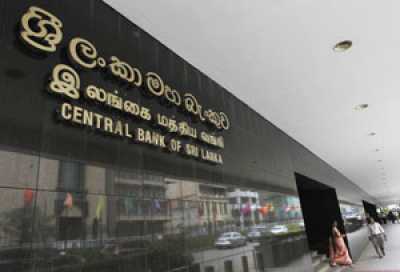
Clarifying on a what was quoted as a ‘Misleading News Item’ but without a proper reference to where and under which headline it was published, Sri Lanka’s Financial Regulator - Central Bank of Sri Lanka (CBSL) in a long explanatory statement yesterday said that “If there were no further borrowings or non-borrowed increase of reserves, the external debt servicing of around US $ 7.5 billion would have resulted in gross official reserves depleting to US $ 0.7 billion by now.”
Statement added that since 2015, the government has serviced external debt of around US$ 7.5 billion as capital and interest payments utilizing external reserves.
“Simply put, gross official reserves as at end 2014 amounted to US$ 8.2 billion” it said.
CBSL further said that “External Debt and Reserves - Need to identify not only borrowings but also the debt repayments in analyzing how gross official reserves were utilized.”
“A misleading news item has been disseminated in relation to Sri Lanka’s foreign reserves and external debt servicing. The contents of the news item portray a misleading picture of the country’s external position” statement pointed out.
The statement further highlighted that “While stating that around USD 8.9 billion of borrowings by the government were absorbed to Central Bank reserves during 2015-2018, the article provides no consideration on the significant debt repayment effected by utilization of reserves during the period, which the Central Bank is obligated to as the official debt manager of the government.”
CBSL said that a country such as Sri Lanka, with a persistent current account deficit of the balance of payments has had to rely on external borrowings to build up reserves over several decades. The country’s Gross External Reserves currently amount to US $ 9.1 billion, according to CBSL.
“They are expected to increase to about US $ 11 billion by mid-June 2018” CBSL added.
CBSL further asserted that it should also be stated that the country’s debt is serviced over a number of years. The weighted average time to maturity on the US $ 8.9 billion debt referred to in the news items is 5.1 years. As of end April 2018, the average annual external debt servicing in 2018–2022 is USD 3.9 billion.
“The country, therefore, has sufficient reserves to meet its external debt servicing obligations” the statement said adding that in assessing the cost and benefits of external borrowings, it is important to consider the returns generated by such inflows through investment in infrastructure and basic services.
“The news item also states that the CBSL earned a higher return on the investment of its external reserves during 2010– 2014 than in 2015–2017” CBSL said.
Clarifying on above the statement said that the high rate of return in the earlier period was due both to the increase in the price of gold and substantial capital gains of bonds as Central Banks around the world cut interest rates, subsequent to the global financial crisis. The latter period has seen lower gold prices and the global interest rate environment has been reversed following the rate hikes in the USA.
Although government borrowings can supplement investment necessary for economic growth, it is important to ensure that such investment is productive and provides a substantial return. Such returns can be in terms of a wide array of socioeconomic benefits. However, if government borrowings are invested in unproductive infrastructure, which does not generate sufficient returns to repay the debt with interest, the government will have to continue to borrow to repay its obligations. Financing unviable projects using borrowed funds, therefore, results in accumulation of unsustainable public debt.
Central Bank purchases borrowed foreign exchange from the government by issuing rupees for the government to meet local expenditure. It is not expected to generate a return equivalent to the borrowing cost of the government through its reserve management.
The primary aim of reserve management is to preserve the level of reserves without unwarranted losses from high risk investments that deplete reserves. Hence, Central Banks adopt a conservative approach in reserve management. Therefore, it is extremely misleading to compare the cost of borrowing with the rate of return on investing the reserve portfolio, as the main motive of reserve management by a Central Bank is safety rather than making profits from its investments.
The statement also note that the CBSL is currently following prudential reserve management policies, including obtaining assistance through the World Bank’s Reserves Advisory and Management Programme. High priority is being given to avoiding speculative investment which exposes the country’s reserves to undue risk. The risk appetite is being calibrated to what is expected of a Central Bank when managing its external reserve portfolio. It would be inappropriate for a Central Bank to take on the same risk as a commercial fund manager. Accordingly, the Central Bank maintains a balance between safety, liquidity and return in relation to its investment of foreign reserves. The reserves portfolio of the Central Bank is managed against a basket of internationally accepted benchmarks.
Video Story