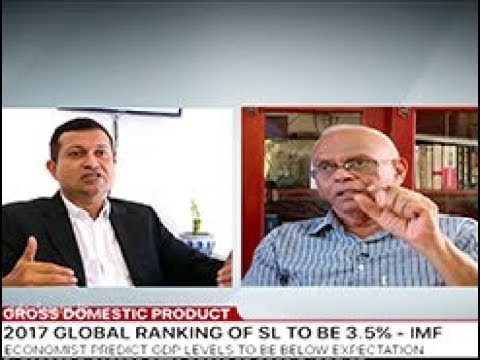
Asia based lending giant for social and economic development – Asian Development Bank (ADB) in a recent update titled Asian Development Outlook (ADO) report, downgraded the Sri Lanka’s GDP growth forecast from 4.2% to 3.8% in 2018. ADB also downgraded the 2019 growth rate from 4.8% to 4.5%, falling below the growth estimate for the sub-region.
The report noted that weakening domestic demand, investments and exports as causes for downgrade, whilst sub-region to retain GDP growth at 7%. The report also pointed out that country’s inflation, too, will drop from 5.2% to 4.5% in 2018 and from 5.0% to 4.7% in 2019.
Sri Lanka recorded a growth rate of 3.1% in 2017, as the Government started implementing structural reforms supported by the International Monetary Fund (IMF) to lift fiscal performance towards sustaining higher growth. Report said that the bad weather and policy tightening held GDP growth to 3.3% in 2017, while the Government kicked off wide-ranging structural reforms supported by the IMF. It also pointed out that the country’s fiscal performance improved with tax revenue rising as a share of GDP and a small primary surplus in 2017, stressing on the need for continued structural reforms as heavy debt repayment looms closer.
“With external demand coming off a high base in the second half of 2017, and little change expected in investment and Government expenditure, projections for growth in 2018 and 2019 are marked down from ADO 2018. A downside risk stems from the approaching elections,” the report highlights adding however, South Asia is expected to retain its growth momentum at 7% for 2018 and 7.2% for 2019 as published in April.
“The country’s GDP growth stayed subdued in the first quarter of 2018 at 3.5% year-on-year,” ADB highlights adding that the Agriculture sector, which was hit badly in 2017, recovered with better weather to grow by 5.3% as rice production increased by 53.3%, while the Services sector advanced by 4.8%.
“However, the industry displayed much slower growth, recording an expansion of only 1.1%, held back by a 4.7% decline in Construction and only modest growth in Manufacturing” the report said.
“Further, the first quarter saw private consumption revive, continued tightening in Government consumption spending, stagnant fixed investment, and lower net exports,” the report adding that ‘Headline Inflation’, which recorded a drop of 1.6% year-on-year in April as the Agriculture sector recovered, rose to 3.4% in July owing to higher food prices, currency depreciation, rising global oil prices, and the introduction of the fuel price formula in May.
“These pressures and the scheduled introduction of automatic pricing for electricity later this year will see inflation trend higher to average 4.5% in 2018, which is below the ADO 2018 forecast,” the report noted.
- Reporting by Devendra Francis