

March, 10, 2026
The World Economic Forum Global Risks Report 2026 identifies extreme weather events, biodiversity loss and ecosystem collapse, and critical changes to Earth systems as the top three global risks ranked by long-term severity over the next decade. These risks underscore the urgent need for business leadership in advancing environmental sustainability and building resilient supply chains.
Responding to this urgency, the United Nations Global Compact Strategy 2026–2030 reflects both the scale of the global sustainability challenge and the opportunities for businesses to lead transformative change. The vision is clear: to mobilize businesses to transform sustainable ambition into action at the scale the world demands.
Aligned with this global strategy, UN Global Compact Network Sri Lanka has launched its Country-Level Environmental and Supply Chain Sustainability Working Group strategy, anchored in three core priorities:
equipping companies to act, catalyzing collective action, and advancing the business case for sustainability.
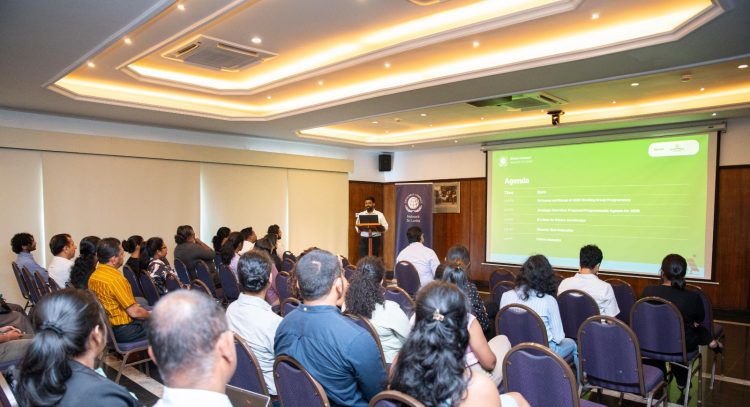
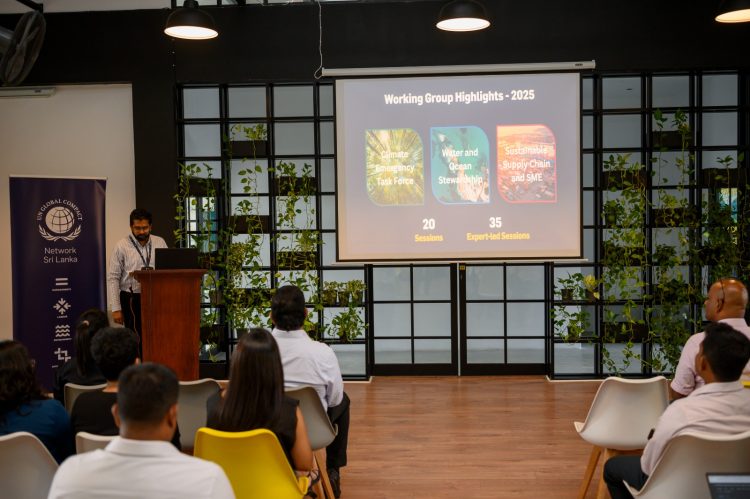
The 2026 programme commenced with a series of Working Group kick-off sessions held during the third week of January across the Network’s environmental thematic platforms:
Designed to mobilise over 70 companies, the kick-off convened corporate leaders to align on priorities, identify areas for collaboration, and advance actionable pathways for environmental leadership in Sri Lanka.
Equipping Companies to Act
The Climate Emergency Task Force is focused on translating corporate climate change mitigation and adaptation commitments into ambitious and measurable action. The Working Group will interpret the global outcomes of United Nations Climate Change Conference 30 and identify forward pathways for business leadership in climate mitigation and adaptation.
Within the Sri Lankan context, the Working Group will prioritize strengthening Disaster Risk Reduction integration within corporate risk management and business continuity planning, particularly in light of the impacts of recent climate-related disasters such as Cyclone Ditwah. Additional focus areas include scaling nature-based solutions and advancing the operationalization of climate just transition strategies within corporate operations.
The Water and Ocean Stewardship Working Group is advancing corporate action on water stewardship, risk transparency, and ocean sustainability, aligned with evolving disclosure expectations and blue economy priorities. According to the Food and Agriculture Organization and UN-Water report Progress on the Level of Water Stress: Global Status and Acceleration Needs for SDG Indicator 6.4.2, Sri Lanka’s water stress level is reported at 90.79%. This reflects significant spatial and temporal variability in rainfall, leading to disparities in water availability that are further exacerbated by climate change.
In response, the Working Group will explore structured water governance frameworks, sector-specific water risk mitigation practices, and integration of the UN Global Compact’s Ocean Stewardship principles into business strategy. The platform will also promote innovation through the Triple Helix model of innovation, convening corporates, academia, and government to accelerate applied research and practical solutions.
The Supply Chain Sustainability Working Group encourages companies to work collaboratively with suppliers to accelerate the transition toward environmentally and socially responsible supply chains. By strengthening supplier engagement and capacity building, businesses can unlock economic resilience, improved risk management, and increased consumer trust.
Key focus areas include embedding sustainability into procurement practices, responsible sourcing, and human rights due diligence in supply chains, alongside promoting eco-labelling and alignment with emerging regulatory and market expectations.
Catalyzing Collective Action
Building on the momentum of the January kick-off sessions, February marked the advancement of key collaborative initiatives through a strategic Memorandum of Understanding with the National Cleaner Production Centre Sri Lanka, as well as a Roundtable on Regulatory Impact Assessment (RIA) conducted in collaboration with United Nations Industrial Development Organization Sri Lanka.
The Network will also localize the SPARK programme, engaging tier-one suppliers of selected parent companies to address sustainability risks and strengthen supply chain resilience. This initiative will deliver structured capacity-building across four pillars designed to advance responsible business practices across supplier ecosystems.
In addition, UN Global Compact Network Sri Lanka will launch a localized accelerator “It’s Now for Nature”, implemented in collaboration with Biodiversity Sri Lanka, to support companies in advancing biodiversity action and nature-positive business strategies.
Advancing the Business Case
Globally, the transition from voluntary sustainability disclosure to expanding mandatory reporting frameworks is accelerating. With emerging requirements such as SLFRS S2 climate-related disclosures and increasing stakeholder expectations, companies must integrate environmental sustainability and supply chain responsibility into core business strategy and governance structures.
Through its Environmental and Supply Chain Sustainability Working Groups, UN Global Compact Network Sri Lanka aims to foster an ecosystem that supports data-driven, globally aligned corporate environmental action. Leveraging global, regional, and local partnerships, the Network provides companies with opportunities for cross-sector collaboration, peer learning, and capacity building.
Collective action through these platforms will contribute to advancing Sri Lanka’s national environmental priorities, including Nationally Determined Contributions (NDCs) 3.0 and progress toward the United Nations Sustainable Development Goals (SDGs).
Through five thematic Working Groups — Diversity & Inclusion, Business & Human Rights, Climate Emergency Task Force, Water & Ocean Stewardship, and Sustainable Supply Chain & SME — UN Global Compact Network Sri Lanka convenes the private sector to move from commitment to implementation. These platforms translate global standards into practical action, strengthen governance and accountability, and drive collective progress towards inclusive, resilient, and sustainable economic growth aligned with national and global priorities.
Video Story