

November, 16, 2022
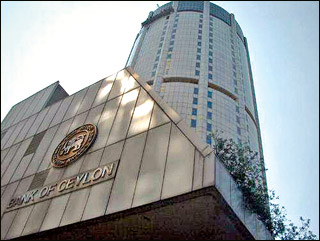
The Bank has reported Rs. 27.5 billion Profit Before Tax (PBT) for the nine-month period ended 30 September 2022 despite of many headwinds caused by the never experienced economic and operational environment prevailed during the period.
Despite of never experienced economic and operating environmental challenges prevailed, the net interest income grew by 32% to Rs. 107.9 billion contributing 72% to total operating income. The increase in interest rates in line with the upsurge in policy rates and materializing the volume growth reported in private sector advances in previous year resulted 54% growth in interest from loans and advances which denotes 68% of total interest income. Interest income from investments boomed up YoY to Rs. 102.6 billion and the major portion of it derived through Treasury Bills and Bonds.
The upsurge in deposit rates increased the cost of funding, YoY interest expense hiked by 100% and as considerable portion of FDs are reprised by now, the interest expense during 3Q-2022 moved up by nearly threefold than previous year corresponding period.
As rupee depreciation is around 81% for the period, net exchange gains derived through currency conversion represents considerable portion in non-fund based income amounting to Rs. 27.5 billion. Similarly, net fee and commission income also contributed Rs. 11.7 billion with 28% growth as business operations are now normalized and increased the number of retail transactions and trade financing activities were increased causing improvement in related fee income.
As conducive environment was not prevailed in the Share market activities during the period under concern equity portfolio did not contribute significantly to non-fund based income.
From this year January onwards, impairment provision for loans and advances and investment were provided in compliance with CBSL Directions No.13 and 14 of 2021 on Classification, Recognition and Measurement of Credit Facilities and Financial Assets. Thus, the impairment
provision for loans and advances and financial investments were calculated to capture the expected losses associated with the customers or the investment instruments based on the possible consequences in current economic conditions, sector specific risk factors, new policy reforms, present negotiations in foreign and local debt settlements by the Government.
Management over lays were applied to identify the risk elevated industries which results the significant increase in credit risk due to spillover of economic turmoil prevailing the country and exposures to those industries were assessed as under performing to account for life time credit loss on prudent basis. Further, the Economic Factor Adjustment (EFA) which is used in calculating the expected losses for collectively assessed portfolios were enhanced by capturing the stressed economic condition prevailed at present. Nevertheless, the Individually Significant Customers (ISL customers) were also assessed critically given the high degree of uncertainty and extraordinary circumstances in the short-term and mid-term economic conditions mainly caused by the continuous disruptions to businesses and prudent level of ISL impairment provision were made. The impairment provision made to compensate the ECL from loans and advances amounted to Rs.65.3 billion during the nine-month period ended 30 September 2022, while the provision made for the 3Q 2022 amounting to Rs.15.8 billion. Consequently, the gross loans to impairment provision reserve ratio stood at 10% while Impaired loan ratio (Stage 3) stood at 5.6% against the 6% and 5.1% reported by end 2021.
By considering the negotiation plans are being in the discussion table for the settlement of foreign and local sovereign debt the Bank set aside a considerable level of impairment provision for its investments in International Sovereign Bonds and Sri Lanka Development Bonds.
No exceptions, the cost escalation is experienced by the Bank too during the period under concern. The operating expenses of Rs. 33.3 billion mainly consists of personnel costs, assets maintenance expenses, deposit insurance and other overhead expenses. 16% YoY increase in operating expenses represents mostly from escalations in personnel cost in line with comforting the Bank’s human resource against increase in cost of living. However, amidst double digit inflation the Bank’s effective cost controlling ways and means settled the increase in other expenses at below 10%.
Operating profit before VAT on financial services amounted to Rs. 35.1 billion which is 18% reduction YoY. Value added tax on financial services of Rs. 7.7 billion has been charged for the period resulting Rs. 27.5 billion Profit Before Tax (PBT). For the 3Q -2022 the PBT of Rs. 5.6 billion has been resulted after deducting Rs. 2.5 billion VAT on financial services.
Income tax for the period showed 6% increase even though PBT depicted decline than previous year as the over provision for income tax relating to the year 2020 was adjusted in the first quarter of the year 2021 in line with income tax rate reductio from 28% to 24%.
During the period the Bank’s total assets grew by 16% and reached Rs. 4.4 trillion, preserving its industry leadership. The key contributive factor is growth in investment book which denotes about 35% of the assets of the Bank. During the nine-month period ended September 2022 lending to private sector grew by 10% and the Bank continued to extend its support towards business revival. However, the total gross loans and advances showed only a marginal growth of 2% as the lending to direct Government declined during the period.
Focusing more on maintaining the portfolio quality and with a view to addressing transforming of non-performing facilities in to hardcore level, the Bank setup a Business Revival unit during the last year and continued to support the revival of the customers. The Bank maintains adequate coverage for the expected losses and the provision reserve built so far covers the 10% of the total loan book for expected losses.
The Bank’s deposit base during the year has increased to Rs. 3.3 trillion with a 16% growth and 68% of the Deposit base comprises of local currency deposits. Even though, the Balance 32% which denotes foreign currency deposits stood at Rs. 1,050.8 billion.
Current and Saving deposit (CASA) base which generates funds at low cost represents 32%.
Return on Assets (ROA) ratio of the Bank stood at 0.9% while reporting a 11.5% Return on Equity (ROE) ratio resulting a decline YoY as the bottom-line performance of this year is in low scale than previous year. The increase in risk weighted assets with the rupee depreciation, payment of Rs. 6.7 billion surcharge tax which was deducted from retained earnings and rising stage III loans
adversely impacted to the Bank’s capital Adequacy Ratio (CAR). However, the Bank was able to maintain its Tier I Capital and Total Capital ratio at 11.7% and 14.3% respectively as of end September 2022, both of which were above the regulatory norms.
Despite of cash flow deferments in loan installments, the Bank was able to maintain a better trade
-off between the liquid assets and its liabilities. All liquidity ratios were also maintained above the regulatory norms.
The Group Financial Statements comprise a consolidation of its nine subsidiaries and its interest in five associate companies. Being the parent company, Bank of Ceylon places the major role in the Group and denotes more than 99% of the Group’s assets base. For this year nine-month period ended by 30th September, Group has reported PBT of Rs. 27.3 billion.
The Bank’s approach on service delivery has now reached more towards digital and virtual delivery channels. A greater surge was experienced in the customer adoption to those channels during the pandemic and the Bank was ready with the required infrastructure to cater this growing demand, resulting an increase in the Bank’s digital and virtual transactions.
The Fitch Ratings Lanka has placed the BoC in the scale of “AA -”.
Video Story