

December, 11, 2025

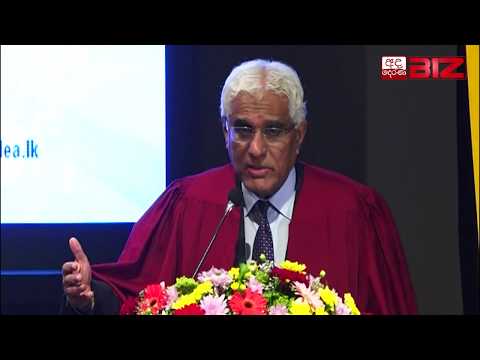
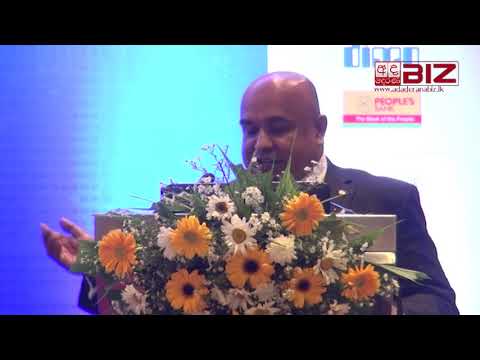
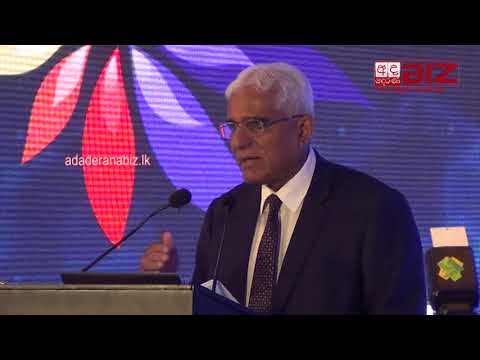
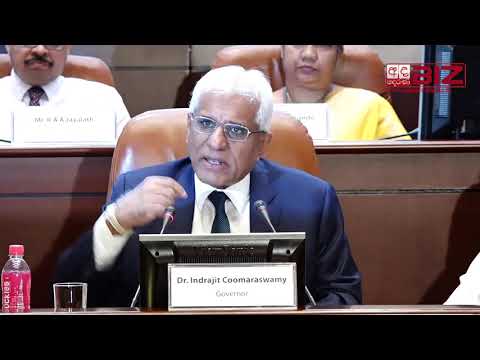
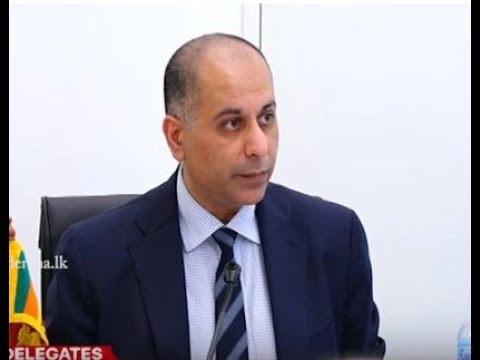
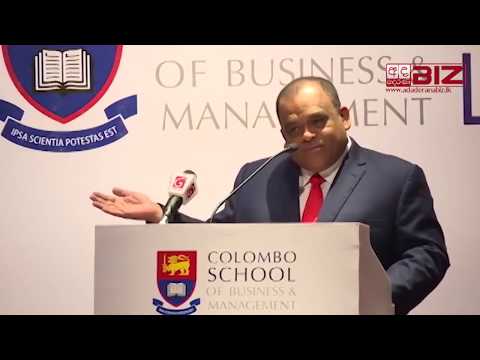
Under this Research Symposium, the CBSL held its flagship research event, the 14th IRC, on 8 December 2025. The Conference aimed at stimulating innovative theoretical and empirical research on various contemporary macroeconomic policy issues. Delivering the inaugural address at this event, Dr. Nandalal Weerasinghe, Governor of the CBSL, highlighted the multidimensional risks faced by small open economies, including geoeconomic fragmentation, rapidly evolving trade and financial patterns, and climate risks that amplify economic vulnerabilities. In this context, the Governor stressed the importance of research-driven policymaking.2
Dr. Michael D. Patra, Former Deputy Governor of the Reserve Bank of India, delivered the keynote address at the IRC. In his speech, titled 'Emerging Economies: Securing Stability Amidst Uncertain Times', Dr. Patra discussed the global trends, such as geopolitical uncertainties, economic and trade policy uncertainties, supply chain pressures, and financial market spillovers that threaten the economic stability of countries. He also underscored the need for emerging economies to forge pathways to hedge against these significant uncertainties by improving policy frameworks, identifying drivers of productivity and growth, strengthening economic buffers, pursuing climate harmony, and leveraging emerging technologies to safeguard long-term resilience.
The inaugural session of the IRC was followed by two technical sessions chaired by Mrs. Nelumani Daulagala, Senior Deputy Governor and Dr. Chandranath Amarasekara, Deputy Governor of the CBSL. Eight research papers in the areas of inflation forecasting, capital flows, credit dynamics, financial risks, sustainable development, financial inclusion and productivity, which were selected through a rigorous double-blind evaluation process from a large number of submissions, were presented by the local and international researchers. Alongside the Conference, the CBSL published the latest volume of its flagship research journal, Staff Studies.³
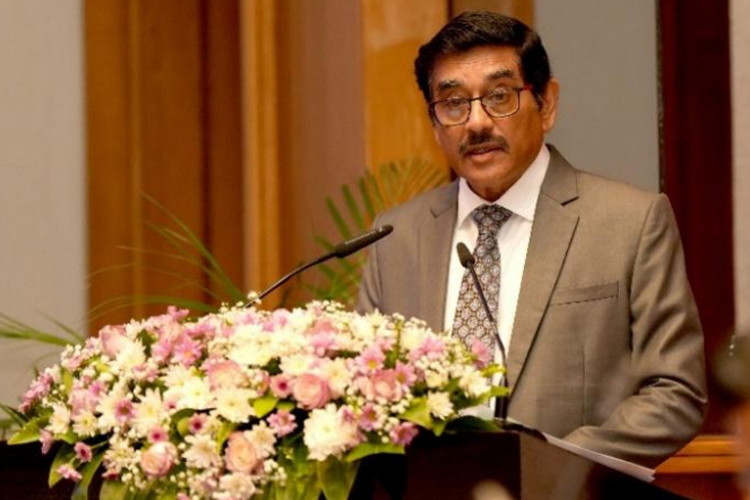

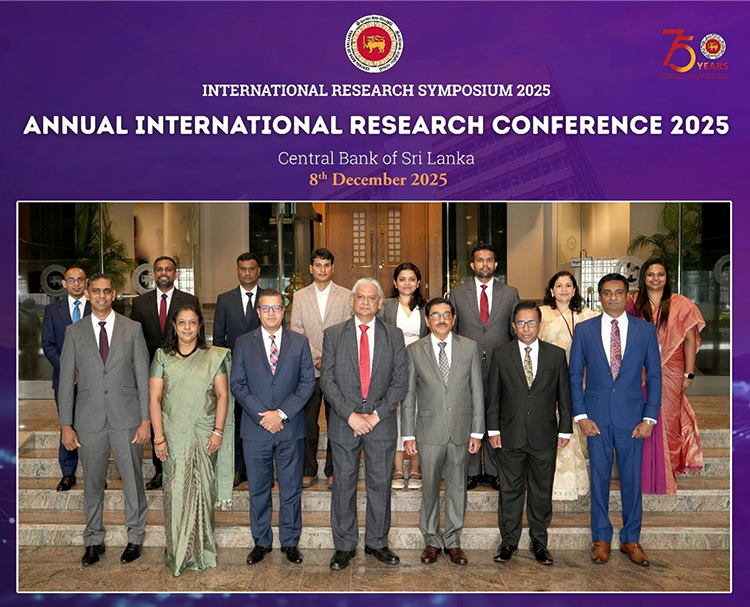
On the second day of the Symposium, the CBSL hosted the SF Database Seminar. Sri Lanka held the Chairmanship of the SAARCFINANCE Network in 2024. It is customary for the country that held the SAARCFINANCE Chairmanship in a particular year to host the Database Seminar in the subsequent year. Accordingly, the CBSL hosted the SF Database Seminar in 2025, with delegates from SAARC central banks participating both in person and virtually.
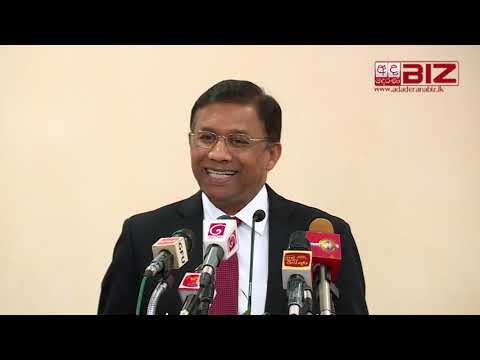
Delivering the keynote address during the inaugural session of the Seminar, Dr. Chandranath Amarasekara highlighted the importance of data and its effective use in achieving macroeconomic policy goals. He also pointed out that SAARCFINANCE Database can serve as a vital anchor in supporting the data-driven processes of the SAARC central banks, thereby strengthening regional stability.
The Seminar featured two technical sessions chaired by Dr. (Mrs.) Sujeetha Jegajeevan, Director of Economic Research, and Dr. Vipula Wickramarachchi, Additional Director of Economic Research of the CBSL. Seven insightful country papers were presented by representatives from Bangladesh Bank, Royal Monetary Authority of Bhutan, Reserve Bank of India, Maldives Monetary Authority, Nepal Rastra Bank, State Bank of Pakistan, and the Central Bank of Sri Lanka. These papers offered policy experiences and practical insights on addressing macroeconomic instabilities caused by external and domestic headwinds across the region as well as the use of novel techniques for policy making.
SAARCFINANCE Nodal Officers' Meeting was conducted on the sidelines of the Database Seminar. Recent developments and roadmap for the forthcoming year in relation to the database were discussed at this meeting.
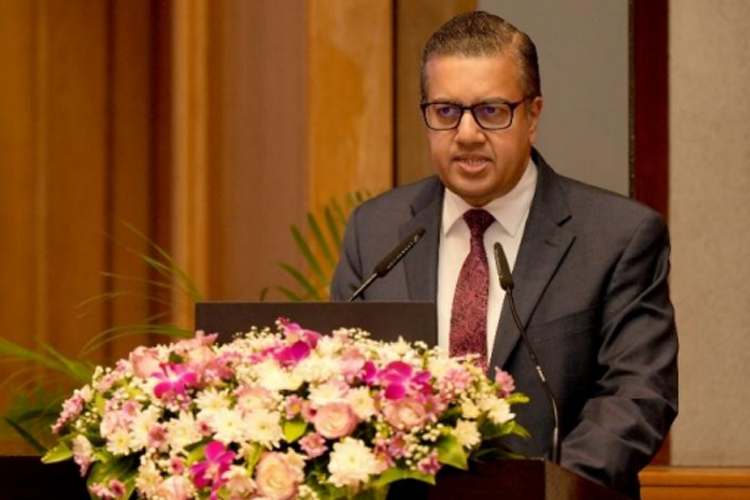

The final event under the Symposium was the 6th CBSL-ADB-APAEA Joint Workshop held on 10th December 2025.
Inaugurating the CBSL-ADB-APAEA Conference, Dr Nandalal Weerasinghe, Governor of the CBSL emphasised that the central banks must upgrade their analytical capabilities continuously and adopt evidence-based policymaking amid rapid global economic changes and technological advancements. He also emphasised the importance of establishing a collaborative research network among the policy practitioners and academia. Further, Prof. Paresh Narayan, the Founder and President, APAEA and Dr. John Beirne, Principal Economist of the ADB also underscored the importance of sustaining research collaboration between institutions and the critical role of research in informed policy making.
The workshop comprised two technical sessions featuring eight research paper presentations by authors from the CBSL, ADB and APAEA, covering contemporary areas such as credit cycles, inflation, capital flows, nowcasting of economic growth, climate shocks, fiscal rules and asset pricing models These sessions were chaired by Dr. Lasitha Pathberiya, Additional Director of the Economic Research Department of CBSL and Dr. John Beirne.

Video Story