

May, 27, 2025
By Prof. Samitha Hettige
Being an agricultural society, Sri Lankans including the ancestors of President Gotabaya, Minister Mahindananda & the officials investigating the payments to the Chinese fertilizer ship may have successfully used bio fertilizer from times immemorial. However, PM Dudley had to sign the ‘Rubber Rice Pact’ with China in 1952 to fight famine. A decade later Dudley launched the ‘Agricultural War’ (‘Wagaa Sangraamaya’ – 1965) to meet the growing food demands with scientifically backed usage of chemical fertilizer. When Gotabaya government decided to go 100% bio fertilizer, citizens who remembered the past may have wondered why other countries aren’t having such policies in their fights for food security & sustainable development.
2025 Kunming Declaration
The 3rd International Agrobiodiversity congress was held in Kunming, China last week. At the event global experts have urged greater global corporation to safeguard agricultural biodiversity & to focus technologies to foster resilient & sustainable food systems. Addressing the congress Marcela Quintero (deputy director general of the alliance of biodiversity international & international center for tropical agriculture) expressed concern about the people with food insecurity & malnutrition. The ‘2025 Kunming Declaration: Agrobiodiversity for More Effective Global Food Systems’ was the key outcome expected to address the global food crisis & climate change. The declaration will also propose innovative financing mechanisms & policy recommendations to promote transnational cooperation platforms & genetic resource sharing etc. (Ref. Media). This message should be taken seriously by Sri Lankans who are concerned about the malnutrition levels discussed more after the COVID 19 pandemic as scientists at the event believed that China's experience can offer valuable insights for other countries.
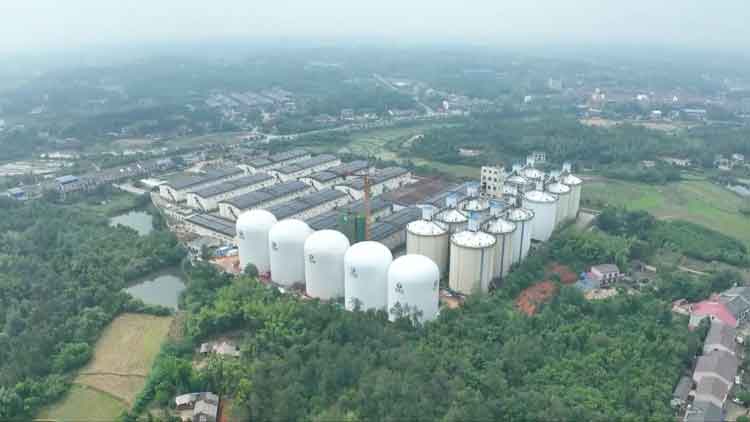
Next generation inflatable granary
The first five ‘Pneumatic Grain Storage Facilities’ have been successfully inflated this week in Changsha, Hunan. It is seen as an important step to develop the 4th generation grain storage technology. Each with a 24M diameter & 33M height has a 9000 tonne capacity enough to feed 23 million people for one day (more than the population of Sri Lanka). The pneumatic silos which can withstand rain & cold air has air tightness capacity 6 times more than national standards. Their thermal insulation performance is 3 times better than conventional squat silos. The nearly oxygen free environment helps control pests, ensure optimal grain quality with a 30% reduction in operational/ maintenance costs (Ref. Chengdu Grain Storage Research Institute).
Fate of ‘Oriental’ Granary?
Sri Lankans excelled in rice cultivation especially during the 1st century AD attracting international players including China earning the name ‘oriental granary’. 20 centuries later China is the largest consumer & the largest producer in the world (Ref. Statista). Many countries & UN agencies (which support countries fighting malnutrition & famine to increase food production) benefit from Chinese technology, harvest & even fertilizer. Trading with Chinese partners is thus on the rise. It may strengthen the organizational profiles of partners in other countries. Sri Lankans may learn more from other states about; food security, upholding the reputation of Sri Lankan banks, national image & very specially the difference between politics & governance.
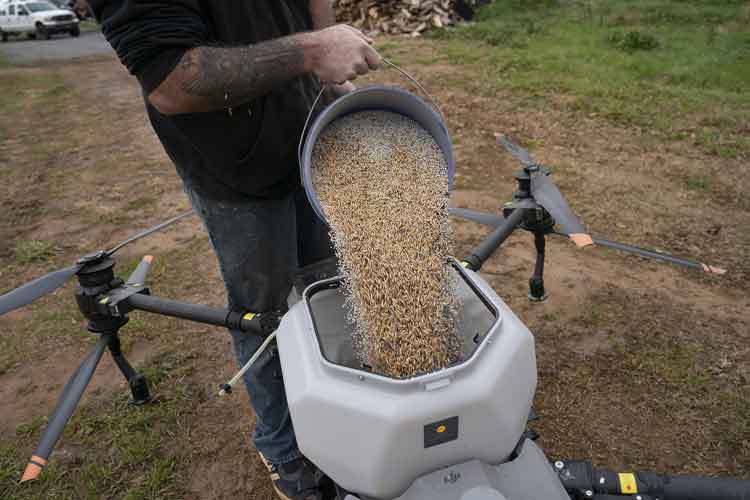
(Views expressed are personal/Photo: US farmers using drones for cultivation & inflatable granaries in China - source www).
Video Story