

December, 1, 2025
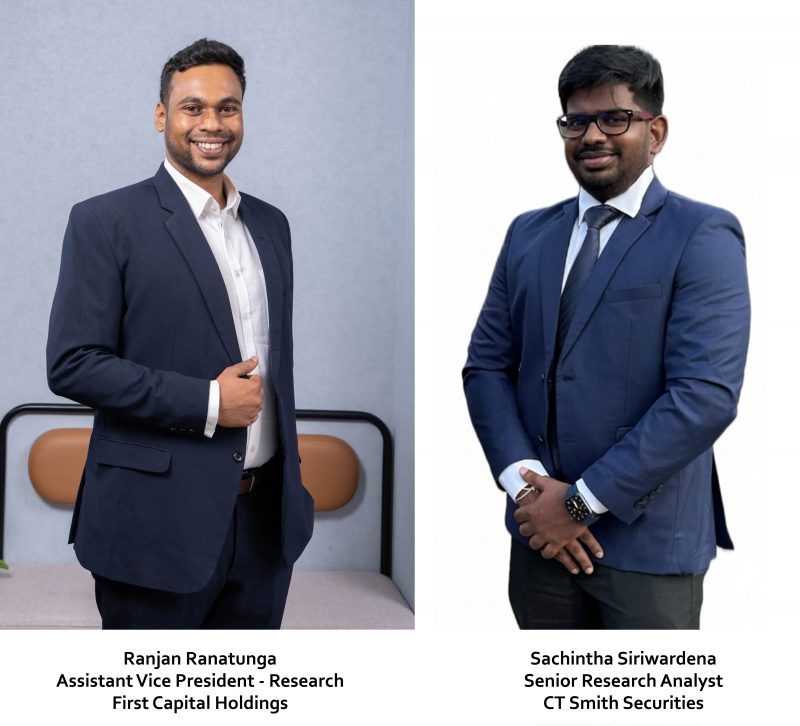
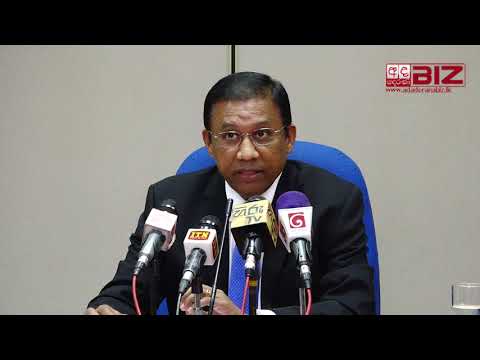
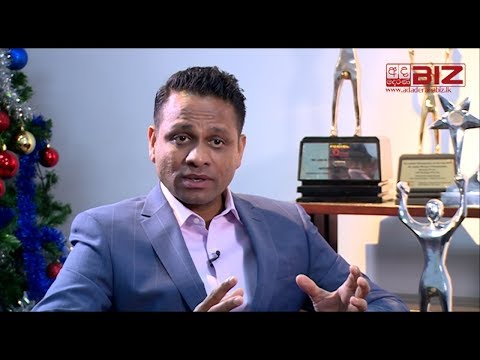
Following John Keells Holdings’ strong Q2 2025/26 performance, discussions have centred around how sustainable the momentum really is. In this joint interview, Sachintha Siriwardena – Senior Equity Research Analyst at CT Smith, and Ranjan Ranatunga – Manager of Research at First Capital Holdings, share their views on JKH’s sectoral performance, large projects such as City of Dreams Sri Lanka and the West Container Terminal, Group balance sheet strength, and where they see the greatest potential for value creation over the next few years.
Q: How would you characterise JKH’s Q2 performance, and how broad based was the contribution across sectors?
Sachintha: The quarter was broadly in line with expectations, with segments benefiting from clear tailwinds performing particularly well. Retail remained a major driver on the back of BYD sales, and Financial Services delivered a solid quarter as Nations Trust Bank continued its strong run. These helped offset weaker profitability in Transportation, where an unfavourable volume mix weighed on margins, despite CWIT ramping up ahead of expectations and SAGT gaining from higher throughput at the Port of Colombo. City of Dreams Sri Lanka was close to EBITDA breakeven, and although finance costs from newly opened components affected the bottom line, Group gearing remains comfortable.
Ranjan: There was a diversified contribution. Consumer Foods posted robust growth, driven mainly by volume improvements across Beverages, Confectionery, and Convenience Foods as disposable incomes recovered. Retail profits were led by BYD, with revenues realised on 3,705 vehicles during the quarter. Meanwhile, Property and Financial Services benefited from the lower interest rate environment. With this mix, we do not expect performance to depend excessively on any single business, including JKCG, thus leading us to believe that this performance is sustainable over the medium term.
Q: How comfortable are you with JKH’s balance sheet, cash flows and risk management after such a large investment cycle?
Ranjan: Lower interest rates have already supported the Property and Financial Services segments and should continue to do so. With major investments in City of Dreams Sri Lanka, the West Container Terminal and capacity expansions in the consumer businesses now largely behind them, JKH is entering a phase where rising recurring EBITDA, strong operating cash flows, and a more stable capex outlook create room for further deleveraging as well as disciplined growth.
Sachintha: As at 30th September 2025, gearing stood at around 32%, or about 30% excluding JKCG’s trade facilities, which is manageable for a group of JKH’s scale. At present, the debt maturity profile is weighted toward FY26 and FY27, but given current cash generation ability and access to refinancing, there is sufficient flexibility to meet upcoming obligations. In fact, cash flows have strengthened in recent quarters, supported by steadier EBITDA across core businesses and the absence of large near-term capex. Together, these factors give the Group a more predictable cash position and reinforce its ability to meet ongoing commitments.
Furthermore, the Group manages currency and interest rate exposure through a mix of rupee and US dollar instruments and by aligning borrowings with the wider debt profile. Thus, rising contributions from Leisure and Transportation will enhance foreign currency liquidity, helping absorb movements in both the Rupee and global exchange rates. Accordingly, we see that the borrowing book is actively recalibrated, combining fixed, variable and hedged positions, with refinancing undertaken where appropriate.
Q: JKH has invested heavily in City of Dreams and other property projects. How do you view the scale of these investments and their return profile?
Sachintha: City of Dreams is a substantial investment of about USD 1.2 billion and became fully operational in August 2025. Given its scale and the nature of the underlying businesses, returns will build gradually rather than immediately. Other developments such as VIMAN and TRI-ZEN have already recorded steady sales momentum. Together, these projects are positioned to enhance the Group’s long-term revenue mix, though the pace of contribution will depend on how broader demand conditions evolve.
Ranjan: Sri Lanka’s tourism recovery, supported by rising Indian arrivals, has been key to the improvement in leisure profitability. Occupancies at Sri Lankan Resorts rose to 71% in Q2 FY26 from 64% a year earlier, while Colombo Hotels improved to 73% from 66%. We see City of Dreams becoming a meaningful profit driver more in the medium term, given initial costs. By FY28, under the 50:50 EBITDA sharing model for the casino, we estimate it could contribute around LKR 6.8 billion, supported by stronger hotel occupancies and a projected mall occupancy of over 90% at Cinnamon Life.
Q: How is the leisure segment positioned as tourism recovers and City of Dreams moves from preopening to revenue generation?
Sachintha: Leisure continued its steady recovery, with higher occupancies and stronger rates across the local resort portfolio. In Colombo, occupancy has improved even though rates remain constrained by the larger room inventory. The Maldivian resorts also delivered a stronger quarter, with growth in both rates and occupancies supporting margins. With City of Dreams now fully operational, the segment is shifting from preopening costs to revenue generation, which should gradually lift profitability as tourism strengthens. City of Dreams is attracting more MICE and high-end gaming visitors as well, which should support revenue and earnings over the coming years.
Ranjan: Looking ahead, the key indicators for City of Dreams are hotel occupancy levels and arrivals from India, a core target market for the casino. Stronger inflows from India will be important for accelerating breakeven. For the wider leisure portfolio, the path of global interest rates also matters, given the inverse relationship between rates, disposable incomes and travel spending.
Q: Supermarkets are low margin and modern trade is still developing in Sri Lanka. How has JKH adapted its retail model to protect margins and sustain growth?
Ranjan: Although retail is inherently low margin, JKH’s model carries several advantages. Its private label accounts for about 5% of the product range, and investments in renewable energy, the broader green concept, and value-added services such as in-store bakeries and EV charging help support higher than industry margins. More than 75% of the store network is located in the Western Province, allowing the business to capture higher income, higher spending customers. This positioning boosts footfall and basket value, underpinning comparatively stronger margins.
Sachintha: JKH has managed margin pressures through operational efficiency and disciplined expansion. The modern distribution centre has improved supply chain flow and reduced handling costs, while the ongoing shift from general trade to modern trade has supported both margin resilience and growth.
Q: How sustainable is the current momentum, particularly with BYD’s rapid growth, and what external variables will matter most for earnings?
Ranjan: Consumer Foods, BYD, Property and Financial Services were the primary growth contributors in the quarter, not just BYD. We do expect the exceptionally strong growth in BYD to moderate toward FY27 as pent-up demand eases, though its attractive pricing should help it retain a leading position in the EV segment. More broadly, domestic consumer spending remains the key catalyst for the Consumer, Retail and Property businesses, which together account for close to 75% of Group revenue.
Sachintha: Transportation recorded strong volume growth, though margins were held back by an adverse volume mix. The uptick in activity at the Port of Colombo and CWIT’s better than expected ramp up still point to a stable underlying trend, with future trade flows dependent on stronger demand from India and fewer disruptions along the main East-West shipping route. Leisure will continue to track tourism flows, while Retail and Consumer Foods will move in line with domestic consumption. Given the Group’s diversified portfolio, near term earnings reflect a blend of these segment-specific drivers rather than any single macro variable.
Q: How do you see investor sentiment today, and where is the greatest value creation potential over the next three to five years?
Sachintha: Conglomerates typically trade at a discount to their sum of the parts, and JKH has been no exception, particularly given earlier uncertainty around returns from City of Dreams. As the project ramps up and begins to demonstrate the potential for medium to long term earnings, that perception is starting to shift. Institutional investors want to see returns on the significant investments made over the past decade, and with newly developed projects beginning to contribute, sentiment towards JKH’s long term prospects remains positive. JKIT continues to advance the Group’s digital agenda through strategy, cloud and platform solutions, including ERP modernisation via SAP S/4HANA and RISE with SAP, which should strengthen operational reliability.
Ranjan: Market sentiment today is mixed, mainly due to uncertainty surrounding the long-term trajectory of the BYD business and the casino licence, although the strong Q2 FY26 results have helped restore confidence. Looking ahead three to five years, we see substantial value creation from the investment cycle of the past decade: City of Dreams Sri Lanka, West Container Terminal, capacity expansions in the consumer businesses and profit-sharing joint ventures with partners such as BYD and Adani. Key indicators for shareholders include hotel occupancies and Indian tourist arrivals for City of Dreams, container volumes and the domestic versus transhipment mix for West Container Terminal, and vehicle sales volumes for the BYD operation. Together, these will determine how quickly JKH converts its investment pipeline into sustained earnings and shareholder value.
Video Story