

January, 20, 2023
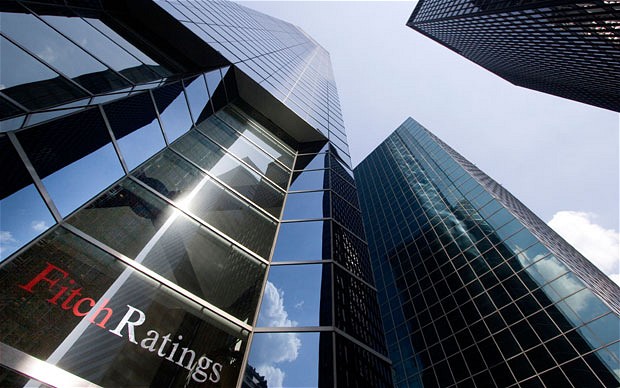
Fitch Ratings has downgraded the National Long-Term Ratings of five Sri Lankan finance and leasing companies (FLCs) after the recent sovereign downgrade and recalibration of the agency's Sri Lankan National Rating scale. The FLCs' ratings remain on Rating Watch Negative (RWN). The downgrades follow similar action on 10 Sri Lankan banks. For details, see "Fitch Downgrades 10 Sri Lankan Banks' Ratings", dated 12 January 2023.
The recalibration of the national scale is to reflect changes in the relative creditworthiness among Sri Lankan issuers following Fitch's downgrade of Sri Lanka's Long-Term Local Currency Issuer Default Rating (IDR) to 'CC' from 'CCC'/Under Criteria Observation on 1 December 2022. Fitch typically does not assign Outlooks or apply modifiers to sovereigns with a rating of 'CCC+' or below.
National scale ratings are a risk ranking of issuers in a particular market designed to help local investors differentiate risk. Sri Lanka's national scale ratings are denoted by the unique identifier '(lka)'. Fitch adds this identifier to reflect the unique nature of the Sri Lankan national scale. National scales are not comparable with Fitch's international rating scales or with other countries' national rating scales. For details, see "Fitch Ratings Recalibrates Sri Lanka's National Rating Scale", dated 19 December 2022.
The recalibration of the Sri Lankan National Rating scale has resulted in downgrades of the National Long-Term Ratings of the following Fitch rated FLCs:
- People's Leasing and Finance PLC (PLC) to 'A-(lka)'/RWN from 'A+(lka)'/RWN;
- Central Finance Company PLC (CF) to 'A-(lka)'/RWN from 'A+(lka)'/RWN;
- CBC Finance LTD (CBCF) to 'BBB+(lka)'/RWN from 'A(lka)'/RWN;
- HNB Finance PLC (HNBF) to 'BBB+(lka)'/RWN from 'A(lka)'/RWN; and
- Siyapatha Finance PLC (Siyapatha) to 'BBB+(lka)'/RWN from 'A(lka)'/RWN.
The National Ratings of other Sri Lankan FLCs, which are not mentioned in this commentary, have not been affected by the recalibration. Still, their credit profiles generally remain exposed to heightened downside risks in the current operating environment.
The downgrades of the National Ratings of PLC and CF are driven by the downgrade of the sovereign's Long-Term Local-Currency IDR and the recalibration of the Sri Lankan National Rating scale. They also reflect their relative creditworthiness among Sri Lankan issuers, including the larger banks. A probable default on the sovereign's local-currency obligations increases the risk that authorities will impose restrictions on FLCs servicing their local-currency obligations, like for the banks. That said, we believe that this risk is lower than non-payment by the sovereign.
The downgrades of CBCF, HNBF and Siyapatha stem from the downgrades of their bank parents - Commercial Bank of Ceylon PLC (A(lka)/RWN), Hatton National Bank PLC (A(lka)/RWN) and Sampath Bank PLC (A(lka)/RWN), respectively - due to the recalibration of the bank parents' National Ratings. These FLCs remain rated two notches below their respective parents' ratings, reflecting the finance subsidiaries' limited importance to their bank parents.
We have maintained the National Ratings of PLC and CF on RWN, in line with the RWN on other standalone-driven Sri Lankan banks and FLCs. This reflects the potential for further credit deterioration on the Sri Lankan National Ratings scale as sovereign local-currency default risk rises and economic pressures intensify. The RWN on CBCF, HNBF and Siyapatha reflect those of their parents.
The National Ratings of PLC and CF are sensitive to a change in the FLCs' creditworthiness relative to other Sri Lankan issuers.
The RWN reflects rising risks to PLC's and CF's ratings from funding stresses, which could lead to a multiple-notch downgrade. We expect to resolve the RWN when the impact on their credit profiles becomes more apparent, which may take more than six months. Developments that could lead to a multiple notch downgrade include:
- funding stress or significant intervention by authorities that constrains the FLCs' ability to service their obligations;
- a temporary negotiated waiver or standstill agreement following a payment default on a large financial obligation, or where Fitch believes that the company has entered into a grace or cure period following non-payment of a large financial obligation.
- a deterioration in their credit profiles relative to other local Fitch-rated entities may also result in negative rating action: examples include a greater deterioration in asset quality, funding costs and/or profitability leading to more significant capital erosion relative to peers;
- a further downgrade of the sovereign rating stemming from a default event could also lead to a downgrade of the ratings.
CBCF, HNBF and Siyapatha's ratings are sensitive to changes in their respective bank parents' credit profiles, as reflected in the parents' National Long-Term Ratings, as well as Fitch's opinion around the parent's ability and propensity to extend timely extraordinary support. Developments that could lead to a downgrade include:
- insufficient or delayed liquidity support from the parent that hinders the subsidiary's ability to meet its obligations in a timely manner;
- intervention by authorities that constrains the subsidiaries' ability to service their obligations;
- increased size relative to the parent that makes extraordinary support more onerous for the parent;
- Fitch perceives a weakening in the parents' propensity to support their finance subsidiaries due to weakening links.
There is limited scope for upward rating action given the RWN. The resolution of the Rating Watch with an affirmation is likely to be driven by our view that the risks from funding and sovereign-related stresses have stabilised for the rated entities.
Fitch has downgraded the FLCs' national scale debt ratings correspondingly, where assigned. The senior unsecured debt ratings of PLC and Siyapatha are rated at the same level as the companies' National Long-Term Ratings, in accordance with Fitch's criteria. This is because the debt ranks equally with the claims of the entities' other senior unsecured creditors.
HNBF's and Siyapatha's outstanding Sri Lankan rupee-denominated subordinated debt is rated two notches below the National Rating anchor. We have applied our Bank Rating Criteria in rating these instruments, as we view the prudential capital framework for finance companies to be closer to that for banks in Sri Lanka. The ratings reflect our baseline notching for loss-severity for this type of debt and our expectations of poor recoveries in the event of default. There is no additional notching for non-performance risk, as the debentures have no going-concern loss-absorption features, in line with Fitch criteria.
The RWN on the debt ratings reflects the RWN on the anchor ratings.
Video Story