


October, 2, 2019
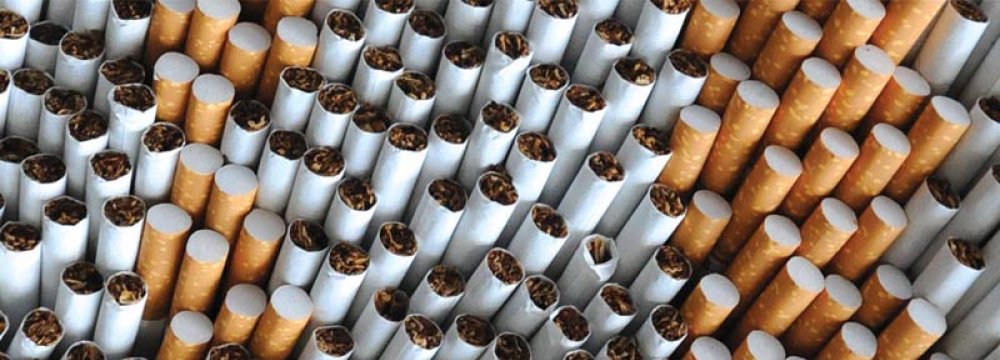
The Research Intelligence Unit (RIU) in its recent report titled “Economics of Tobacco Taxation in Sri Lanka: Effects and the need for a Prudent Framework” revealed that the current tax policy has caused significant market distortions from legitimate to illicit, which will undermine the Government’s efforts to deter smoking.
Most recently, at the Big Issue Sri Lanka Economic Forum, the RIU pointed out the need to have a coherent and sustainable excise tax policy on tobacco to meet the government’s health objectives, while maximising government revenue.
In the same forum, the RIU also showed that Sri Lanka is one of the most expensive countries to purchase cigarettes and thus, has become a hotspot for smuggling.
According to the report; Disproportionate application of tobacco taxation of beedi has enhanced the affordability of beedi. Rs.3 tax on a stick of beedi can generate an additional Rs. 7.5 billion annual revenue for the government.
“Current excise taxation puts a greater burden on low income groups than the upper income groups, eroding the real incomes of low income individuals. This will have serious implications in terms of increased poverty levels.”
“Our analysis indicates the tobacco excise tax policy in Sri Lanka is characterised by low elasticity, low buoyancy and low predictability of tax revenues, which could be a result of the improper structuring and/or revenue leakages from the growing illicit market,” Roshan Madawela, Founder and CEO of RIU said.
In 2012, the illicit share in Sri Lanka was under 10% of the total market. A 52% increase in the price of cigarettes in October 2016 and several increases that followed has made Sri Lankan cigarettes the most expensive, in absolute terms on the purchasing power parity (PPP) basis globally, by 2018.
The base case estimate indicates the illicit share to be around 14% in 2018 and with the 2019 July excise revision, it is about to increase to 21% in 2019.
“The value of the illicit cigarette market will reach 24 billion in 2019 up from 15 billion in 2017 at the expense of the legitimate industry,” the report said.
“The illicit beedi market is worth around Rs. 4 billion to 5 billion and accounts for about 5 to 6% of the legitimate market.”
“This massive size of the illicit market means a loss of revenue for the Government, to the industry and for those whose livelihoods are connected with the tobacco industry - such as tobacco farmers and beedi rollers,” the report added.
“In 2019 the Government stand to lose over Rs.14billion due to illicit cigarettes. This is equivalent to around 36% of the annual Samurdhi spending.”
“Furthermore, the illicit tobacco network is also a threat to national law and order as well as security.”
“Thus, the Government must not rule out the threat it poses to the country and must take action to track down supply chains,” the report said.
Worth over Rs.190 billion, the tobacco industry is a major contributor to the economy in terms of providing jobs and sustaining livelihoods.
Moreover, the industry generates over Rs. 100 billion in tax revenue for the government through excise duty and other taxes.
The RIU has always been an organization that has addressed issues of national interest and has been advocating pursuance of prudent policies. It was one of the first organisations to carry out a study to understand the impact of the Chrysotile ban in Sri Lanka and accurately predicted a potential diplomatic blunder that could arise from this ban.
This report is an extension to the RIU’s previous report “Towards a Sustainable Policy Framework for the Tobacco Industry in Sri Lanka” where their research focused on estimating the size of the market and understanding the key driving factors of illicit tobacco trade.
Using the findings, the RIU attempts to recommend a list of policy prescriptions to curb the growth of illicit trade.
Video Story