By Dr. Thanerimudalige D.G. Canisius
(Some views and questions on the current developments with respect to the SLIIT.)
In the midst of praise that I normally hear, recently I heard that the SLIIT is again facing criticism of my fellow countrymen. However, I was unaware of its intensity and seriousness until a couple of days ago when I was on a phone call to a relation in Sri Lanka. Subsequently I searched the internet and came across what seems to be a significant, sometimes venomous, campaign against the SLIIT. It is an understatement if I am to say that the negativity of the material I discovered saddened me greatly for the country.
During my internet search I discovered a significant amount of criticism of the SLIIT management, including allegations of privatisation ‘for greed’. Also, I discovered on the SLIIT website what is called the ‘true story’, which is a strong rebuttal of the accusations levelled against it. Both sides seemed to strongly believe in their versions; with the SLIIT ready to defend itself and the detractors seemingly ‘ready for a fight’. Sadly, I feel that this dispute, which seems an attempt by the government to take control/‘ownership’ of the SLIIT, might be at great expense to the country, especially its youth, in the same way that children are badly affected when parents continually quarrel. Hence, I ardently desire and strongly wish that all parties sit together and come to a fair and amicable settlement, setting an example to everyone within our shores and beyond.
Owing to what is at stake for the country and its progress in an increasingly competitive world, I hope that all stakeholders would consider facts and implications of their decisions very carefully. With the hope of helping careful and rational thinking at a time when emotions can run high and the development of comprehensive holistic decisions about the future of the SLIIT, I have posed below a set of questions for all to consider.
In case any reader wonders why I am concerned about the current sad situation, as a chartered structural engineer who has reached the pinnacle of his profession by being a Fellow of the Institution of Structural Engineers (FIStructE), I believe I have a duty to speak when there are signs that the progress of the profession can be affected. Besides, I have been very impressed by the progress of the SLIIT since its inception, due in no small measure to its leadership team and their vision, including that of Prof. Lalith Gamage who was highly admired and respected at the University of Moratuwa where I was an Assistant Lecturer. Hence, last year when I decided to donate most of my very large UK collection of books on structural and civil engineering to a library, I chose the SLIIT to be the recipient from among institutions in the UK and Sri Lanka.
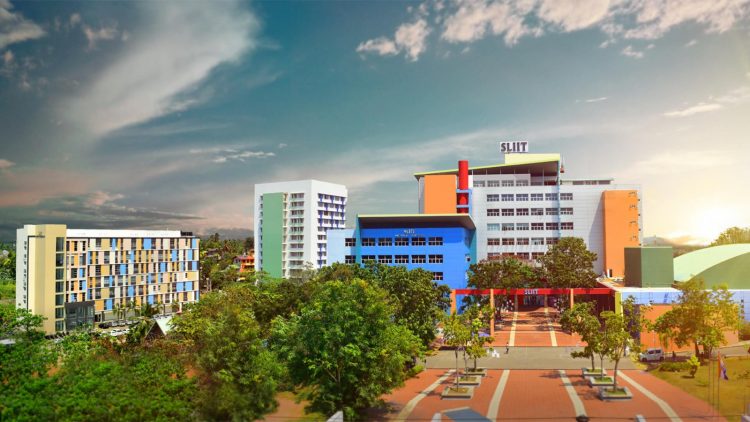
Last year I visited the SLIIT for the first and only time to make the formal donation of my books. There I was given a short tour of the campus and I met very enthusiastic students and staff who were proud to show and explain to me their project work and experiments. This was an enthusiasm I had not experienced in the many universities I have visited on a professional basis in the USA, Canada and the UK. They were highly motivated teams, for which the top leadership team deserve great credit.
I strongly believe that it would be a great mistake if the current dispute leads to demotivation of staff and students such as those whom I met there. Thousands of children depend on the SLIIT for their future careers; most are compelled to do so because, although intelligent and capable, and their parents would have paid tax to the state like others, the capacity limits in our public universities and the basis of selection would work against them. Their future depends not only on the SLIIT as an institution but also on the quality, motivation and dedication of its staff, especially of those who give leadership and have foresight to know the future needs of society and the economy of the country. People who understand human motivation would know that a disruption of the status of the institution, even if it is just to be “under Mahapola” and “with the same structure”, would not bring the same positive results in our country where political interference in institutions is not uncommon.
Owing to the above, I request the Government, the Opposition, the COPE, Mass Media, engineering professionals, concerned citizens and other stakeholders to consider the following questions in relation to the future of the SLIIT (and any other similar institution).
- Could politicians and agitators against the SLIIT be setting a bad precedent in a country that needs investment by the private sector?
Should such investment be only financial, or should it also include the drive and efforts of individuals who are committed to a cause that they believe in and would do their utmost to achieve their goals for the benefit of the society?
- For an Institution that was started from scratch, with its success having mostly, if not solely, dependent on the vision, personal conviction and efforts of its leaders, and its legal status being determined by the approval granted by the governments of the time, is it prudent to reverse those decisions of a government once the institution has become a great (and unique) success?
Could such an action to reverse previously made government decisions be detrimental to the existence and success of the institution?
Would such an action discourage new investors from taking part in future high-risk endeavours that require personal dedication?
Would such an action discourage people of vision and drive from helping to develop the country and its people, especially if they fear that their products could be then snatched away from them?
- Would the SLIIT have been born and existed without the vision and efforts of Prof Lalith Gamage?
Are there others with such vision, drive and experience available to take over the leadership roles if the current team either leave in protest or are made to leave?
If not, what could be the result of the disruption that some critics and campaigners seem determined to cause?
- Why are the state universities, which receive the cream of our youth as identified by the AL exam, seem to have been unable match the rate of progress achieved by the SLIIT, both locally and internationally, within a short space of time?
Are those universities the first choice of most AL students because of the free education they offer, despite the anticipated disruptions from students’ strikes and the distress due to first year ragging?
- Is a major reason for SLIIT’s success, in addition to its phenomenal leadership team and staff, it being a private institution that allows it to innovate and expand without being unduly constrained by rules and regulations and to attract excellent teachers and researchers?
(Most of the world’s top universities are either private, e.g. Harvard, Princeton, Yale and Stanford in the US, or have significant autonomy and private assets and incomes, e.g. Oxford and Cambridge in the UK).
Would taking the SLIIT under government ‘sponsorship’ via the Mahapola Trust eliminate such independence that has driven, and drives, its success?
Although it is said that “its structure would remain the same” if brought within the Mahapola Trust, can anyone guarantee that ambitious and/or envious politicians would not poke their fingers in and even would not attempt to gradually change the structure?
Is there any public institution in Sri Lanka where there is no political influence and/or interference in their operation and staffing? If not, could the same fate befall the SLIIT, with appointees being for whom it would be only a job to earn a living and satisfy their masters, instead of being a vocation that requires dedication and sacrifice?
- If the SLIIT is brought under the Mahapola Trust, what is the possibility of it failing financially, for example if paying students would not be attracted to it because they do not see the same prospects as before?
Could the SLIIT become another institution that the state has to feed from its declining coffers and is unable to stand on its own feet?
From where would the money to fill gaps in funds come? Would it mean more tax and/or foreign borrowing?
Could the cost of disruption and potential damage, not only to the SLIIT but also to the country, be worse than any benefit that accrues?
(For example, aspects at risk could be the excellent leadership, the high regard employers have for the SLIIT, which improves job prospects, and established international connections with foreign universities that improve prospects for training and employment abroad while also increasing the prestige of their degrees.)
- Was a cost-benefit analysis carried out on the proposed change, i.e. bringing SLIIT under the Mahapola Scholarship Trust?
For example, have the aforementioned issues considered in relation to quantifiable and non-quantifiable consequences?
Could the country drop this valuable and unique treasure into an abyss as a result of the COPE/Government wanting to hold it in their inexperienced, and possibly weaker, hands by snatching it from those who are carrying it safely to greater heights?
- What has made the salaries of staff become a point of discussion for some commentators at a time the ownership of the institute is the issue raised at COPE?
Do they realise that they are complaining about salaries of internationally high-flying staff who could easily obtain foreign employment with much greater remuneration?
Do we want to lose them when their presence is currently sustainable without being a burden to the government?
Are we aware that successful private companies get the best international personnel by paying them attractive salaries? If SLIIT is becoming successful also internationally, should not their staff remuneration be similarly competitive?
(A private institution would provide salaries that it could afford based on the incomes derived. It is a decision to be taken by its board of governors by considering the current sustainability and anticipated future income and growth.)
- Is the SLIIT a monopoly or one operating among many locally-based competitors, some of whom could be part of foreign institutions?
Are the competitors as successful as the SLIIT and, if not, why?
If the SLIIT is to fail or slip down in its status due to the current turmoil caused by various actors, would more students go abroad, draining the precious foreign exchange resources to foreign institutions?
Even if they are to enrol at the local branches of foreign institutions, would not their profits move abroad whereas the SLIIT, as a non-profit distributing company, recycles its surplus within the institution? Which is better for our country?
- If SLIIT can continue progressing without the continual distractions of its enemies, would we soon have a great institution that could be the local equivalent of the greatest universities of the world, even attracting significant numbers of foreign students to fill the foreign exchange coffers of the government?
(Higher Education is a significant employment and income earner for countries such as the USA, the UK and Australia that attract significant numbers of foreign students every year. Sri Lanka could join this league if we build a university to be globally competitive and remain autonomous in its operations and be independent. Otherwise, there can be serious limitations of local students’ places in a publicly funded institution being given to foreign students.)
A common complaint about us Sri Lankans is that we would try to bring down anyone who is successful. As if to justify this, it seemed to be with much glee that some videos I saw recently expressed negative opinions on the SLIIT. Hence, my plea to everyone is to go beyond emotional or political considerations and consider the current situation rationally.
I hope professionals and students will raise their voices in support of the SLIIT and politicians will listen and join them to protect and nurture this unique treasure for our future generations. For this, we need to also ask ourselves:
- How many great institutions like the SLIIT, developed by the foresight and unrelenting efforts of a dedicated team, exist in Sri Lanka?
- Should we develop more of such institutions, instead of potentially destroying the treasure we already have?
- Should the nation’s efforts be better spent on determining how, where necessary, public institutions can be raised to the standards of the SLIIT and at developing more such institutions, instead of at constant harping and sniping that have now existed for many years?
- Should people who develop such great institutions have the nation’s highest accolades, for what they have achieved in the midst of adversity in a field filled with significantly more powerful international educational institutions that advertise perpetually to attract our students and deplete the country’s foreign exchange reserves?
- Should we disregard the fact that our country was financially strong at the time of independence, but is carrying a begging bowl now? Do people say that it was because of short-sighted, and sometimes either ignorant or selfish, policies of at least some politicians?
- Do we want to destruct the SLIIT for it to become another example of the tragic history of our country?
Dr. Thanerimudalige D.G. Canisius
Consulting Engineer
BSc (Hons) in Civil Engineering (Moratuwa);
MASc and PhD in Structural Engineering (Canada)
Chartered Engineer (CEng), United Kingdom
Fellow of the Institution of Structural Engineers (FIStructE), UK and International
(Former Assistant Lecturer in Civil Engineering, University of Moratuwa)