

January, 14, 2026
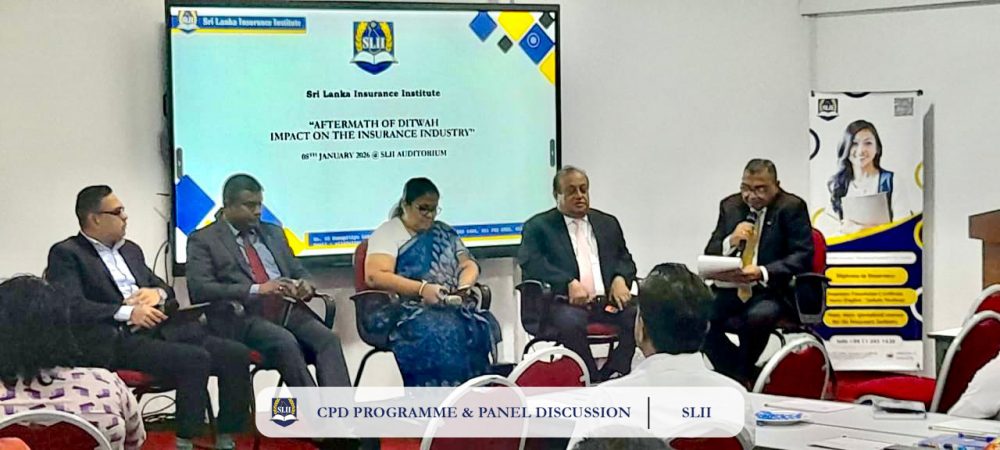
The Sri Lanka Insurance Institute (SLII) recently hosted a thought-provoking programme at its Auditorium, drawing a large gathering of industry professionals on ‘Aftermath of Ditwah: Impact on the Insurance Industry’. The session provided timely insights into post-Ditwah challenges, regulatory considerations, claims management, and the evolving risk landscape.
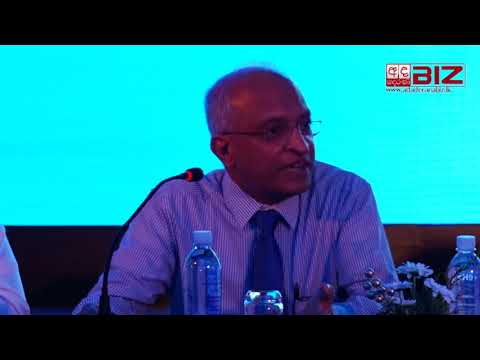
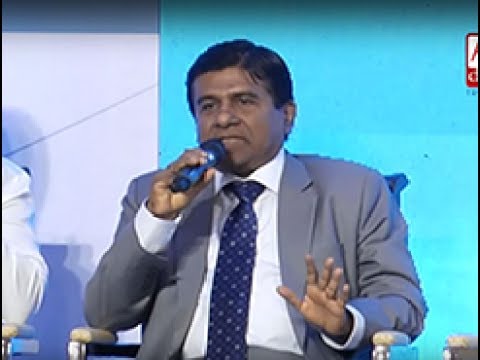
The programme was moderated by Mr. Ainsley Alles- Deputy Chairman/Managing Director of Senaratne Insurance Brokers (Pvt) Limited. The distinguished panel featured leading voices in the insurance sector; namely, Mrs. Damayanthi Fernando - Director General of the Insurance Regulatory Commission of Sri Lanka (IRCSL); Dr. Jagath Alwis - Executive Director of Ceylinco Holdings PLC; Mr. Tanuj Edward - Managing Director/CEO of Orient Insurance Ltd; and Mr. Sithumina Jayasundara - Director/CEO of HNB General Insurance Ltd.
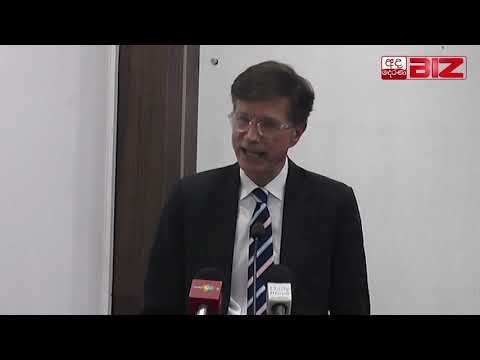
In his opening remarks, Mr. Alles noted that the cyclone had devastated many livelihoods and businesses. He pointed out that most homes and SMEs had not been insured, leaving them dependent on the State for reconstruction and renovations. As of 5th January 2026, insurers had received claims exceeding Rs. 52 billion from more than 24,200 clients.
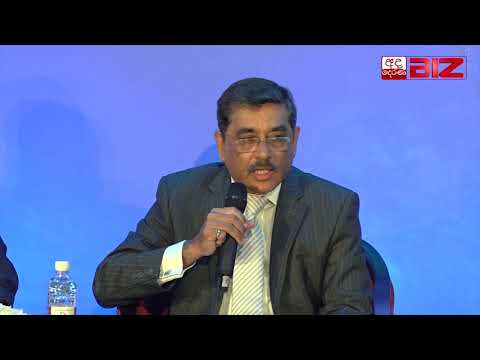
Mrs. Fernando, Director General of the IRCSL, elaborated on the steps taken by the regulator in the aftermath of Ditwah, while highlighting the high-level discussions held with insurers, loss adjusters, and brokers to ensure the speedy settlement of claims. She also underscored the gaps in insurance penetration across the country and emphasized the need for regulatory reforms to address them. She further underlined that insurers and brokers must reach wider segments of the population with simplified, accessible policies, enabling more people to obtain coverage and thereby improving insurance penetration across the country.
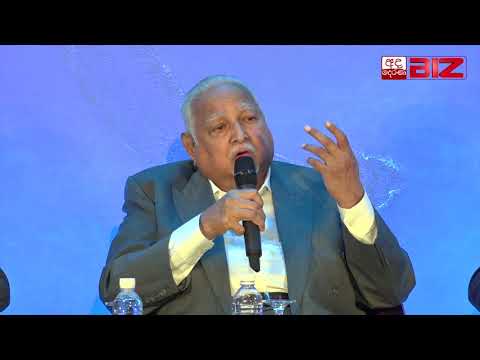
Dr. Alwis highlighted the lessons Ditwah revealed about the adequacy of catastrophe risk modelling in Sri Lanka. He called for the reintroduction of a National Catastrophic Insurance Programme, enabling the public to access essential coverage against future disasters.
Mr. Edward examined the implications of Ditwah on reinsurance arrangements, noting that existing programmes helped keep insurers’ net losses at manageable levels. However, he cautioned that the cost of reinsurance is likely to rise at the next renewal cycle once the current losses have been settled by insurers and reinsurers.
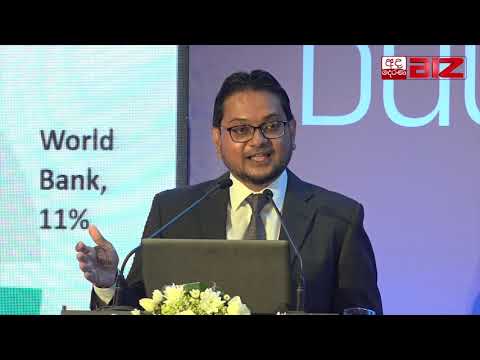
Mr. Jayasundara focused on innovations in product design, particularly micro insurance and parametric insurance covers, which could provide affordable protection for vulnerable communities and also strengthen underwriting portfolios against future calamities.
SLII’s initiative underscored the importance of collective industry dialogue in building resilience and safeguarding communities against future disasters.
Video Story