

February, 6, 2026
Climate shocks are increasingly shaping Sri Lanka’s economic recovery, with floods and extreme weather events now posing risks that extend well beyond immediate damage. Tourism continuity, investor confidence, and recovery timelines are emerging as key concerns as climate disruptions become more frequent.
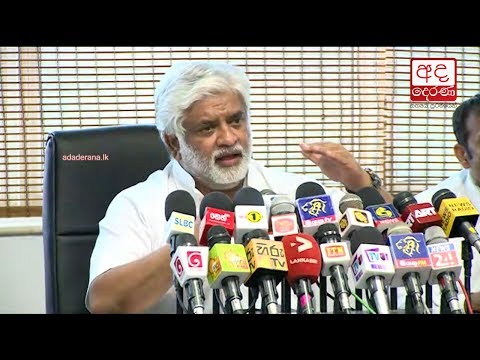
Investor and fund manager Arj Samarakoon, widely known as Arj Samarakoon, said climate events should now be viewed as economic stress events rather than isolated natural disasters. According to him, the long-term economic impact of climate shocks depends less on exposure and more on how prepared institutions are to respond.
Sri Lanka’s recent floods have once again highlighted the importance of recovery credibility. While emergency relief remains essential, longer-term outcomes are shaped by how quickly infrastructure is restored, employment stabilised, and confidence maintained among investors and businesses.
He pointed to Australia’s experience as a relevant comparison. Despite facing frequent cyclones, bushfires, floods, and extreme heat events, Australia has managed to preserve economic and tourism stability. This, he noted, is largely due to preparedness, early response systems, and clearly defined recovery frameworks.
Australia treats climate volatility as a structural reality rather than an exception. Disaster response mechanisms, early warning systems, infrastructure standards, and recovery funding arrangements are embedded into governance well before crises occur. As a result, businesses and investors operate with clearer expectations when disruptions take place. Research by the OECD and World Bank indicates that such predictability reduces prolonged economic fallout by limiting uncertainty, capital withdrawal, and employment disruption.
In contrast, many emerging economies experience disproportionate losses because recovery pathways remain unclear. Delays in restoring infrastructure, fragmented public communication, and weak coordination often erode confidence faster than physical damage itself. The World Bank has repeatedly noted that institutional weakness can amplify the economic impact of climate shocks, particularly in tourism-dependent economies.
The implications for Sri Lanka’s tourism-led recovery are significant. Eco-tourism is often promoted as a long-term growth opportunity, supported by the country’s biodiversity and community-based tourism potential. However, Samarakoon cautioned that eco-tourism cannot deliver resilience if climate preparedness is treated as branding rather than policy.
“Tourism economies remain stable through climate shocks when recovery is planned, not improvised,” he said.
As climate events continue to test Sri Lanka’s economic foundations, analysts argue that lessons from countries such as Australia underscore the need to integrate climate resilience into economic planning rather than treating it as a peripheral concern. International assessments by organisations including the IPCC and the UN World Tourism Organization have similarly highlighted the growing link between climate preparedness and long-term tourism stability.
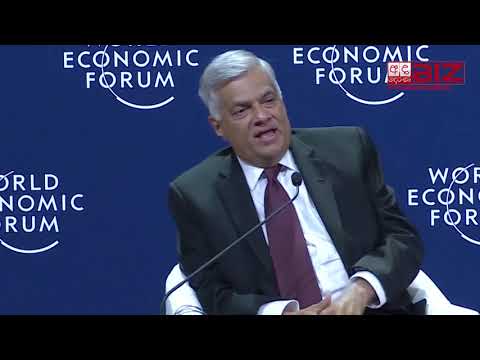
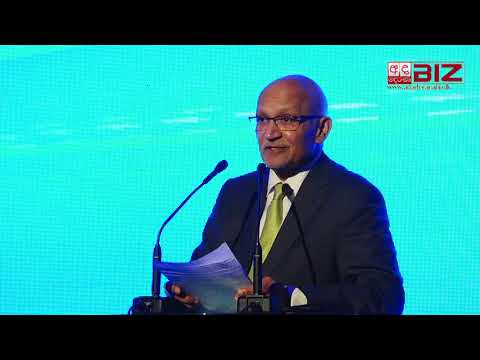
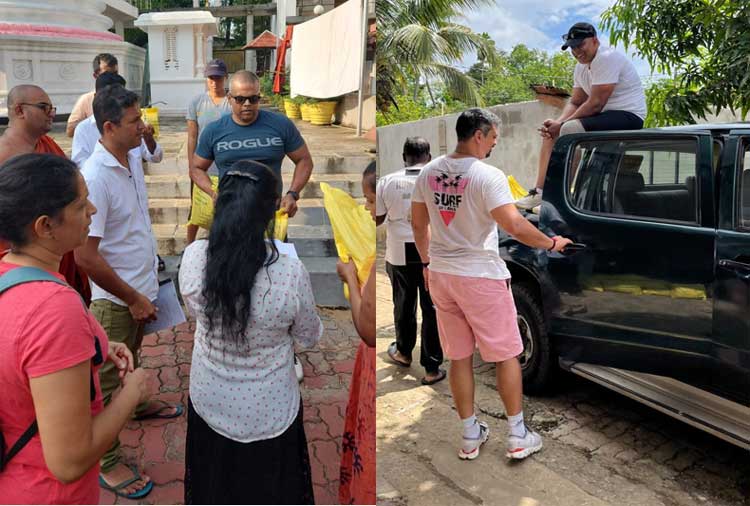
Top Photo - Investor Arjuna Samarakoon during flood relief efforts, as attention turns to the economic impact of climate shocks.
Video Story