

January, 12, 2023
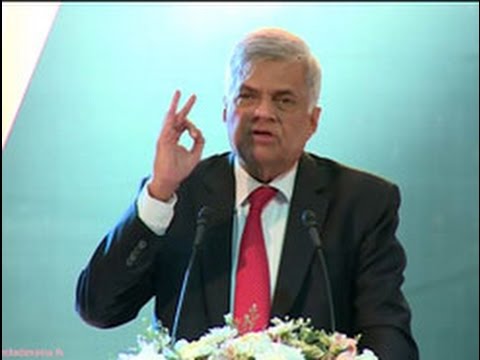
Sri Lanka's central bank has urged China and India to agree a write-down of their loans as soon as possible.
The crisis-hit Indian Ocean state defaulted on its debt repayments and negotiated a $2.9bn (£2.4bn) bailout.
But the International Monetary Fund will not release the cash until China and India first agree to reduce Sri Lanka's billions of dollars of debt.
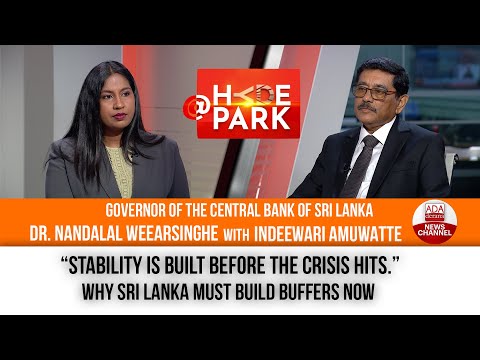
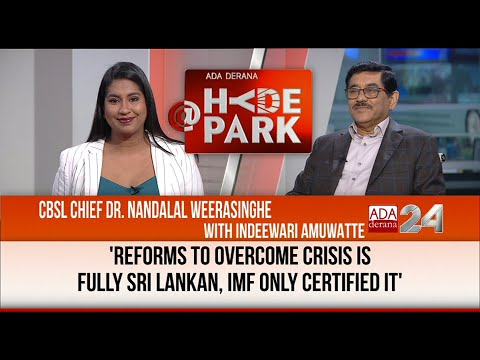
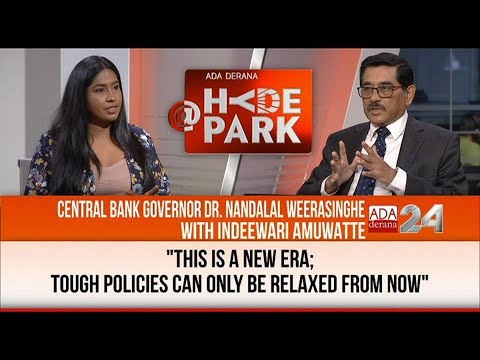
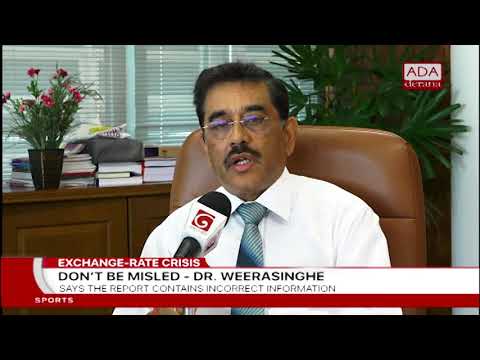
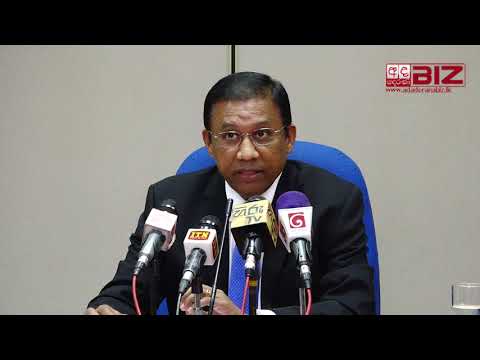
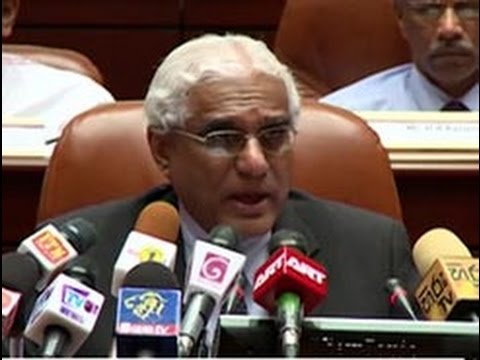
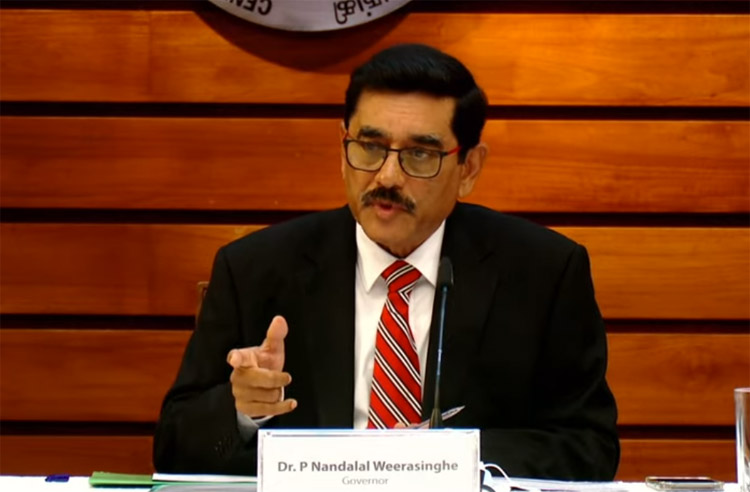
The governor of Sri Lanka's central bank told BBC Newsnight it was in the interest of all parties to act quickly.
P. Nandalal Weerasinghe said: "The sooner they give us finance assurances that would be better for both [sides], as a creditor, as a debtor."
"That will help us to start repaying their obligations," he added.
"We don't want to be in this kind of situation, not meeting the obligations, for too long. That is not good for the country and for us. That's not good for investor confidence in Sri Lanka."
Though inflation in the country has eased slightly since last year, food prices in Sri Lanka last month were still 65% higher than a year earlier.
The World Food Programme estimates that 8 million Sri Lankans - more than a third of the population - are "food insecure", with hunger especially concentrated in rural areas.
The economic turmoil sparked mass protests last year, which resulted in the former president fleeing the country in July.
The World Bank estimates that Sri Lanka's economy shrank by 9.2% in 2022 and that it will contract by a further 4.2% this year.
Beijing's lending to Sri Lanka stands at around $7bn while India is owed around $1bn.
The Sri Lankan government had initially hoped to agree a new payment plan with China and India by the end of 2022.
Mr Weerasinghe said it was possible an agreement could come later in January but added "this all depends on the other parties - our creditors really have to make that decision".
He added that Sri Lanka had now provided them with all the information on the country's borrowings they needed.
Independent analysts say China is concerned about what a substantial Sri Lankan debt write down could mean for its extensive lending to other developing countries through its Belt and Road programme.
Meanwhile, India is said to be wary of getting inferior terms on debt restructuring to China, its regional rival.
The US ambassador to Sri Lanka, Julie Chung, said the greater onus to move was on China, as the biggest bilateral lender.
"We hope that they do not delay because Sri Lanka does not have time to delay. They need these assurances immediately," ambassador Chung told BBC Newsnight.
"For the sake of the Sri Lankan people, we certainly hope China is not a spoiler as they proceed to attain this IMF agreement."
But if India and China do ultimately agree to write down their loans to Sri Lanka another potential problem looms in the form of private creditors, who account for 40% of the country's external debt stock.
In the years after Argentina plunged into economic crisis and default in 2001, some American hedge funds, rather than accepting a restructuring of the sovereign bonds they had bought on the open market, demanded full repayment and took the country's government to court in the US to achieve it.
A large group of international economists on 8 January called for Sri Lanka's bonds, to be "cancelled", writing: "All of Sri Lanka's creditors must ensure debt cancellation sufficient to provide a way out of the current crisis."
Asked about Sri Lanka's private bondholders, Mr Weerasinghe said: "We engage with private creditors in good faith negotiations. And what we are seeing is that they are very positive and they are willing to engage with us."
The governor said he expected that once agreement from bilateral creditors has been agreed the IMF funds could be distributed to Sri Lanka within "four to six weeks".
Additional reporting by Jack Garland and Scarlett Barter.
December, 21, 2022
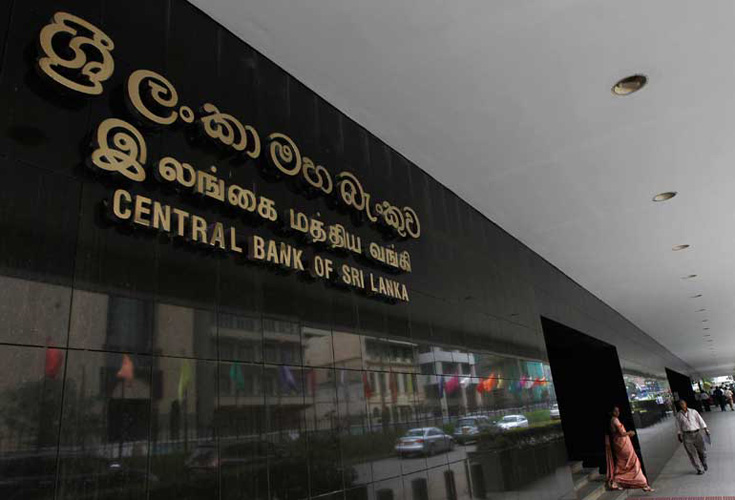
Bloomberg - Sri Lanka’s cabinet endorsed a bill that aims to bolster the central bank’s autonomy and keep it out of fiscal management.
Cabinet approval of the bill on monetary law is key to unlocking a pending $2.9 billion bailout from the International Monetary Fund. Sri Lanka’s parliament will have to discuss the bill before enacting the legislation, though no timetable has been proposed.
The government hasn’t provided a copy of the latest version of the bill, which was first drafted in 2019. Last month, Central Bank of Sri Lanka Governor Nandalal Weerasinghe said the proposed bill would push the monetary authority to adopt a formal flexible-inflation targeting regime.
If approved, the bill will also end the central bank’s participation in government treasury auctions, said Weerasinghe. This change will separate the Central Bank of Sri Lanka from fiscal functions and end its involvement in funding the budget.
Weerasinghe said a new debt management office under the treasury will be created and handle government bond sales after the law is approved. The treasury secretary will cease to be a member of the central bank’s rate-setting panel.
December, 12, 2022

In recent times, a rapid increase in the number of complaints filed by aggrieved parties has been observed in relation to defrauding money from individuals by giving false information through fraudulent phone calls, text messages, e-mail messages and social media networks, promising to direct them to foreign employment or asking them to pay customs duties to receive parcels containing various valuable goods.
Therefore, the Financial Intelligence Unit (FIU) hereby emphasizes to the public not to deposit money into the bank accounts of unknown parties or remit money through other means based on the above information, without proper verification.
Further, the scammers who engage in such practices, may request the following information from you in order to proceed with such transactions:
Therefore, the FIU further emphasizes to the public that such confidential information should not be shared with any third party and to be vigilant of such scams. Also, providing such details will surely make you/your family member/your close friend, a victim of a financial scam.
If you receive these types of phone calls or text messages, please inform the FIU through 011-2477125 or 011-2477509.
December, 12, 2022

By virtue of the powers vested under Section 19 (1) read together with section 19 (2) of the Financial Transactions Reporting Act, No. 6 of 2006 (FTRA), financial penalties are imposed on Institutions for non-compliance with the provisions of the FTRA. The penalty may be prescribed taking into consideration the nature and gravity of relevant non-compliance of the Financial Institution.
Accordingly, as Sri Lanka’s regulator for Anti-Money Laundering and Countering the Financing of Terrorism (AML/CFT), the FIU collected penalties as indicated below, amounting to Rs. 10.75 million in total from 01 July 2022 to 16 November 2022 to enforce compliance on Financial Institutions. The money collected as penalties were credited to the Consolidated Fund.


December, 12, 2022
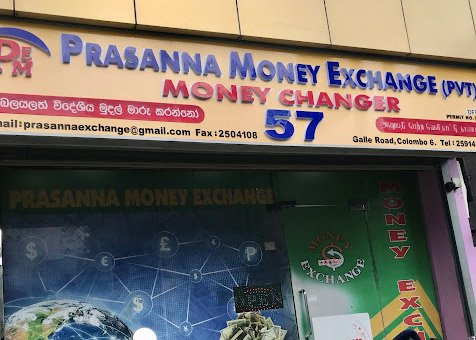
After conducting an inquiry into the non-compliances committed by Prasanna Money Exchange (Pvt) Ltd upon the temporary suspension of the permit issued to the company to engage in the money changing business at its head office and branch located at No. 42A, Mudalige Mawatha, Colombo 01 and No. 57, Galle Road, Colombo 06, respectively, the Monetary Board of the Central Bank of Sri Lanka decided to permanently revoke the permit No. DFE/RD/0058 issued to Prasanna Money Exchange (Pvt) Ltd, in terms of section 11 (3) of the Foreign Exchange Act No. 12 of 2017 (the Act).
The public is hereby informed that Prasanna Money Exchange (Pvt) Ltd is no longer permitted to engage in money changing activities as an Authorized Money Changer and buying, selling and exchanging foreign currency with Prasanna Money Exchange (Pvt) Ltd is considered as a contravention of the provisions of the Act.
November, 21, 2022

The Ceylon Chamber of Commerce is firmly of the view that institutions like the Central Bank of Sri Lanka should be allowed to function independently in performing its mandate as in most other countries, particularly at this stage when the country is grappling with a major economic crisis. We emphasize the need to reintroduce the Central Bank Act which was proposed in 2018 when the current President was Prime Minister to enable an independent Central Bank, prioritize price stability and limit the monetization of the fiscal deficit.
The Ceylon Chamber reiterates the need for a strong and independent Central Bank which is paramount in driving Sri Lanka’s economic revival. Over the decades, Sri Lanka has been hampered by weak institutions and poor governance that has deteriorated the efficiency of the public sector and led to sub-optimal policymaking on the economic front. The present plight of the country has been attributed by many experts to weak institutions that have not been able to perform their role in line with expectations due to excessive political interference. The success of the journey taken on by the Government to move out of the current debacle with the support of development partners and the international community will undoubtedly rest on the commitment it demonstrates towards better governance and adoption of best practice.
The Chamber recently published a set of proposals to ensure an independent, productive and efficient public service. These proposals are aimed to ensure formal checks and balances within the public sector, and improve efficiency in order to transform the public sector into a people centric arm of the state. It is vital that proposals such as these are implemented so that national development can be accelerated through efficient and independent service delivery by the Government.
September, 28, 2022
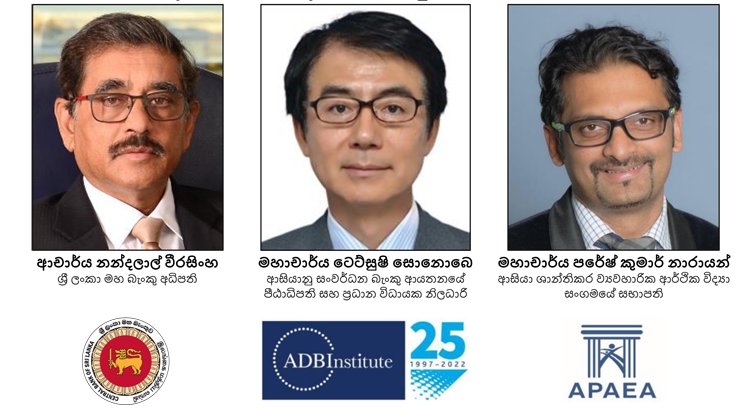
The Central Bank of Sri Lanka co-hosted the CBSL-ADBI-APAEA Online Macroeconomics Conference for the third consecutive year, in collaboration with the Asian Development Bank Institute (ADBI) and the Asia-Pacific Applied Economics Association (APAEA), on 23 September 2022. This year’s theme remained same as the previous year; ‘Emerging Issues for Macroeconomic Stability’.
Inaugurating the Conference, Dr. Nandalal Weerasinghe, the Governor of the Central Bank, elaborated on some key challenges faced by many countries over the world, mainly driven by the COVID-19 pandemic and geo-political tensions, driving most central banks to prioritise on stabilising their corresponding economies. He highlighted the increasing concern faced by both advanced and emerging market economies alike, in the balancing act between supporting economic growth on the one hand, and maintaining overall macroeconomic stability on the other, amidst varying levels of macroeconomic buffers. He also noted the importance of research collaborations between the academia and policymakers to address various issues faced by the economies amidst the prevailing high volatility in the global economic landscape. The Governor highlighted that although the applicability and validity of findings of certain models and theories presented in theoretical academic research could be somewhat limited amidst crisis situations like the one Sri Lanka is facing at present, ongoing effort to study the dynamics of emerging market economies is an essential element in the recovery process. Professor Tetsushi Sonobe, Dean and Chief Executive Officer (CEO) of ADBI delivered opening remarks and noted the heterogeneity among different regions in terms of the exposure to inflation pressures, available policy space and the soundness of macro-fundamentals. He emphasized that workshops of this nature would help stimulating a dialogue among academia and policymakers and support further development of policy research.
The Conference comprised two sessions of research paper presentations by authors from the Central Bank of Sri Lanka, ADBI and APAEA. The sessions were chaired by Dr. John Beirne, Vice-Chair of Research at ADBI, and Mrs. Yvette Fernando, Deputy Governor of the Central Bank.
August, 27, 2022

With the aim of popularizing the LankaRemit National Remittance Mobile Application among migrant workers, the Central Bank of Sri Lanka (CBSL) and the Sri Lanka Bureau of Foreign Employment (SLBFE) held a ceremony on 26 August 2022 at SLBFE to demonstrate its features. LankaRemit provides Sri Lankan expatriates with access to a fast, secure and more convenient remittance channel to send money to Sri Lanka.
CBSL in collaboration with LankaClear (Private) Limited (LCPL) implemented the “LankaRemit” mobile application with the launching of the first phase in February 2022. CBSL is in the process of creating awareness of “LankaRemit” locally and internationally with the support of stakeholders such as the Ministry of Foreign Affairs, Ministry of Labour and Foreign Employment and the SLBFE.
LankaRemit enables users to make fund transfers to beneficiaries in Sri Lanka and to make utility bill payments using Electronic Fund Transfer Cards issued overseas. LankaRemit also offers a number of value-added services to its users such as the ability to locate nearby money transfer operators and find relevant details of such locations. Further, after the remittance is made via money transfer operators abroad, the user can track each remittance made to beneficiaries in Sri Lanka via the App using a tracking number. If there are any future benefit schemes introduced for the remitters by the Sri Lankan government or respective authorities, such benefit schemes would also be available in the LankaRemit App.
The LankaRemit mobile application is available to download in the Google Play Store, the Apple App Store and the Huawei AppGallery for any person remitting money to Sri Lanka from any country. Remittance service providers connected to LankaRemit are continuing to increase and it is expected that more service providers from financial services industry including global money transfer operators and global FinTechs will join the App in the near future to facilitate remittances to Sri Lanka.
The features and benefits of LankaRemit were demonstrated to migrant workers who were preparing to commence work abroad. The ceremony was graced by the Chief Guest Hon. Manusha Nanayakkara, the Minister of Labour and Foreign Employment, Dr P. Nandalal Weerasinghe, the Governor of CBSL, and Mr. A A M Hilme, Vice Chairman, SLBFE on behalf of Mr. Mahendra Kumarasinghe, Chairman, SLBFE as well as Heads of several government institutions, financial institutions and payment service providers. It is expected that this event would increase awareness and adoption of the LankaRemit App among Sri Lankan expatriates and encourage the use of formal remittance channels when sending remittances to the country.

Dr. P Nandalal Weerasinghe, Governor, CBSL addressing the audience.

Hon. Manusha Nanayakkara, Minister of Labour and Foreign Employment addressing the audience.
Image Caption : Left to right - Mr. Pradeep Banduwansa, Head of Retail Products and Digital Channels, Commercial Bank, Mr. Dinuka Perera, Chief Operating Officer, LCPL, Dr. Kenneth De Zilwa, Chairman, LCPL, Mr. A A M Hilme, Vice Chairman, SLBFE, Mr. R P A Wimalaweera, Secretary, Ministry of Labour and Foreign Employment, Hon. Manusha Nanayakkara, Minister of Labour and Foreign Employment, Hon. Dr. P Nandalal Weerasinghe, Governor, CBSL, Mr. D Kumaratunge, Assistant Governor, CBSL, Mr. Channa de Silva, Chief Executive Officer, LCPL, Mr. D D P Senanayaka, General Manager, SLBFE, Mr. Vasantha Alwis, Director/Payments and Settlements, CBSL, Dr. B H P K Thilakaweera, Director/Foreign Remittance Facilitation, CBSL, Mr. Rajendra Ranasinghe, Assistant General Manager, Sampath Bank, Ms. Rangika Chandrasena, Senior Manager-Digital Banking, Commercial Bank, Mr. Kanishka Weeramunda, Founder/Chief Executive Officer, PayMedia (Pvt) Ltd.
August, 16, 2022
With the view of encouraging service exporters to repatriate their export proceeds into the country, the Central Bank of Sri Lanka has withdrawn the mandatory requirement to convert service export receipts/proceeds, that are received in Sri Lanka on or after 12 August 2022. The service exporters may use their export proceeds so repatriated to Sri Lanka for the permitted purposes. The mandatory requirement to receive proceeds of service exports to the country within 180 days from the date of provision of services remains unchanged.
According to the information reported by banks, during the first six months of year 2022, a total of USD 1,533 mn has been received as service exports receipts, of which USD 406 mn has been converted to Sri Lankan Rupees. The highest monthly service export proceeds of USD 324 mn were received in March 2022. During discussions with representatives of service exporters, they have highlighted the potential to further enhance export receipts.
All exporters are encouraged to bring in all export proceeds to the country at this time of need, while taking note of the mandatory requirement to receive such proceeds within 180 days. The Central Bank has intensified its monitoring on compliance with the relevant requirements with respect to exporters and Authorised Dealers.
Further information on the above mentioned relaxation can be obtained by referring to the “Repatriation of Export Proceeds into Sri Lanka Rules No. 02 of 2022” as published in the Gazette Extraordinary No. 2292/50 dated 12 August 2022, accessible through www.dfe.lk.
August, 13, 2022
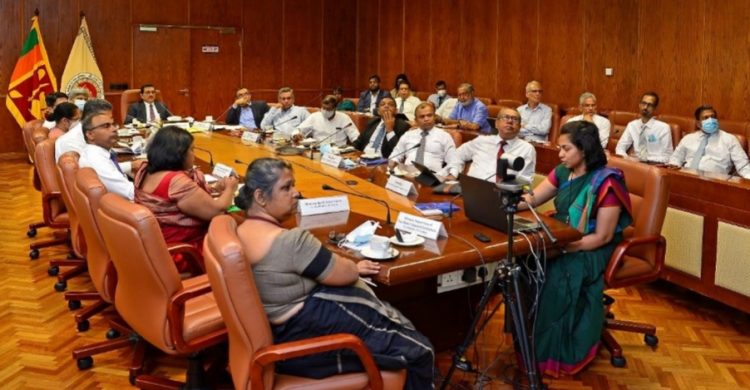
The Central Bank of Sri Lanka (CBSL), with a view to broadening its engagement with key stakeholders of the economy, established the Stakeholder Engagement Committee (SEC) by replacing the Monetary Policy Consultative Committee (MPCC) and the Financial System Stability Consultative Committee (FSSCC) of the CBSL that were in operation previously. The SEC is chaired by Prof. Sirimal Abeyratne, Professor in Economics, Department of Economics, University of Colombo and comprises the following 17 eminent personalities from the private sector and academia as members.
• Mr. Ashique M Ali, Chairman, Sri Lanka Association for Software Services Companies
• Mr. Kapila P Ariyaratne, Chairman, Sri Lanka Banks’ Association
• Mr. Sanjaya Bandara, President, Institute of Chartered Accountants of Sri Lanka
• Mrs. Dhamitha Cooke, Chief Financial Officer, Stassen Group of Companies
• Dr. Priyanga Dunusinghe, Senior Lecturer, Department of Economics, University of Colombo
• Mr. Priantha Fernando, Chairman, Sri Lanka Tourism Development Authority
• Mr. Murtaza Jafferjee, Chairman, Advocata Institute
• Mr. Christopher Joshua, Managing Director, Access Engineering PLC
• Mr. Rohan Masakorala, Founder, Shippers’ Academy Colombo (Pvt) Ltd
• Mr. Reyaz Mihular, Non-Executive Chairman, Bairaha Farms PLC
• Mr. Ashroff Omar, Chief Executive Officer, Brandix Lanka Limited
• Mr. Lakshman Silva, Former Chief Executive Officer, DFCC Bank PLC
• Mr. Rohan Tennakoon, Chairman, Finance Houses Association of Sri Lanka
• Mr. Rajendra Theagarajah, Past Chairman, Ceylon Chamber of Commerce
• Prof. Lakshman R Watawala, President, Institute of Certified Management Accountants of Sri Lanka
• Dr. Ganeshan Wignaraja, Senior Research Associate
• Mr. Anushka Wijesinha, Economist and Co-Founder, Centre for a Smart Future.
The primary role of this high-level consultative Committee is to represent the views and sentiments of the private sector and academia on economic conditions and the outlook, considering the overall economic development, particularly in the monetary and financial sectors of the economy. Further, the SEC is expected to provide feedback from the viewpoint of the stakeholders of the economy on the policy measures adopted by the CBSL, thus enabling the CBSL to make informed policy decisions in a more consultative manner.
The inaugural meeting of the SEC was held on 10 August 2022 at the CBSL premises with the participation of the Governor of the CBSL, Dr. P. Nandalal Weerasinghe, and senior CBSL officers.
Video Story