

August, 19, 2022

With the application process for the Best Corporate Citizen Sustainability Awards 2022 now underway, the Ceylon Chamber of Commerce announced a dynamic team of evaluators for the Best Projects Sustainability (BPS) Awards category, which awards special sustainability projects conducted by corporates.
Comprising dynamic experts in the field of sustainability projects, this year the panel of evaluators for the BPS Awards is led by Dr. Chandana Siriwardana – Senior Lecturer, Faculty of Engineering of the University of Moratuwa, under the guidance of Dr. Ananda Mallawantantri – Country Representative of Sri Lanka, International Union for the Conservation of Nature, and Chairperson of Panel of Evaluators of Best Corporate Citizen Sustainability Awards 2022.
In addition to Dr. Siriwardana who joins the panel this year, panelists Dr. Nuwan Gunaratne, Dr. Vinod Malwatte, Ms. Harshini de Silva Pandithasekara and Mr. Azam Bakeer Markar from the previous year’s panel, will be joined by Ms. Madu Dissanayake.
The team brings a diverse range of industry and sector experience to the panel, enabling the revision of the BPS application to align it with the current national context and encompass additional aspects of sustainability, in order to encourage corporates to raise the bar for sustainability projects.
The closing date for applications is October 28th, and applications and relevant details are available on www.chamber.lk. For further information, contact Oshadhi on 0115588851 / oshadhi@chamber.lk or Whitney on 0115588850 / hr@chamber.lk
August, 15, 2022

The Ceylon Chamber of Commerce in association with the Department of Labour, will conduct a virtual awareness programme promoting social dialogue and workplace co-operation on 16th August.
Conceptualised by the Human Resource Development Unit of the Department of Labour, the workshops promote industrial relation best practices and healthy work environments, thereby contributing to improved institutional productivity and efficiency.
The main objective of the workshop is to foster more informed and productive tripartite dialogue with employer-employee parties such as trade unions, employee councils, etc. and the government. As such, the content focuses on topics such as prevention of industrial disputes through enhanced social dialogue, increasing awareness regarding the basics of current labour laws, new trends in industrial relations in Sri Lanka, management and human resource management practices and fostering positive attitudes and employee motivation.
The workshop will be conducted by the Ms. G.W.N. Viraji – Commissioner of Labour, Human Resources Development Department of the Department of Labour, P.A.S.C. Pathiraja – Assistant Commissioner of Labour, Department of Labout, Negombo and W.P. Nimal Weerasinghe – Labour Officer, Human Resources Development Division of the Department of Labour.
Participation is free of charge and registration is now open at https://event.chamber.lk/Register/Event/200
August, 9, 2022
The Ceylon Chamber of Commerce recently held a webinar to brief prospective applicants for the Best Corporate Citizen Sustainability (BCCS) Awards 2022. Held this year for the nineteenth consecutive year, the BCCS Awards, which champion corporate sustainability in an increasingly environmentally vulnerable world, are one of the most anticipated events on the corporate calendar.
Against a backdrop of a challenging year in terms of the global and national socio-economic environment, the Awards seek to highlight proactive initiatives that sought to ensure sustainable and resilient practices.
‘The purpose of these Awards is to give due recognition to the concept of corporate sustainability in Sri Lanka, whilst encouraging corporates to adopt the best sustainability practices in their business strategies. Considering the COVID-19 pandemic and the current socio- economic crisis that had a significant impact on business operations in 2021/22, this year the Chamber has adopted new and enhanced evaluation criteria, whilst also introducing Awards that celebrate sustainable resilience’, Alikie Perera, Deputy Secretary General and Financial Controller of the Ceylon Chamber stated, delivering the welcome preliminaries on behalf of the Ceylon Chamber.
The briefing was led by the Chairman of the Panel of Evaluators and a veteran in the field of sustainability, Dr. Ananda Mallawatantri, Country Representative (Sri Lanka) - International Union for Conservation of Nature. Stressing the urgency in mainstreaming sustainable Environmental, Social, and Governance (ESG) practices in core business processes and corporate strategies, Dr. Mallawatantri elaborated on ESG practices including circularity, net-zero approaches, life- cycle analysis, science-based targets, etc. as important pillars of sustainable strategies.
The introduction of a ‘Planning and Adoption of Resilient Practices for Covid-19 and Emerging Country Context’ award this year, will highlight corporates that effectively identified, assessed, and implemented Covid-19 resilient practices, as well as practices to ensure sustainability and stability in the context of emerging political, economic and social disruption.
Dr. Chandana Siriwardana, Senior Lecturer, Faculty of Engineering - University of Moratuwa, who will lead the panel of evaluators for the Best Projects Sustainability Awards, briefed participants on the Best Projects Sustainability Awards application. These awards highlight the efforts of the private and public sectors to develop and implement individual projects that promote a specific aspect one or more aspects of sustainability, and which demonstrate a contribution to the well-being of the people or the planet.
Applications for the BCCS Awards are now open, with the application forms, brochures and other relevant documents accessible at www.chamber.lk For further information, please call Oshadhi on 0115588851 / oshadhi@chamber.lk or Whitney on 0115588850 / hr@chamber.lk
August, 4, 2022

The Ceylon Chamber of Commerce welcomes the call by President Ranil Wickremesinghe to initiate the formation of an All-Party Government, as a concerted and united effort is necessary to address the current challenges facing the country. At this extremely crucial juncture for Sri Lanka, all political parties must join hands and put Sri Lanka First over individual agendas.
An All-Party Government that is acceptable to all sections of the public and equitably represents the views of all parties, which will work towards a common minimum programme is the first step toward addressing the current crisis. A policy framework with broad consensus by all parties is required so that an agreed reform agenda will spur global confidence amongst investors, the private sector, and the public.
We appreciate the steps taken by the Government to improve the shortages as a result of the economic stresses including ongoing power cuts, shortage of fuel, securing adequate essential drugs and food items, and the provision of adequate fertiliser to ensure food security. This stresses the importance of leveraging technology and communications to find solutions to these shortages.
The Chamber has in the recent past highlighted the need to urgently resume IMF negotiations with a view to reaching a staff level agreement expeditiously, proposed amendments to the Constitution, and the need for State-Owned Enterprise reforms as being among key priorities.
The implementation of a sustainable economic recovery plan will take time to bear fruit and key milestones will need to be set. We therefore call for all parties and the public to work together and be patient to usher in a new era for Sri Lanka.
July, 28, 2022

With Sri Lanka becoming the first South Asian country to enact comprehensive data protection legislation, the Ceylon Chamber of Commerce will conduct the first in a series of virtual awareness workshops related to the Personal Data Protection Act No. 9 of 2022, on 4th August.
The workshops will offer a comprehensive overview of the PDPA and focus on the impact and implications of the PDPA on industries that process personal data. This will include the obligations of controllers and processors, rights of data subjects and the powers and functions of the proposed data protection authority. The first workshop will cover information security, human resources management, and privacy by design in the context of compliance under the PDPA.
The workshop will feature Mr. Jayantha Fernando - General Counsel ICTA and Chair – Data Protection Law Drafting Committee, Ms. Sanduni Wickramasinghe – Legal Consultant and Privacy Professional and Member of the Data Protection Law Drafting Committee, Mr. Sujit Christy CISSP, President - (ISC)² Colombo Sri Lanka Chapter, and Dr. Anna Cavoukian – Executive Director, Global Privacy and Security by Design Centre, as guest speakers, and Ms. Shenuka Jayalath – Manager Regulatory, Dialog Axiata PLC and Member, Data Protection Law Drafting Committee.
The workshop will be conducted from 3.00 pm - 6.45 pm via Zoom.
Participation is free and registration is now open at https://event.chamber.lk/Details/Event/193
July, 1, 2022
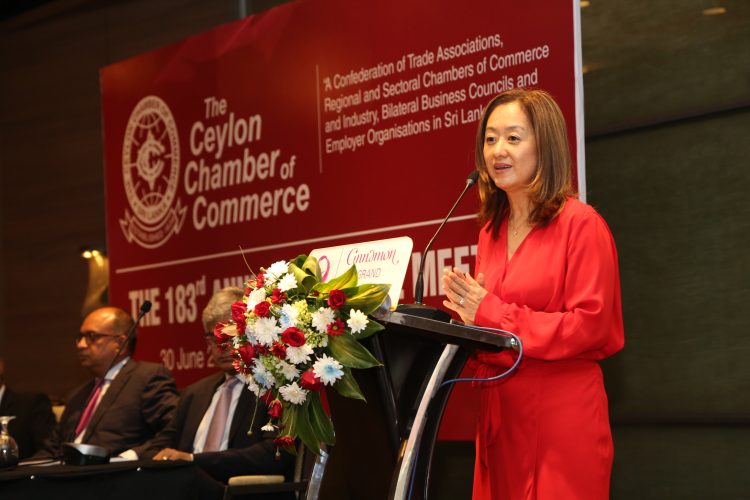
The Ceylon Chamber of Commerce re-elected its leadership for the forthcoming year at its 183rd Annual General Meeting on 30 June, 2022.
The United States Ambassador to Sri Lanka Her Excellency Julie Chung attended as the Chief Guest.
Highlighting the Chamber’s concerted efforts toward national economic policy reform, Mr. Vish, Govindasamy, re-elected as Chairman of the Chamber for the year 2022/23, expressed appreciation for USA’s multifaceted support for Sri Lanka’s economic recovery and socio-economic progress, and invited Ambassador Chung to address the gathering.
The Ambassador’s speech, in its entirety, is reproduced below:
“Chairman Govindasamy, CEO de Silva, honorable members of the board, and friends at the Ceylon Chamber of Commerce – thank you for the invitation to speak with you this evening. I understand this is the first time in three years you’ve been able to hold this General Meeting in person – and how wonderful it is to see you all in person and not on a screen! As the Chairman just spoke about all the Chamber’s activities, I want to applaud your leadership in entrepreneurship, transparency, good business governance, and strong CSR (Corporate Social Responsibility). All of you in this room are not only spectators but real advocates for strengthening the investment and trade climate, and democratic institutions in Sri Lanka to make this country better.
Yesterday, a high-level delegation representing the U.S. Department of the Treasury and the U.S. Department of State just concluded an important visit. Deputy Assistant Secretaries Robert Kaproth of Treasury and Ambassador Kelly Keiderling of State met with a wide range of political representatives, economists, and international organizations. The purpose of their meetings was to explore the most effective ways for the United States to support Sri Lankans in need, Sri Lankans working to resolve the current economic crisis, and Sri Lankans planning for a sustainable and inclusive economy for the future. The delegation also pressed upon the government the need to negotiate urgently with its creditors and the IMF to finalize an assistance package, in order to ease the suffering of the Sri Lankan people and get the economy back on track as quickly as possible.
This visit underscores our ongoing commitment to the security and prosperity of the Sri Lankan people. Our efforts to support economic growth and strengthen democratic institutions have never been more critical.
As we all know, Sri Lanka is facing one of the most challenging moments in its history. We’ve all seen the fuel queues grow longer, and prices for basic necessities increase. We’ve sat in the dark during power cuts, and we’ve witnessed Sri Lankans voice their frustrations in peaceful protest. Every day, in every conversation I have, Sri Lankans share that they are worried about the future and the wellbeing of the next generation. Sri Lanka’s challenges are undoubtedly serious. But they are not insurmountable.
Every day, I see and hear examples about incredible ingenuity and inspirational efforts that are contributing to the well-being of every-day Sri Lankans. There is one thing I am certain about and that is the resilience of the Sri Lankan people. It will take creativity, leadership, determination, and compromise to resolve this economic crisis. It also requires political stability and urgent action. Now is the time to redouble our joint efforts to get Sri Lanka back on the path to economic stability. Now more than ever the private sector can make a difference in creating a more inclusive and sustainable economy. In my remarks today, I’d like to lay out a few – well, five to be exact, steps that I think Sri Lanka must take to revive its economy and build long term solutions to benefit all Sri Lankans:
First, the debt crisis must be resolved. We welcome the steps Sri Lanka has taken to go to the IMF, to hire debt and legal advisors, and begin debt restructuring talks. Those are positive moves. But there is much more that needs to be done to get Sri Lankan back on the path to sustainable economic growth. If talks are successful, this will be Sri Lanka’s 17th IMF package. Let’s make sure it’s the last. The reform measures Sri Lanka adopts need to address the root causes of this crisis so that the country finally makes lasting and decisive structural reforms that enshrine international standards of good governance and transparency for the benefit of all Sri Lankans. There is no more room for stop-gap measures.
As Sri Lanka engages in debt restructuring and financial reforms, it is absolutely critical that all creditors are treated equitably and comparably. That is one of the very important components that many countries who undergo an IMF program have to address.
Second, Sri Lanka must invest in its people. It is vital to have a workforce with gender parity, with women literally at the table and in leadership roles. Looking around this room, it’s clear we need more women in business and our work is not yet done. Women should enjoy equal access to funding for their small and medium-sized enterprises that operate in so many villages and towns across the island. It is imperative that all Sri Lankans have access to quality public primary, secondary, and tertiary education, and training so that Sri Lanka retains and builds on the rightly earned reputation of having a highly educated, creative, and skilled workforce. To build peace and stability, Sri Lanka must protect democratic values such as the rule of law, respect for human rights for all, equal representation, and transparent government. When these democratic values falter, the private sector, civil society, and the independent press must hold the government accountable for its leadership and stewardship of this country. The right to peaceful protest must be upheld for all Sri Lankans and the culture of impunity must end. We call on the government to foster independent institutions that operate transparently and build public trust in the reconciliation process, to ensure all Sri Lankan’s have access to a fair justice system, including further reforms to bring the PTA in line with international standards, and to engage with minority parties and a wide range of civil society organizations to bring political stability to the country. We also call upon the government to protect civic space and allow civil society organizations to operate freely. Economic reform needs to be intertwined with political reform in order to create a sustainable and prosperous economy for all of Sri Lanka’s people.
Third, the business environment and investment framework environment need improvements for the private sector to flourish. It is important to reduce red tape and make sure that there are no unreasonable obstacles to investors as they look for opportunities in Sri Lanka and bring in the foreign capital that the country desperately needs.
In 2020, U.S. foreign direct investment in Sri Lanka was $13 million, bringing total active U.S. investment in the country at the time to $274 million. If you compare this to the $17 million invested five years earlier in 2015, I think you would agree when I say that there is room for improvement. Concerns about consistency and transparency in government decision-making, and above all, a lack of predictability, are the primary reasons FDI hasn’t grown faster. What our companies want is a level playing field. A good regulatory framework. Trust that their arbitration and their contracts will be honored. When you have that kind of strong investment climate, then companies will want to come. Making this a reality, however, will require difficult decisions on reforming unprofitable state-owned enterprises that often pose a barrier to entry to foreign direct investment. We welcome the Ministry of Power and Energy’s recent efforts to modernize the country’s electricity sector to allow more private sector participation and diversity of energy sources.
Fourth, Sri Lanka should seize this moment to shift to green technology and renewable energy sources. We are encouraged by Sri Lanka’s target to reach 70 percent of electricity generation from renewable sources by 2030 as part of a broader policy of climate action. If there is anything the fuel crisis has taught us is that the time to switch to renewables is now! This is an area where Sri Lanka stands to benefit from the cutting-edge technology that American companies have to offer, as well as access to U.S.-based project finance. Clean power is also a priority focus of the Build Back Better World partnership that President Biden announced with our G7 partners last year.
Sri Lanka is endowed with abundant sustainable energy sources like wind and sunlight, but its power sector has not been developed to maximize the usage of these resources. This is why we launched the $19 million USAID Sri Lanka Energy Program to help transform Sri Lanka’s power sector into a sustainable and reliable market-driven system. The project will facilitate access to capital and attract investments in support of the government’s renewable energy goals. USAID’s Transaction Advisory Fund has committed $850,000 to support the competitive development of Floating Solar installations. The project will also work toward improving energy efficiency and demand side management activities in the country and will promote the deployment of advanced technologies.
We also recently announced technical assistance to VEGA Innovations to help them further develop Sri Lanka’s electric vehicle sector. This will support VEGA Innovations’ efforts to promote electric vehicles, including electric “tuk tuks,” help pilot a national vehicle charging network, and support the manufacturing of locally designed batteries and inverters. I drove one myself and was amazed by its efficiency; I can imagine a day when the streets of Colombo are full of these tuk tuks. The eventual transition of the Sri Lankan power sector to a market-driven system will provide more opportunities for Sri Lankan private businesses as well as international investors while helping the country get out of this crisis and rebuild its economy. This kind of financial assistance often contributes much more to long term, sustainable capacity development than more high profile, but economically dubious, infrastructure projects.
And finally fifth – and this is an area my team and I are truly excited about – Sri Lanka can grow its exports to and investments in the United States. The United States remains Sri Lanka’s largest single country export market, so our contributions to Sri Lankan prosperity are, in this regard, unparalleled. Our bilateral trade relationship amounts to about three percent of Sri Lanka’s GDP. By our estimates, Sri Lankan exporters to the United States provide direct employment for at least 180,000 people here. This is the type of economic partnership we should all be looking to expand. Investment in the United States is another opportunity for the Sri Lankan private sector. Businesses investing in the United States, regardless of industry, gain competitive advantages from one of the most open markets on the planet. The United States offers the largest consumer market on earth with a GDP of $20 trillion and 325 million people. Companies of all sizes help make innovation in the United States a global enterprise, benefiting from – and contributing to – a flourishing ecosystem for invention and inspiration.
This is a defining moment in Sri Lankan history, and a time when unity is more important than ever. Unity does not mean we all agree all the time. It means coming together and doing whatever each of us can constructively to solve the problems of the day. For seventy years, the United States has provided foreign assistance, loans, trade opportunities and two-way educational exchange programs to help grow the Sri Lankan economy, increase domestic capacity, and support the prosperity and wellbeing of the Sri Lankan people. The United States continues to stand by Sri Lanka during these challenging times. Over the last few weeks, we have announced $120 million in financing for Sri Lankan small and medium-sized businesses, $27 million for the Sri Lankan dairy industry, and over $30 million in new humanitarian, technical and food security assistance to benefit Sri Lanka’s most vulnerable communities. And we look forward to building on that assistance in the months to come. The United States remains a friend and partner for Sri Lanka’s prosperity, and I look forward to our shared future and success in overcoming the present-day challenges. The Chairman spoke about surviving through these challenging times. I would like to take that a step further and say we need Sri Lanka not only to survive but to thrive, to become stronger and better through this crisis. It may seem daunting but I believe it can be done. Let’s make sure Sri Lanka thrives together. Thank you”.
June, 27, 2022
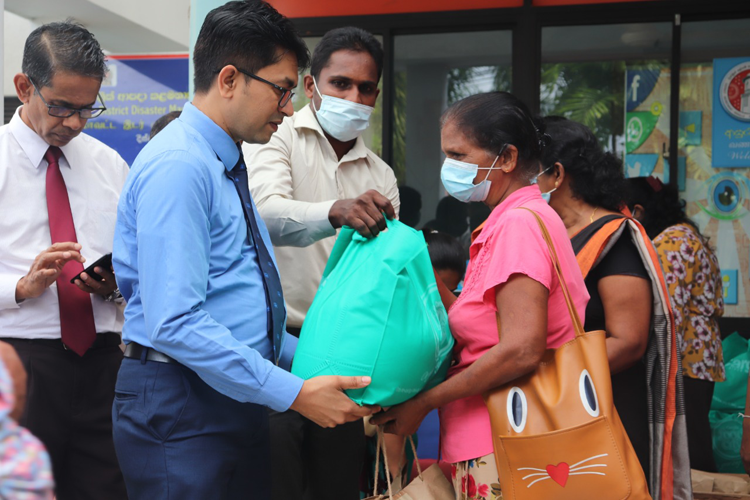
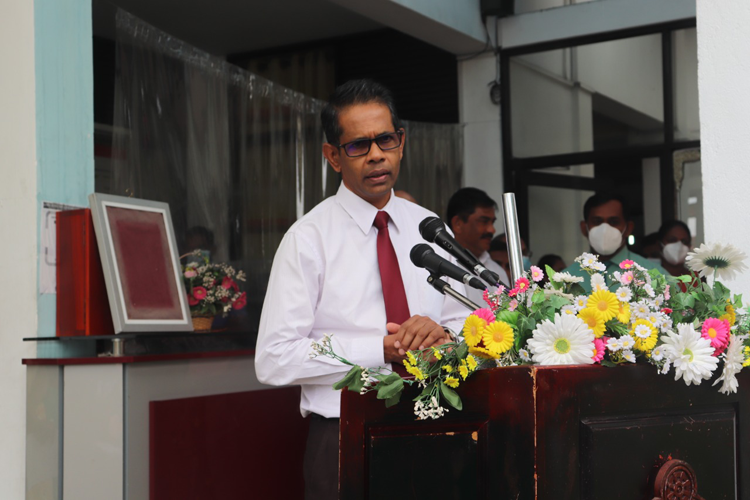
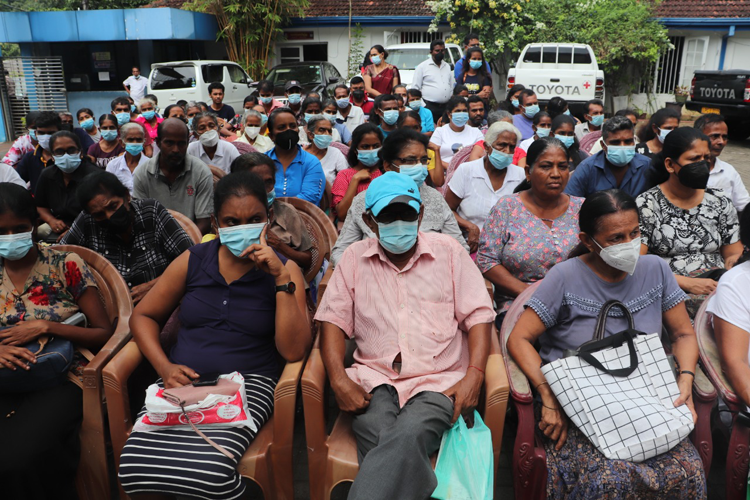
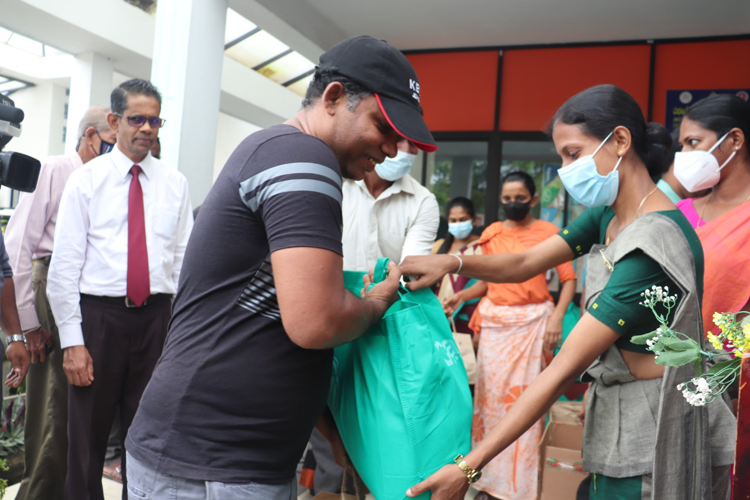
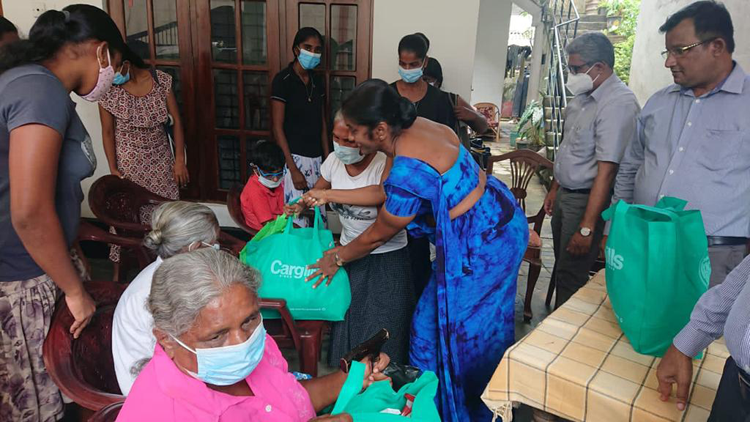
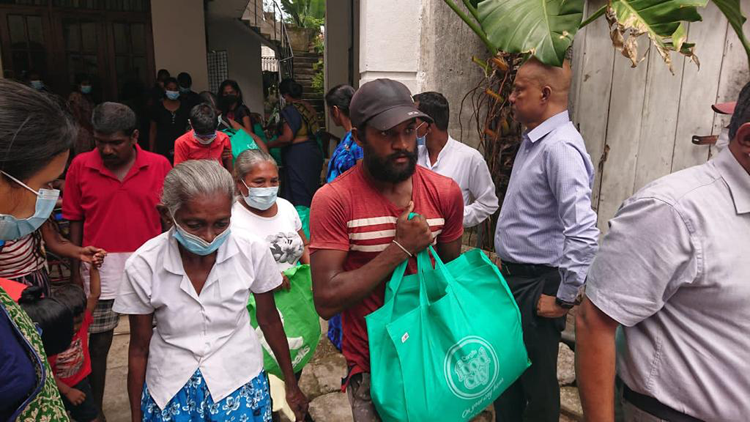
With the current economic crisis driving thousands in Sri Lanka to the brink of starvation, the Ceylon Chamber of Commerce’s ‘Diwiyata Diriyak’ social initiative provided emergency relief in the form of 1,000 essential dry ration packs to vulnerable families in the Kegalle and Colombo districts.
Mobilising the Chamber’s Membership to assist low-income families that are struggling to survive the current crisis, the initial distribution which took place at the Kegalle District Secretariat, was the first phase of Diwiyata Diriyak, which aims to provide 5,000 relief packs to families in Colombo and Kegalle districts.
Containing essential items such as rice, lentils, sugar, wheat flour, canned fish, etc. costing Rs. 5,000 each, vulnerable families identified by the respective District Secretaries in the Warakapola, Galigamuwa, Mawanella and Rambukkana DS divisions, were among the initial beneficiaries.
‘The Ceylon Chamber is committed to supporting the public during this immensely challenging time, and will always strive to ensure that the most vulnerable in our society are protected’, Manjula de Silva, CEO and Secretary General of the Ceylon Chamber said.
Home Garden Starter Packs, sponsored by the CIC Group were also distributed among the families, in order to assist and encourage home garden cultivation as a viable option to address the rapidly rising costs and predicted shortage of food items.
Organisations and individuals who would like more information on contributing towards Diwiyata Diriyak may get in touch by emailing chandra@chamber.lk.
June, 16, 2022
To tackle the escalating issue of Sri Lanka’s plastic waste management, the Ceylon Chamber of Commerce has initiated the implementation of an Extended Producer Responsibility (EPR) model, which requires all stakeholders generating plastic waste to take responsibility for recycling and minimizing the use of plastic packaging.
‘The Ministry of Environment will support and welcome all initiatives started by the private sector including the implementation of the Collect-Back Target model proposed by the Ceylon Chamber of Commerce. The Central Environmental Authority will closely monitor the progress of proposed mechanisms and complete the legal provisions required for meeting efficient outcomes from each method. The Ministry of Environment and the Central Environmental Authority reiterate the necessity of playing an active role by the private sector to adhere to the EPR principle with Best Available Technologies’, Secretary to the Ministry of Environment, Dr. Anil Jasinghe stated.
The Ceylon Chamber and Biodiversity Sri Lanka (BSL) with financial support from the United States Agency for International Development (USAID) developed the EPR Roadmap in 2021, to provide a strategic plan for plastic waste management in Sri Lanka. The implementation of the Mandatory Reporting and Collect-Back (MRCB) model was recommended under this EPR Roadmap.
The MRCB model, requires plastic users to declare their annual usage and pledge to collect back an agreed-upon percentage, targeted to reach close to 100% over a five-year period. The initiative aims to increase plastic waste collection and recycling in order to minimize plastic pollution. The proposed Collect-Back Target model has been endorsed by the Ministry of Environment (MoE) and the Central Environmental Authority (CEA), and welcomed by the private sector.
There is an urgent need for an integrated and collaborative approach within the plastic value chain in order to implement a sustainable framework, ensuring effective and effective plastic waste management. The Collect-Back Target model will help to promote greater accountability among corporates and ensure an efficient system of monitoring and evaluation', said CEO and Secretary General of the Ceylon Chamber of Commerce, Manjula de Silva.
The private sector will commence reporting of waste collection and recycling through the online reporting system. The initial phase will focus on two types of plastics, namely, Polyethylene Terephthalate (PET) and High Impact Polystyrene (HIPS) packaging. The outcome of voluntary EPR implementation will be documented to draw lessons that can be applied to a mandatory collection and reporting system in the future.
The project is guided by a high-level multi-stakeholder Project Steering Committee, co-chaired by the MoE Secretary to the MoE and the Secretary General of the CCC.
The Ceylon Chamber and the Ministry of Environment, urge all private sector companies using plastic packaging to intensify their voluntary plastic collection and recycling initiatives, and from 2022 onwards to maintain the necessary records in order to demonstrate their commitment to EPR.
June, 7, 2022

The Ceylon Chamber of Commerce has been certified as a great workplace by research and consulting firm Great Place to Work® in Sri Lanka.
The Ceylon Chamber was awarded this certification based on extensive ratings provided by employees which address key areas of employee satisfaction. These include the supportiveness of the work environment, job satisfaction, opportunities for professional development and career progression, workplace flexibility, incentives, transparency, etc.
Employee feedback obtained through an anonymous survey conducted by Great Place to Work ®, indicated that employees highly value the supportive, encouraging and appreciative work environment. Of particular note is the empowerment afforded to employees, where staff are given the opportunity to ‘be creative and take proactive action…. leadership has trust in the work you carry out and give space to take leadership in the assigned work, regardless of the management level you are assigned to’.
Amidst the current economic challenges, the employees are also overwhelmingly appreciative of the flexible work schedules, commenting that the Chamber offers ‘flexible place and working time to work as long as you have done your days job’, focusing on the end output rather than the work process itself.
Great Place to Work®, headquartered in the USA, is the global authority on high-trust, high-performance workplace cultures. Through proprietary assessment tools, advisory services, and certification programs, including Best Workplaces lists and workplace reviews, Great Place to Work provides the benchmarks, framework, and expertise needed to create, sustain, and recognize outstanding workplace cultures.
‘Being officially recognised as a great workplace based on employee feedback is testament to the value we place on inculcating a supportive environment that facilitates high standards of work, personal development and employee satisfaction, which is perhaps one of the most defining aspects of the Ceylon Chamber’s work ethos’, Manjula de Silva, Secretary General and CEO of the Ceylon Chamber stated.
"We applaud the Ceylon Chamber of Commerce for seeking employees' feedback and the opportunity to certify itself," said Kshanika Ratnayake, CEO of Great Place to Work® in Sri Lanka. "These ratings measure its capacity to earn its own employees' trust and create a great workplace - critical metrics that anyone considering working for or doing business with the Ceylon Chamber should take into account as an indicator of high performance."
Video Story