

October, 17, 2022
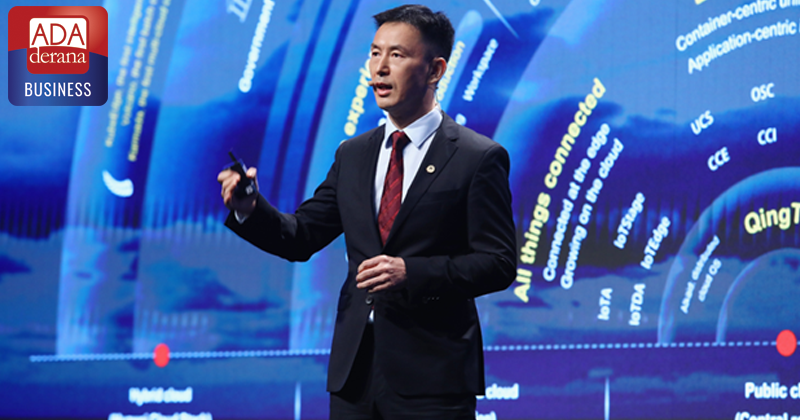
HUAWEI CONNECT 2022, themed "Unleash Digital", kicks off in Dubai today. Industry leaders, experts, partners, and guests from the Middle East and Africa gather to share their thoughts on technological innovation, ecosystem collaboration, and digital transformation. Ken Hu, Rotating Chairman of Huawei, delivered a keynote speech under the conference theme and called for enterprises to "embrace cloud for leapfrog development" for digital transformation. Joy Huang, President of Huawei Cloud Computing Strategy & Industry Development, delivered a speech "Unleash Digital with Everything as a Service".
Mr. Huang said that greener infrastructure, continuous innovation, and shared experience are the paths to digital transformation.
Huawei Cloud marks its presence with innovations in native technologies. At this event, three cloud native products are released globally: CCE Turbo for container engine,UCS for ubiquitous cloud native and GuassDB. CCE Turbo accelerates computing, networking, and scheduling to achieve ultimate scalability. For example, it helps Sina Weibo easily cope with traffic bursts by scaling out 3,000 pods in just one minute. UCS enables users to manage cloud native applications across clouds and regions with one consistent experience. GuassDB has been re-architected to become serverless, and now you can scale your GaussDB automatically in seconds. It’s part of our Backend as a Service plan.Many enterprise applications have to process hybrid requests. For example, a financial application may need to process loans and analyze transaction data as well.
To unleash the real-world potential of AI, Huawei Cloud focuses on three core AI technologies: foundation models, solvers, and knowledge computing. Huawei Cloud worked with partners to develop the Pangu NLP model for the Arabic language that supports hundreds of billions of parameters. The semantic understanding accuracy reached 95%. The OptVerse AI Solver combines operations research and AI, improving the solution speed by 100 times and modeling efficiency by 30 times. The upgraded knowledge computing provides a faster path to combine industry knowledge with AI, and integrates knowledge acquisition, modeling, management, and application all in one place, greatly improving the efficiency of using AI.
Application modernization is a must for digitalization. To ease this process, Huawei Cloud launches four pipelines for software development, data governance, AI development, and digital content production. Huawei Cloud also dives deep into digital technologies and distills them into aPaaS services to customers. At this event, two new core aPaaS services are released: KooMessage and KooSearch.
As a constant innovator, Huawei Cloud hopes to support customer growth with the cutting-edge technologies.
Unleash Digital Productivity and Embrace Cloud
At the Huawei Cloud TechWave Summit held on the same day, Jacqueline Shi, President of Marketing and Sales Service of Huawei Cloud, delivered an opening speech. She pointed out that the key to unleashing digital is to embrace the cloud, and cloud native is the way to realize digital transformation.
Following the "Everything as a Service" strategy, Huawei Cloud builds full-stack cloud native services covering Infrastructure as a Service, Technology as a Service, and Expertise as a Service. Huawei Cloud shares localization experience gained from global services, as well as the insights into businesses and industries in major regions, all of which constitute advanced technologies and solutions to serve more customers in a wider range of industries. "The key to making the most of cloud is to think cloud native, act cloud native. Cloud native has the path to agile and modern applications." said Jacqueline. To provide better local support, Huawei Cloud has built 70 AZs in 27 Regions around the world and rolled out 92 cloud services in the Middle East. Huawei Cloud is launching new Regions in Saudi Arabia and Egypt, another effort of Huawei Cloud to enlarge its global network and provide customers in the Middle East and Africa with more secure, stable, and low-latency networks.
Drive Productivity with Digital Technologies
Human society is becoming digital and intelligent, presenting both challenges and opportunities. Frank Dai, President of Huawei Cloud Middle East, delivered a keynote speech "Inspire Innovation with Everything as a Service", introducing Huawei Cloud's approach to help customers in the Middle East make the most of cloud, improve digital resilience, and go further in digital transformation.
Cloud features efficiency, convenience, and scalability, much beneficial to digital transformation for enterprises. Frank said that countries in the Middle East have realized the value of cloud to digital economy. Building a digital infrastructure is essentially to make the most of cloud. Cloud once meant elastic computing resources to enterprises, who used IaaS services mostly. Now, cloud capabilities branch out to emerging fields such as AI, application development, and big data, with integrated development tools and consulting services accessible whenever needed. Huawei has shifted from helping you "migrate to a good cloud" to "make the most of cloud".
The local ecosystem is an indispensable force to digital transformation. According to Mr. Dai, in the Middle East, Huawei Cloud will work with stakeholders to develop the local digital ecosystem in three aspects, including building industry-specific digital capabilities, cultivating digital talent, and providing support for SMEs.
Dr. Tian Qi, academician of the International Eurasian Academy of Sciences, IEEE Fellow, and chief AI scientist of Huawei Cloud, introduced Huawei Cloud's innovations in Enterprise Intelligence (EI) services and described the value and potential of AI for scientific research, production, and daily life. Dr. Tian said, "AI for Science brings not only tech breakthroughs, but a total changeover in scientific research methods. It will help scientists overcome bottlenecks and leapfrog the technical gap."
Full-Stack Architecture Innovation and Ubiquitous Cloud Native
Cloud native is becoming the preferred choice for enterprises to move to the cloud, previously by Internet companies and now enterprises in traditional industries. Cloud native is poised for full-fledged development.
William Dong, President of Huawei Cloud Marketing, pointed out that in the future, applications, data, AI models, and digital content will become the core assets of a digital and intelligent enterprise. Enterprises will develop, run, and manage these resources in a converged pipeline, and cloud native will be the technology to help businesses navigate uncertainty.
Based on its own technical innovations and practices, Huawei Cloud believes that enterprises are not just migrating to the cloud, but also building on the cloud. Therefore, cloud native covers not only microservices, Kubernetes, and containers, but also big data, AI, and media services. This is called Cloud Native 2.0. Huawei Cloud provides a full-stack cloud native solution with leading capabilities.
Mr. Dong said that Huawei Cloud will dive deeper into cloud native and stay open to enrich its cloud native service portfolio. Huawei Cloud not only provides high-performance, stable, and reliable cloud native infrastructure, but also provides easy-to-use tools and pipelines easily accessible for application development, AI, big data, and digital content production during digital transformation. Huawei Cloud plays an active role in open source for cloud native development. In 2015, Huawei became the only CNCF founding member from Asia. Huawei keeps contributing to the community, ranking No. 1 in Asia and No. 6 in the world by committed code.
To extend cloud native to wherever customers run their services, Huawei Cloud, with its global layout and software-hardware synergy, overcomes geographical restrictions, abstracts away the differences of underlying IT resources, and eases global service deployment and management for customers. Cloud native is the path Huawei Cloud takes to realize Everything as a Service.
At the event, Huawei Cloud released the Cloud Native 2.0 Architecture White Paper, aiming to enable local customers with full-stack cloud native capabilities to take a quantum leap to the future.

Joy Huang, President of Strategy & Industry Development, Huawei Cloud
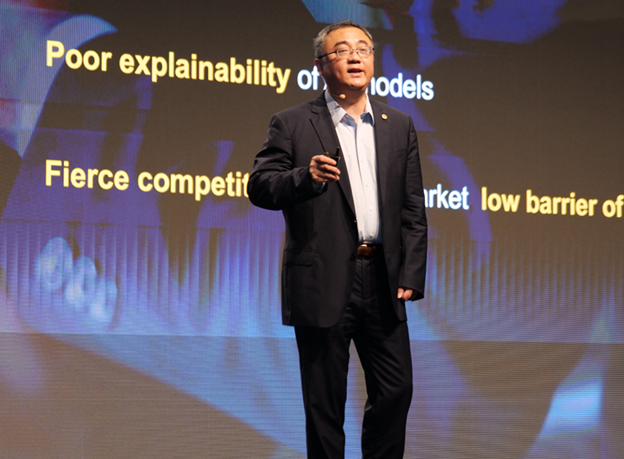
Jacqueline Shi, President of Global Marketing and Sales Service, Huawei Cloud
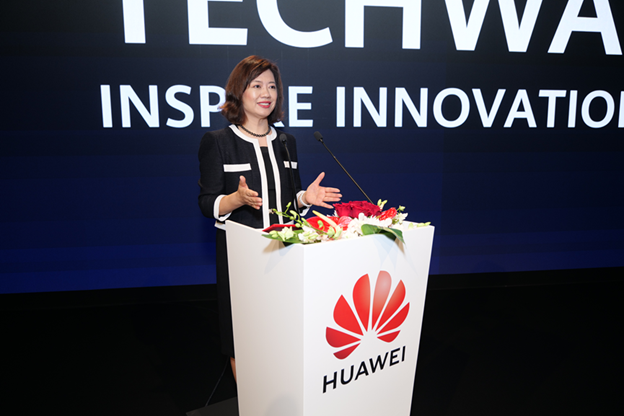
Frank Dai, President of Huawei Cloud Middle East
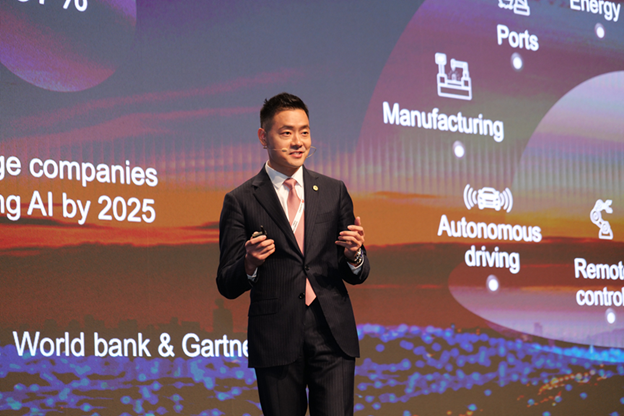
Tian Qi, Chief AI Scientist of Huawei Cloud
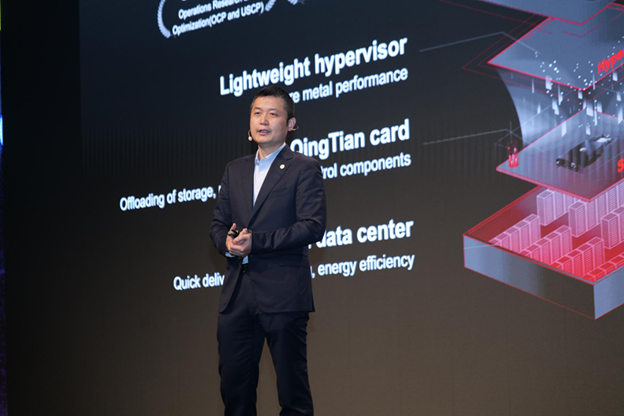
William Dong, President of Huawei Cloud Marketing
October, 10, 2022
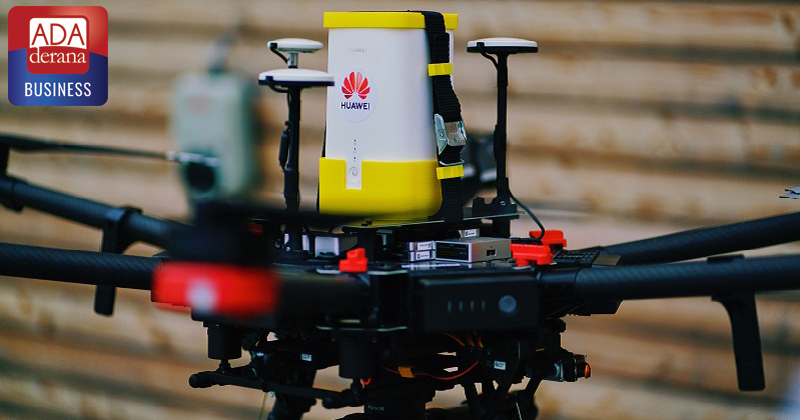
At the Nussböckgut vineyard, a centuries-old estate in Upper Austria that was first mentioned in a document in 1323, the two companies provided an update on their pioneer project that started last year, and introduced how their 5G and IoT technologies can advance sustainability in agriculture. The two companies also hosted a panel made up of digitalization and agriculture experts discussing how technology innovation, and 5G particularly, can promote sustainable farming amid rising global concerns for food security.
The two companies announced that their collaboration is entering the second phase called “Digital Sky”. Huawei will provide cloud computing services on top of 5G, which will serve as the foundation for real-time artificial intelligence (AI) analysis. Meanwhile, equipped with high-resolution cameras and sensors, Dronetech’s drones will survey the land and objects, to capture images and data that will be processed by AI, and provide actionable findings to the users instantly.
The technology helps farmers detect small insects, monitor crop status and predict harvests, allowing them to optimize the use of water, chemicals and pesticides precisely, and with minimum waste.
In the second phase, the project also plans to develop a shared economy approach for drone services. Users from different sectors, including farmers, municipalities, corporates or individuals could rent the drones and their AI solutions for a wide range of applications, such as inspection of solar panels, traffic management, or power lines wear-out detection.
"The project of Huawei and Dronetech with drone use in asparagus and winegrowing is the first in Austria and here we want to analyse plant growth with real-time image recognition. By doing so, we want to improve the harvest, the output and the quality of the products," explains Andreas Reichhardt, Director-General of Directorate-General VI – Telecommunications, Postal Services and Mining at the Austrian Ministry of Finance. "We want to use the opportunities of the digital transformation, for this we need an optimal infrastructure, here the focus is in the area of 5G."
The biggest challenge for introducing 5G-enabled drones to agriculture is network coverage. Currently, 5G networks are primarily designed for end-user who are mostly at ground level or indoors. High-quality coverage for drones, which routinely fly 50 meters above ground, still needs to be developed.
Erich Manzer, Deputy CEO of Huawei Austria, said: "5G was developed for three key application areas: For high bandwidth, low latency and to connect millions of devices. Using drones in combination with AI and 5G can solve many resource-intensive operations such as maintenance or area monitoring."
David Hopf, CEO of Dronetech, noted: "AI-powered drones are important enablers for the sustainable future of agriculture. Partnered with Huawei, we developed a solution that can not only massively reduce the use of pesticides and fertilizers, but also enhance farming efficiency and cut labor costs. This helps our food supply chains to be more sustainable.”
Learn more: https://www.huawei.com/en/sustainability/the-latest/events/5g-smart-farming-tour

Image captions:
October, 6, 2022

During the Asia Pacific ISP Summit, Huawei put forward its latest strategy of “Diving into the Asia Pacific, Shaping an All-Optical, Intelligent Internet”, bolstering the ISP industry as the critical foundation of the Intelligent World 2030. The summit, joined by business leaders and partners, also featured discussions on Asia-Pacific’s all-optical trend and progress of home broadband, integrated bearer, and cloud-managed campuses, creating new values for the industry.
Huawei believes green, all-optical, and intelligent connectivity are the major trends in the ISP industry. When describing the Network 2030 Framework in the strategy, Brandon Wu, CTO of Huawei Asia Pacific Enterprise Business, said it should AI-native, cubic broadband network, and deterministic experience, and meet the security and green requirements.
As a key player in the Asia Pacific ISP Industry, Huawei will leverage its advantages in product portfolios, lead infrastructure innovation, and provide leading end-to-end solutions in datacom, optical network, data center, and cloud.
Meanwhile, Huawei also recognizes that all-optical networks are of growing importance to the ISP industry and even the whole digital economy. Huawei’s technology and solutions will continue to evolve in power-saving and emission reduction, fueling innovation for more Asia-Pacific enterprises.
During the summit, Huawei brought together ISP from several Asia-Pacific countries to share how innovations in Internet infrastructure innovation can help bridge the digital divide and develop the digital economy in the region. For example, Huawei helped an ISP in Nepal transform in home broadband market; in Indonesia, Huawei built cloud connectivity and integrated bearer; and in Thailand, Huawei worked with local partners in innovating managed service provider (MSP) and campus management through enterprise cloud.
The Asia-Pacific ISP industry has seen remarkable growth in recent years. As envisaged by Aarion Wang, Senior Vice President of Huawei Asia Pacific Enterprise Business Group, the Intelligent World 2030 will see a more important role for ISP as both a foundation of the digital world and a source of global economic recovery.
For the exhibition part, Huawei showcased some of its recently released solutions for the ISP industry, including FTTR (Fiber to the Room) for the home scenario, and NetEngine 8000 that integrates multiple service capabilities. These solutions will accelerate the transformation to all-optical, intelligent Internet in the Asia-Pacific region.
Huawei will continue to innovate in green, all-optical, and intelligent Internet infrastructure, to boost the sustainable development of the digital economy in the Asia-Pacific region. With extensive experience in data center networks, data center interconnection, intelligent computing, and public cloud, Huawei is in a unique position to create new values together with customers in the Internet industry.
To learn more about Huawei's latest technologies and solutions in the ISP industry, please visit: https://e.huawei.com/en/huawei/industries/isp
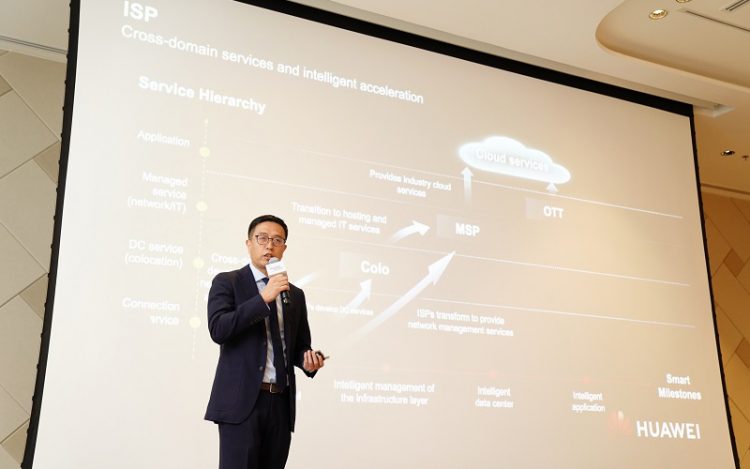 Brandon Wu, CTO, of Asia Pacific Enterprise Business Group, delivered a speech at the summit
Image caption: Aaron Wang, Vice President of Asia Pacific Enterprise Business Group, giving speech
October, 5, 2022
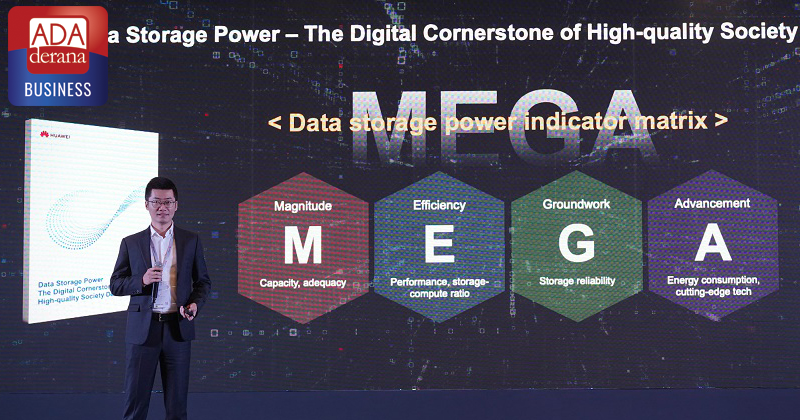
At Huawei Connect 2022 held recently, Huawei officially released its white paper, Data Storage Power – The Digital Cornerstone of High-Quality Development. Examining the development of the storage industry, the white paper defines quantitative indicators to measure data storage capabilities and analyzes the current data storage landscape across different regions around the world. It aims to help governments and enterprises better evaluate, design, and build data storage capabilities.
Gu Xuejun, Vice President of Huawei IT Product Line, said: "The data storage capability is currently measured by capacity. However, with the rapid development of the industry and the emergence of new, diversified data services such as AI and big data, capacity alone is not enough to measure the future development and construction of storage systems. We need a more scientific definition and evaluation system to effectively measure data storage capabilities."
The intelligent world is driving explosive data growth across industries, and the digital transformation of these industries requires powerful data storage capabilities or data storage power. The white paper explains the concept of data storage power, as well as providing:
A concept and connotation of data storage power: Data storage power is a comprehensive concept which includes storage capacity (the core), performance, reliability, and greenness.
Quantitative research of the value of data storage: Huawei's calculations show that a data storage investment of US$ 1 contributes to a direct value of US$ 5, an indirect value of US$ 8, and an induced value of US$ 30-40.
An indicator system that assesses the data storage power of an area or a data center: This system comprises 35 three-level indicators across four directions — magnitude, efficiency, groundwork, and advancement — based on the characteristics of countries and enterprises.
An evaluation of storage power in 20 countries and regions: The white paper analyzes why certain countries lead the data storage power ranking and how those that rank lower can catch up. It also provides policy suggestions for improving data storage power.
Gu said, "I consider this white paper to be a meaningful exploration that will generate more interest in promoting the development of the data storage industry. Only when data is well stored, quickly computed, and stably transmitted through networks can digital infrastructure unleash the value of data and better promote high-quality economic and social development."
Image caption: Gu Xuejun, Vice President of Huawei IT Product Line
October, 3, 2022

Huawei launched its latest solutions for customs and ports at HUAWEI CONNECT 2022, held in Bangkok during recently. This marks the company’s latest tactical move to help the digital transformation of ports and customs after it established its Customs and Port Team last October.
The debut of the Customs and Port Team in Asia Pacific is a big milestone for Huawei, said Robin Lu, Senior Vice President and COO of Huawei Customs and Port Team. The company has many successful digital transformation practices and cases in global trade infrastructure, such as customs and port industries. “At HUAWEI CONNECT this year, we are sharing our leading ICT products and successful industry scenario-based solutions in the hope of helping customs and port infrastructure in Asia Pacific achieve modernization and smart development. In doing so, we can improve port operational efficiency and cross-border trade facilitation,” Lu said.
Port of the future: Safe, Efficient, and Smart
According to Lu, ports in nowadays represent the key infrastructure for international trade and global economic growth. As the world goes digital, ports are under pressure to add intelligence to their equipment, enhance their technological infrastructure, and mine data value. Digitalization is both a challenge and an opportunity.
To help ports go digital, Lu said Huawei offers a range of solutions based on Port Intelligent Twins. The different solutions function as the brain, arms, legs, and eyes of the port.
Brain — Smart Container Planning: Planning is the starting point at any port, impacting operational efficiency. Huawei uses the Huawei Cloud OptVerse AI Solver to enable intelligent planning, helping ports optimize every step of their production efficiency.
Arms — Remote Control with an Optical Network: Conventional terminal operations are time-consuming and labor-intensive. Operators have to work in harsh environments without food or drink for several hours. Quay crane (QC) drivers usually work at a height of 40 m above the ground, at the risk of occupational diseases.
Huawei's remote control solution for QCs and yard cranes (YCs) relies on an optical network. Operators can work remotely from air-conditioned rooms in urban areas, enjoying more safety and comfort as well as shorter commutes. Plus, the solution features high bandwidth, low latency, enhanced security and reliability, simplicity, and easy O&M.
Legs — Smart Horizontal Transport: Ports usually run 24/7. As such, internal container truck drivers typically work in three shifts, facing safety risks and high workloads. Even so, manual dispatching fails to refine plans for complex situations, resulting in low resource utilization.
Huawei's smart horizontal transport solution builds smart clouds, vehicles, and roads. The solution features global path planning, high-precision positioning, an MDC platform that integrates lidars, mmWave radars, and cameras, core system integration, and cloud-vehicle decoupling. These features enable autonomous driving, intelligent obstacle avoidance, and adaptive cruise control, reducing safety risks and increasing operational efficiency by 20%.
Eyes — Smart Production Security: Safety and security are critical at ports. The newly automated terminals require an all-weather security assurance system. That's why, Huawei offers a smart production security solution to help terminals avoid safety risks.
Smart Customs: Open, Controllable, and Fast
Manual inspection usually takes a long time, slowing down customs clearance. Another important issue is ineffective supervision, which negatively impacts trade. To address these issues, Lu said Huawei has designed solutions to enable openness, easy control, fast access, and quality services.
Remote Inspection: Huawei's one-stop customs video inspection solution facilitates online, mobile, and video-based inspections. Customs authorities and enterprises can now interact online instead of performing on-site checks. This leads to faster inspection services and reduces labor and time costs for both customs authorities and enterprises.
Smart Gates: Huawei has also designed a smart gate solution that improves the efficiency at inspection entry and exit points. Gates would often see a lot of congestions and there were many manual tasks. With contactless supervision, inspections are faster and more collaborative; plus, drivers don't need to leave their trucks for clearance.
In October last year, Huawei established its Customs and Port Team to foray into the sector. The group is committed to integrating the company's leading ICTs — such as 5G, AI, big data, and cloud — to deepen the Huawei’s understanding of customer needs and respond to
Image caption: The Smart Customs and Port Solutions Booth at Huawei Connect 2022
September, 27, 2022
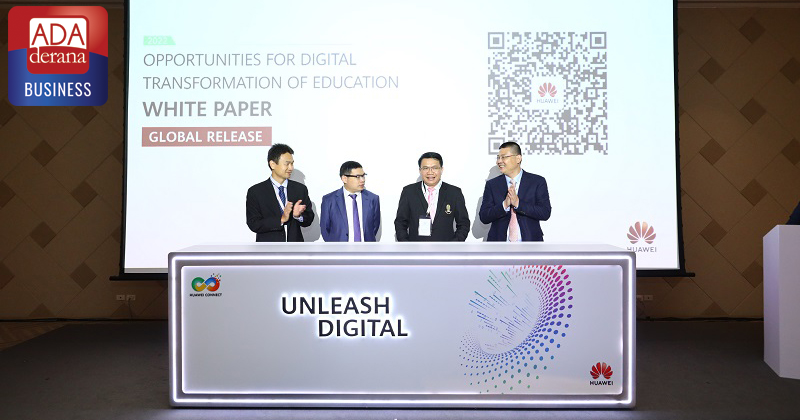
During the session of "Accelerate the Digital Journey of Education" at HUAWEI CONNECT 2022 Bangkok, Huawei released the White Paper on Opportunities for Digital Transformation of Education, which explores the intelligent education maturity assessment model for the first time. Huawei also proposed to leverage all-scenario education solutions to innovate teaching modes, promote inclusive education resources, improve research capabilities, and upgrade management, accelerating the digital transformation of education.
Mark Yang, Director of Education & Healthcare Dept, said: "The White Paper on Opportunities for Digital Transformation of Education is a collection of global strategies and practices from customers, partners, and Huawei itself during their joint exploration of the digital transformation of education. It provides definitions on the concept and framework of intelligent education. The White Paper explores the maturity assessment model of intelligent education for the first time. The model includes six sub-dimensions and five levels, and aims to help schools assess themselves so that they can have a clear direction for future development of education informatization."
Patrick Low, an Industry Expert of Education & Healthcare Dept, elaborated on Huawei's all-scenario education solutions based on Huawei's global success stories. "Huawei's all-scenario intelligent education solutions aim to build an overarching framework for intelligent education, meet the needs of various business scenarios on campus, support diversified teaching applications, realize smart teaching, learning, management, and research in all scenarios, and facilitate talent training across multiple countries."
Inclusive education was also a hot topic at this session. According to Mr. Ekapong Musikacharoen, Deputy Director of Office of Information Technology Administration for Educational Development at Thailand UniNet Scientific Research Network, Thailand's NREN will connect 155 universities and complete a smooth transition to 100 Gbit/s, providing high-quality network connections for all Thai education customers and promoting fair and inclusive education.
Rapidly developing digital technology calls for talent training. Golden Yang, Deputy General Manager of TVET Dept at AVIC-INTL Project Engineering Company, argued that thanks to digitalization, intelligent education will greatly improve the level of talent training and drive technological development. It will cultivate the young generation to provide continuous momentum for the country's high-quality, sustainable development.
Huawei has helped accelerate the digital transformation of education for more than 2800 colleges and universities and research institutes in over 80 countries, and cooperated with over 2000 universities across more than 100 countries and regions to build ICT academies, training an excess of 150,000 students annually. Huawei has certified more than 580,000 ICT talent worldwide. Aaron Wang, Vice President of Asia Pacific Enterprise Business Group, said, "In the Asia-Pacific region, Huawei has cooperated with 273 higher education institutions to construct Huawei ICT academies, training above 16,000 students annually. Huawei is committed to becoming a key contributor to ICT infrastructure of education in the Asia-Pacific region. By applying technologies to education scenarios, Huawei unleashes digital productivity and accelerates the digital journey of education."
For more details, please see the White Paper on Opportunities for Digital Transformation of Education.
Image caption: Launch ceremony for the White Paper on the Digital Transformation of Education
September, 23, 2022
Striding Towards the Intelligent World White Paper Release
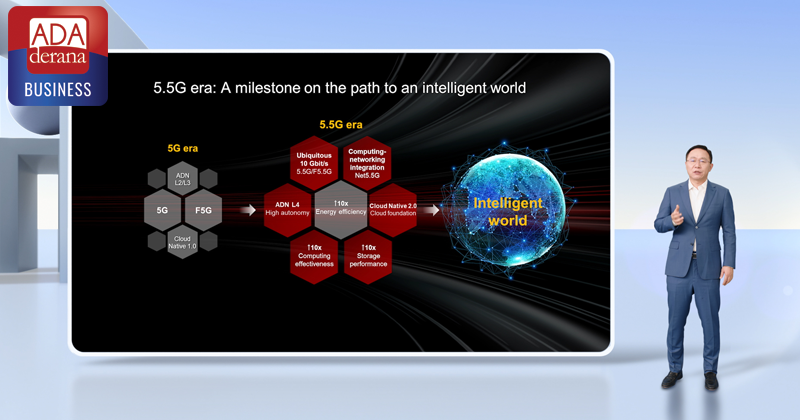
The Striding Towards the Intelligent World Summit at HUAWEI CONNECT 2022 successfully concluded today. David Wang, Huawei's Executive Director of the Board and Chairman of ICT Infrastructure Managing Board delivered a keynote speech titled Embracing the 5.5G Era: Striding Towards the Intelligent World at this summit.
In this speech, he stressed that 5.5G is a key milestone on our path to an intelligent world and released Huawei's latest series of white papers on the intelligent world. Wang also called upon the ICT industry to coordinate efforts around eight facets of this vision. By working together to further define and refine the industry vision and standards for the 5.5G era, the industry will move ever faster towards the 5.5G era and the intelligent world.
In the future, individuals, households, and industries will have higher requirements for digital infrastructure.
For individuals, immersive services like XR and holographic communication are maturing, and connectivity experience is set to increase from 1 Gbit/s to 10 Gbit/s. Mobile DOU will surge from today's 15 GB to 100 GB. Requirements for latency and ubiquitous connectivity will also increase.
For households, the demands generated by advanced services like 24K 3D VR games and holographic education and meetings are creating a full-fiber, 10 Gbit/s era. For industries, digital transformation has now entered the fast lane. Industrial-grade applications such as smart manufacturing and power grid dispatching are raising diversified requirements for connections, quality, and sensing, while also triggering explosive growth in demand for computing power and storage.
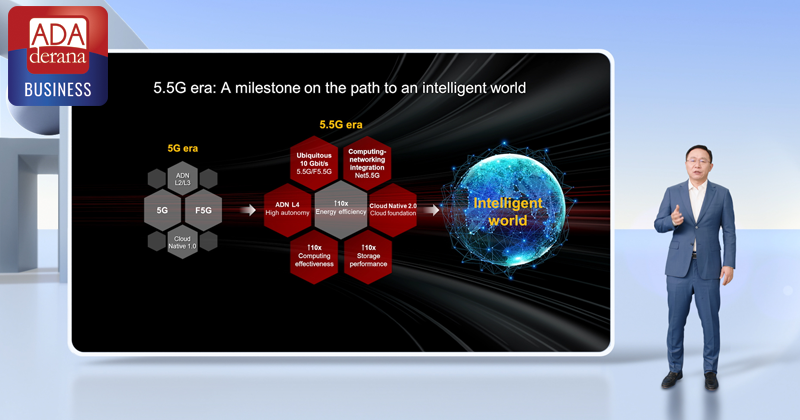
Wang noted, "We must continue to work hard if we hope to reach an intelligent world. The 5.5G era is an important milestone on this path – one we cannot miss. In the 5.5G era, we will need ubiquitous 10 Gbit/s experience; intelligent and high-quality compute scheduling; highly autonomous L4 networks; Cloud Native 2.0 services for enterprises, and a 10-fold increase of computing effectiveness, storage, and infrastructure energy efficiency."
He went on to highlight Huawei's belief that it will need the support of customers, ecosystem partners, industry organizations, and academic institutions to continue evolvingand reinforcing digital infrastructure, thereby accelerating the advent of the 5.5G era and intelligent world.
More specifically, he said that industry players would have to come together to:
1. Promote the allocation of more spectrum to accelerate industry development and continue exploring new 5.5G use cases with greater commercial value;
2. Define the technical paths forward and standards for F5.5G;
3. Quickly reach a consensus on evolution towards Net5.5G;
4. Define a profile for L4/L5 autonomous networks and promote unified standards;
5. Build an open and diversified computing industry for shared success and redefine th computing architecture;
6. Define a storage architecture that meets diversified data processing requirements;
7. Build a cloud foundation for the intelligent world and cultivate a stronger cloud service industry ecosystem; and finally
8. Adopt a unified NCIe system to help industry save energy and reduce emissions with innovative ICT technologies and solutions.
Wang also released Huawei's latest series of white papers, which are titled Striding Towards the Intelligent World. Guided by the next steps relating to the eight facets mentioned above, these white papers explore both the opportunities and challenges that will be presented to major ICT infrastructure domains by emerging business needs and technological developments. The white papers also outline key trends in these domains and specify actions that the company recommends the industry should take before 2025.
Huawei's Chief Strategy Architect Dang Wenshuan then took the stage to discuss the contents of the white papers in more detail. He emphasized two concepts the company would like to promote as we move towards 5.5G and eventually the intelligent world:
1. "ICT for Intelligence" which focuses on constant innovation and evolution in different ICT
domains to improve key capabilities, and
2. "Intelligence for ICT" which focuses on the intelligent and architectural innovation within the ICT industry itself that will be needed to address challenges like increasingly complex O&M, ensuring user experience in diversified service scenarios, and green development. Addressing these challenges will help us make the most of existing and coming core ICT capabilities and lead us to the intelligent world faster.
Image caption: David Wang delivering the keynote
September, 22, 2022
On the second day of HUAWEI CONNECT 2022 Bangkok, Huawei launched a range of innovative infrastructure solutions to drive industry digitalization by finding the right technology for the right scenario. Industry stakeholders gathered together and held discussions around the theme "Innovative Infrastructure to Unleash Digital", exploring the future directions and opportunities for industry digitalization. They analyzed the challenges of different industries striving to go digital, and Huawei introduced solutions supported by its technical strengths to help address these challenges.
At the event, Huawei launched the Huawei Empower Program, a global partner development plan. This program will help Huawei's partners build three types of capabilities to better serve customers: digital transformation consulting and planning, product and portfolio expertise, and solution development.
The right technology for the right scenario: Making it easier to go the "last mile" of digitalization
Ryan Ding, President of Huawei Enterprise BG, said in his keynote speech "Empowering Industry, Creating Value" that "Deeper digital transformation will help companies better adapt to an ever-changing world. Huawei is working closely with our partners to find the right technology for the right scenario, support customers in furthering their digital transformation, and unleash the power of digital."
According to Ding, using its connectivity, computing, and cloud technologies, Huawei is working with its partners to drive ongoing industry innovation and multi-tech synergy, creating scenario-based solutions for diverse customer needs. He added that this will create greater value and make it easier for customers to go the "last mile" of their digital transformation.
Key innovative technologies and stronger infrastructure to unleash the power of digital
Bob Chen, Vice President of Huawei Enterprise BG, discussed how multi-tech synergy is critical for finding the right technology for the right scenario. He explained in his keynote speech "Innovative Digital Infrastructure Accelerates Digital Transformation" that "Data is at the core of digital transformation, and data ingestion, transmission, storage, and analysis are key steps. Huawei provides full-stack products and product portfolios to support end-to-end data processing, accelerating customers' digital transformation."
Data connectivity, transmission, and storage are three important parts in this process.
In terms of data connectivity, Huawei upgraded its Intelligent Cloud-Network Solution that includes CloudFabric, CloudWAN, and CloudCampus. The solution aims to offer industry customers an experience that is easy, agile, and simplified, and helps lay a solid data foundation for unleashing the power of digital.
Regarding data transmission, Huawei has been exploring how to apply the fifth generation fixed network (F5G) evolution in various industries to reshape industry productivity. It has released a variety of new products and solutions for all-optical bearing, all-optical industrial networks, all-optical campuses, and all-optical sensing.
For data storage, Huawei said that it is working to build a data-centric, trustworthy storage foundation for six key data usage scenarios including production and transactions, data analytics, and data protection, helping enterprises get the most from data.
Huawei Empower Program: Building a thriving digital ecosystem for global partners
At the event, Huawei launched the Huawei Empower Program, which is intended to help develop a thriving digital ecosystem for global partners. Through this program, Huawei will conduct joint innovation with partners via OpenLabs, empower partners with a new framework, a new plan, and an integrated platform, and build a talent pool through the Huawei ICT Academy and Huawei Authorized Learning Partner (HALP) programs. Huawei also announced that it would invest US$300 million in this program to support global partners in the next three years.
September, 22, 2022
Striding Towards the Intelligent World White Paper Release
The Striding Towards the Intelligent World Summit at HUAWEI CONNECT 2022 successfully concluded today. David Wang, Huawei's Executive Director of the Board and Chairman of ICT Infrastructure Managing Board delivered a keynote speech titled Embracing the 5.5G Era: Striding Towards the Intelligent World at this summit.
In this speech, he stressed that 5.5G is a key milestone on our path to an intelligent world and released Huawei's latest series of white papers on the intelligent world. Wang also called upon the ICT industry to coordinate efforts around eight facets of this vision. By working together to further define and refine the industry vision and standards for the 5.5G era, the industry will move ever faster towards the 5.5G era and the intelligent world.
In the future, individuals, households, and industries will have higher requirements for digital infrastructure.
For individuals, immersive services like XR and holographic communication are maturing, and connectivity experience is set to increase from 1 Gbit/s to 10 Gbit/s. Mobile DOU will surge from today's 15 GB to 100 GB. Requirements for latency andubiquitous connectivity will also increase.
For households, the demands generated by advanced services like 24K 3D VR games and holographic education and meetings are creating a full-fiber, 10 Gbit/s era.
For industries, digital transformation has now entered the fast lane. Industrial-grade applications such as smart manufacturing and power grid dispatching are raising diversified requirements for connections, quality, and sensing, while also triggering explosive growth in demand for computing power and storage.
Wang noted, "We must continue to work hard if we hope to reach an intelligent world. The 5.5G era is an important milestone on this path – one we cannot miss. In the 5.5G era, we will need ubiquitous 10 Gbit/s experience; intelligent and high-quality compute scheduling; highly autonomous L4 networks; Cloud Native 2.0 services for enterprises, and a 10-fold increase of computing effectiveness, storage, and infrastructure energy efficiency."
He went on to highlight Huawei's belief that it will need the support of customers, ecosystem partners, industry organizations, and academic institutions to continue evolving and reinforcing digital infrastructure, thereby accelerating the advent of the 5.5G era and intelligent world.
More specifically, he said that industry players would have to come together to:
1. Promote the allocation of more spectrum to accelerate industry development and
continue exploring new 5.5G use cases with greater commercial value;
2. Define the technical paths forward and standards for F5.5G;
3. Quickly reach a consensus on evolution towards Net5.5G;
4. Define a profile for L4/L5 autonomous networks and promote unified standards;
5. Build an open and diversified computing industry for shared success and redefine the computing architecture;
6. Define a storage architecture that meets diversified data processing requirements;
7. Build a cloud foundation for the intelligent world and cultivate a stronger cloud
service industry ecosystem; and finally
8. Adopt a unified NCIe system to help industry save energy and reduce emissions with innovative ICT technologies and solutions.
Wang also released Huawei's latest series of white papers, which are titled Striding Towards the Intelligent World. Guided by the next steps relating to the eight facets mentioned above, these white papers explore both the opportunities and challenges that will be presented to major ICT infrastructure domains by emerging business needs and technological developments. The white papers also outline key trends in these domains and specify actions that the company recommends the industry should take before 2025.
Huawei's Chief Strategy Architect Dang Wenshuan then took the stage to discuss the contents of the white papers in more detail. He emphasized two concepts the company would like to promote as we move towards 5.5G and eventually the intelligent world:
1. "ICT for Intelligence" which focuses on constant innovation and evolution in different ICT domains to improve key capabilities, and
2. "Intelligence for ICT" which focuses on the intelligent and architectural innovation within the ICT industry itself that will be needed to address challenges like increasingly complex O&M, ensuring user experience in diversified service scenarios, and green development. Addressing these challenges will help us make the most of existing and coming core ICT capabilities and lead us to the intelligent world faster.
September, 21, 2022

Huawei and the ASEAN Foundation brought together representatives from government, academia, and industry to discuss the construction of a future-ready ICT talent pool in the Asia-Pacific region at the Asia Pacific Digital Talent Summit today. This meeting, focused on cultivating talent to unleash the power of digital, was held during Huawei's annual flagship event Huawei Connect.
In his opening speech, Ekkaphab Phanthavong, Deputy Secretary-General of ASEAN for Socio-Cultural Community, explained that the summit, “is essential to foster discussion and coordinate efforts on how we can cultivate innovative ICT talents in the region, identify their current status, address digital adversities and inequalities, and determine the step forward.”
The ASEAN Foundation's Executive Director Dr. Yang Mee Eng also stated that, “Through the summit, we are bringing key stakeholders across the region to enhance consensus, tackle difficulties, and take ample actions to resolve digital gaps, cultivate innovative talents, and unleash digital transformation for the region.”
Huawei's President of Public Affairs and Communications Jeff Wang explained the company's own goals for talent cultivation, “Connecting people and building the next generation of talent is more important than ever for driving forward digital transformation. For more than 20 years, we’ve worked closely with partners in Asia Pacific to provide Internet access to the unconnected. Meanwhile, we are on track to meet our goal of training 500,000 ICT talents in the region by 2026.”
During the event, government representatives from across the region shared updates on their own current initiatives in talent cultivation.
Dr. Phichet Phophakdee, Inspector-General of the Ministry of Education of Thailand said, “In Thailand, distance learning platforms and resources, such as Digital Learning Television (DLTV), are being developed to ensure learning opportunities are available for everyone. The future of education will depend on us being more united and innovating to make our nation's education more inclusive, more equitable, and higher quality.”
Cambodia's Secretary of State, Ministry of Post and Telecommunications Sok Puthyvuth added, “Cambodia has begun including digital subjects into our school curriculums, leveraging online platforms, and establishing new community tech centers for students. We are also enhancing work with vocational training schools to provide digital training for those already in the workforce.”
Indonesia's Director General of Higher Education under the Ministry of Education, Culture, Research, and Technology Prof. Nizam said, “In Indonesia, we are transforming our education system to be digitally ready and developing a talent pool of digital technology through multiple initiatives.”
Two professors also provided their insights from an academic angel. Professor GUO Yike from Hong Kong Baptist University introduced to the audience the world’s first AI ensemble, Turing AI Orchestra (TAIO). He believed that “TAIO will promote transdisciplinary education to the next generation.” Former Vice-President of Japan's Yokohama National University Hitoshi Yamada explained how international exchange can transform digital talent development.
In his own speech, Huawei's Asia Pacific President Simon Lin said, “Nearly all Asia Pacific countries are empowering ICT talents especially young people to boost digital economy. As a global company rooted in local markets, Huawei will keep strengthening the talent ecosystem through leadership, skill, and knowledge.”
“In today’s world, the talent ecosystem had become the foundation for economic growth and recovery. Technology is continuously evolving faster and there is more and more space available to bridge the skills gap of youth, especially in Asia Pacific countries including Sri Lanka. Therefore it is commendable to see Huawei as a leading ICT company coming forward to boost the talent ecosystem in Asia Pacific with many initiatives for ICT talent development” Dr. Pulasthi Gunawardhana Senior Lecturer – Dept. of Information and Communication from University of Sri Jayawardenapura Faculty of Technology, Sri Lanka said taking part at the event online.
The latter half of the event included: the pre-release of Thailand's National Digital Talent Development White Paper which is scheduled for publication in October; the launch of Huawei's first international training initiative on Cyber Security Talent Development Solution and Certification Standards; and a panel on digital inclusion and post-pandemic recovery.
The panel included Michele Wucker, global best-selling author of “The Gray Rhino”, Professor Guo Song from Hong Kong Polytechnic University, and Iona Dominique, winner of APAC Seeds for the Future Tech4All Competition. Together, they discussed the importance of including young people in digital inclusion policymaking and called for collective actions among private sector, academia and the government for digital inclusion in this era. Michele concluded the panel by saying, “The gray rhino of digital transformation is different for different groups—for young people in terms of their own education, for business in terms of how they hire and operate, for policymakers in terms of how they facilitate the atmosphere that united everyone and deal with it, which involves both obstacles and opportunities. You can see the rhinos coming at you; you can stand still and get trampled; or you can take its strength, harness it and use it to pull everyone forward.”
Image caption: During the event, several country representatives from across the region shared updates on their own current initiatives in talent cultivation.
Video Story