

February, 16, 2026
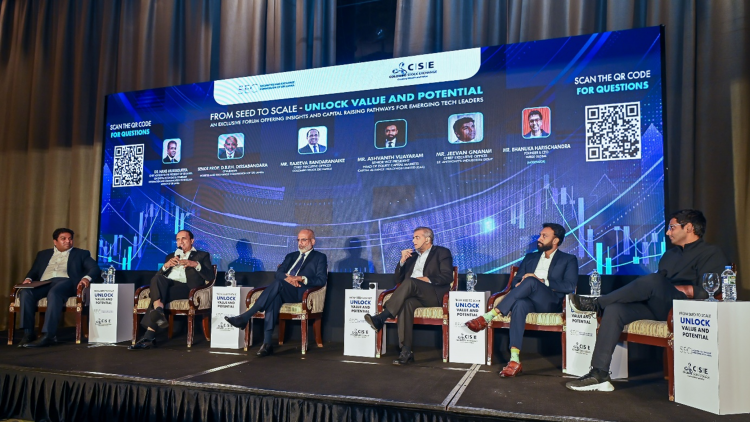
The Securities and Exchange Commission of Sri Lanka (SEC) and the Colombo Stock Exchange (CSE) hosted a forum themed “Seed to Scale – Unlock Value & Potential” to a full house of Tech companies recently in Colombo.
The forum is part of a broader initiative to engage and encourage Tech companies to use the capital market as a source of funding in to catalyse mid-to-long term business growth.
Over 60 firms from the Tech sector got the opportunity to engage with industry leaders and experts to discuss capital raising pathways for emerging tech leaders through a listing of debt and equity on the CSE.
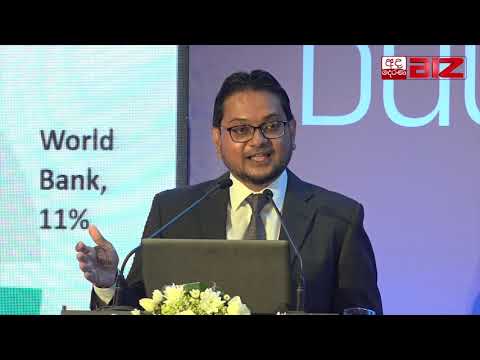
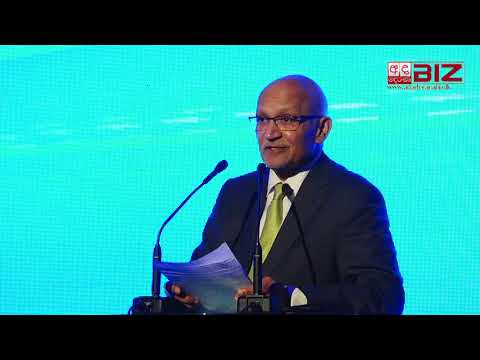
The forum featured an in-depth presentation by Mr. Ashvanth Vijayaram, Senior Vice President –Head of Equity Capital Markets at Capital Alliance Holdings Ltd (CAL) that discussed the path to listing for companies, the benefits of listing as a low cost means of raising capital, how the secondary market can drive valuations for a listed company, as well as the opportunities and brand recognition that listing provides and how IT firms might leverage the capital market.
The main feature of the forum was a panel discussion and Q&A session that featured Chief Advisor to the President of Sri Lanka on Digital Economy & Chairman of Information Communication Technology Agency of Sri Lanka (ICTA) Dr. Hans Wijayasuriya, Chairman of the SEC Snr. Prof. D.B.P.H. Dissabandara, CEO of the CSE Mr. Rajeeva Bandaranaike, Managing Director of St. Anthony’s Industries Group Mr. Jeevan Gnanam, Senior Vice President – Equity Capital Markets at Capital Alliance Holdings Ltd (CAL) Mr. Ashvanth Vijayaram, with CEO and Founder of Surge Global Mr. Bhanuka Harischandra moderating.
The combination of perspectives and expert insights, from policy advisors, investment banks, startup incubators and IT firms provided the forum participants with a comprehensive overview of the Sri Lankan capital market and how IT firms can leverage the capital market, create a digital economic ecosystem and ensure a long-term business legacy through listing on the Stock Exchange.
Panellists discussed several matters, including why the Sri Lankan capital market would be attractive for IT startups. They agreed that the domestic capital market offers IT firms a proving ground that enjoys lower barriers such as cost and compliance requirements, better domestic brand recognition for homegrown firms, better valuations in Sri Lanka compared to listing abroad at the outset, a platform to demonstrate transparency and a trusted reputation upon listing and, the opportunity for Sri Lankan IT startups to leverage their domestic success when scaling through foreign markets.
Chief Advisor to the President of Sri Lanka on Digital Economy & Chairman of the ICTA Dr. Hans Wijayasuriya, speaking at the forum commented on this further, setting out the advantages the Sri Lankan capital market offers domestic IT firms as well as outlining the optimal tech ecosystem, remarking: “Lot of startups, once they reach a certain scale, would shift their headquarters outside the country because of capital mobility and pool of capital available in that country. Capital mobility is key, especially in the tech industry. Only very few categories of tech can build scale in Sri Lanka from the domestic market. Therefore, a majority of your capital has to be quickly scaled outside of Sri Lanka. The dream is that of Sri Lankan IPs and Sri Lankan headquartered companies becoming multinational. That’s when the digital ecosystem in Sri Lanka will really flourish and capital will come in to fuel Sri Lankan companies and IPs to go overseas. To make that possible, you need to allow for capital mobility, and that is something which I think very soon we will hear good news on. There would be special facilities for FDIs to fuel Sri Lankan startups to be fully mobile. That is capital to be used to invest overseas and expand your business, provided you keep your IP and headquarters in Sri Lanka.”
Dr. Wijayasuriya further elaborated on tax reforms that would lead to a more vibrant tech ecosystem, commenting “The second piece is regarding taxation – in the current scenario venture capital funds and venture capital fund investors face cascading taxes, which is not the case in other overseas markets. Therefore, the propensity for venture capital funds to set up in Sri Lanka and bring foreign capital into the Sri Lankan ecosystem requires solving for the cascading tax. That is something which the SEC is playing a key role to formulate and make the required changes in legislature to remove that cascading tax. If we can attract capital to the venture capital space and create an environment where our own innovators are sufficiently motivated to stay in the country and operate out of Sri Lanka and expand overseas from Sri Lanka, then I think we will have a much more vibrant tech ecosystem. The path to better scaling will involve shortening the process of listing in such an environment, with shorter maturity curves and greater readiness for the full scale-capital market.”
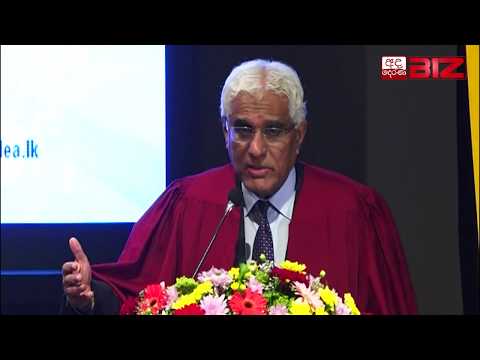
Speaking at the forum, Chairman of the SEC Snr. Prof Dissabandara, surveyed the state of the Sri Lankan IT sector and its potential future, stating: “When you look at the Sri Lanka tech sector, it is no longer an emerging story, it is an unfolding success. From export driven IT services to homegrown platforms and intellectual property, our entrepreneurs are building companies that can compete globally and has made a significant impact on growth of the Sri Lankan economy. The real question before us is how our capital markets can evolve to support this momentum by providing not just capital, but confidence, credibility and continuity. When you look at the startups and tech driven companies, they are central to this vision. Many of these companies possess immense growth potential and the capacity to become future market leaders, generating employment, export earnings and innovation-led value creation. We see capital formation not simply as a financing mechanism but as a strategic pathway for these enterprises to scale professionalize and to integrate into the formal market system.”
In this context, he emphasized the role of the regulator in enabling this transformation: “When you look at the SEC as the regulator and a facilitator, as we firmly believe our role is not merely to regulate, we have openly said that, but first and foremost to help create the market and thereafter to maintain the market and to regulate the market thereafter. Our objective is to build an inclusive and dynamic capital market ecosystem in the country that enables incentives, innovation, encourages entrepreneurship and supports sustainable economic growth. As the SEC, we bridge this gap by actively supporting the growth journey of such companies by enabling access to diverse capital, raising avenues to enable capital formation while preserving the market integrity. We are committed to a regulatory approach that is progressive, proportionate and responsive to change while upholding the standards that sustain investor trust and confidence.”
CEO of the Colombo Stock Exchange Mr. Rajeeva Bandaranaike, asked at the forum to advise potential issuers on how to navigate the inherent volatility of the capital market remarked: “Besides attracting capital for your company, you unlock value of your company and discover a price for your share. As discussed, there are many routes of the listing experiences – raising capital, exiting your company by selling part of your shareholding, listing the company as is through an introduction – all to discover the price of your shares, unlock value and gain brand value, amongst other reasons. Markets are cyclical and subject to volatility. As an entrepreneur or owner of a company, you should not be overly concerned about short term volatility. If your company has a solid growth story, is well managed, has positive cash flows and positive net assets there will be a demand for your shares. We have seen short term volatility in the market but also have seen the shares of companies performing well during tough times. As a business owner of course, you will have to watch the secondary market too because your share price matters. But as I said it’s not about short-term volatility. You have entered the market with a purpose, unlocked the value of your company and realized the valuation that you want. In terms of post listing experience you have an obligation to give returns to your shareholders either by way of dividends, or if you are a growth-company then by way of capital gains that you offer through share price appreciation. Listing is ultimately about unlocking value. As discussed, entering the capital market at the right time does matter, but there is no universal right time. If you have a growth story, the potential and there is investor appetite, your IPO will be successful.”
Managing Director of St. Anthony’s Industries Group Mr. Jeevan Gnanam speaking on implementing the financial discipline required for the listing compliance remarked: “Startups when they first start often focus on making money. At Hatch we look at introducing financial governance and discipline. Before the pre-seed, we introduce a requirement for a monthly financial statement, for the benefit of not just us but also the startup – because they need to know what stage of growth they are in. In the wider industry this kind of practice is useful to avoid cases of infamous startups that have seen venture capitalists invest without the required due diligence. As an industry if we take the practice of simple financial discipline, we introduce it very early in startups. We ensure such in startups we are bringing through our accelerator and incubator programs or even into our fund. Financial discipline is a must, and we introduce it very early because it reinforces a positive loop by building trust. Financial discipline gives you trust, trust gives you access to capital, capital gives you leverage, leverage equals growth. So, you are trying to enforce that into the startup mindset. “
Mr. Ashvanth Vijayaram, Senior Vice President – Head of Equity Capital Markets at Capital Alliance Holdings Ltd (CAL) elucidated upon how best IT startups can utilize investment banks when he remarked: “One of the biggest challenges I’ve observed — particularly in the Sri Lankan context — is that at an early stage in a company’s lifecycle, founders often try to bring in investors who are better suited for a later phase. This creates a mismatch between investor expectations and the company’s readiness.
Early-stage investors need to be significantly more risk-tolerant than later-stage investors. However, in Sri Lanka, the limited pool of angel investors and venture capitalists means startups often have to work harder to find the right fit at that stage. Where an investment bank is engaged, its role should be to help identify and connect the company with the most appropriate early-stage investors. At later stages, the role of an investment bank evolves. The conversation is no longer just about where to place securities, but how to structure the transaction — capital structure, instrument design, valuation approach, and timing. Those structuring discussions become relevant as the business matures. In contrast, at the early stage, the primary question is: who is the right investor for this company?”
The forum occurred amidst sustained success of the Sri Lankan capital market, which has marked two years on the rise. 2026 CSE saw the capital market break several milestones in January, continually setting new records for the All-Share-Price-Index (ASPI), the S&P SL20, and market capitalization which crossed the LKR 8.5 Bn threshold. Last year also saw 25 listings on the exchange including 6 newly listed companies, to raise capital to fund rapid expansion. 2025 also saw several listed companies issue new instruments for the first time in the country including Blue Bonds, Green Bonds, Social Bonds and High Yield Sustainable Bonds amongst others, providing issuers with a novel way to raise funds required for mid-to-long term growth while tapping into the market for sustainable investment options that investors increasingly look towards.
Photographs: (L – R): Panellists of the “Seed to Scale – Unlock Value & Potential” Forum; Managing Director of St. Anthony’s Industries Group Mr. Jeevan Gnanam, CEO of the CSE Mr. Rajeeva Bandaranaike, Chairman of the SEC Snr. Prof. D.B.P.H. Dissabandara, Chief Advisor to the President of Sri Lanka on Digital Economy & Chairman of Information Communication Technology Agency of Sri Lanka Dr. Hans Wijayasuriya, Mr. Ashvanth Vijayaram, Senior Vice President – Equity Capital Markets at Capital Alliance Holdings Ltd (CAL), and CEO of Surge Global Mr. Bhanuka Harischandra.
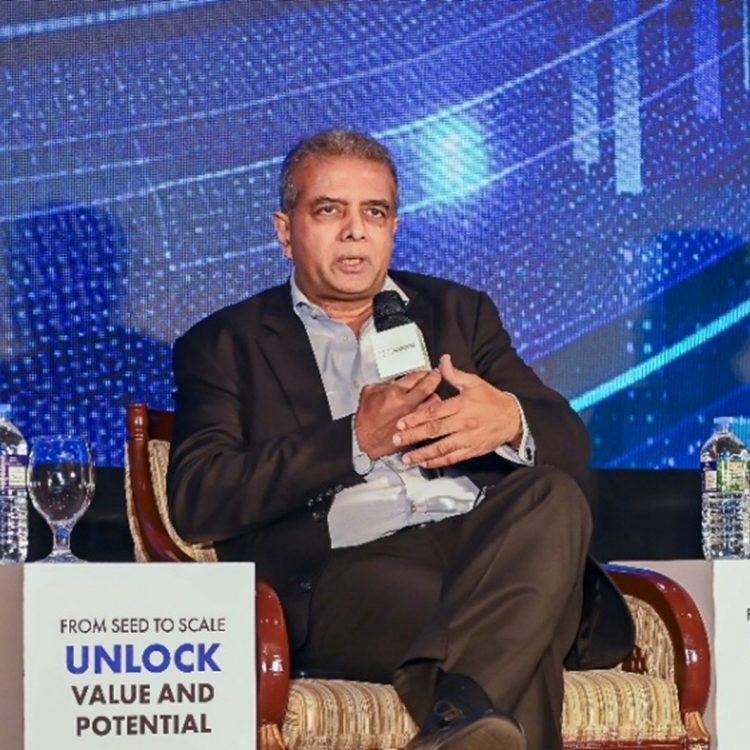
Dr. Hans Wijayasuriya - Chief Advisor to the President of Sri Lanka on Digital Economy & Chairman – Information Communication Technology Agency of Sri Lanka
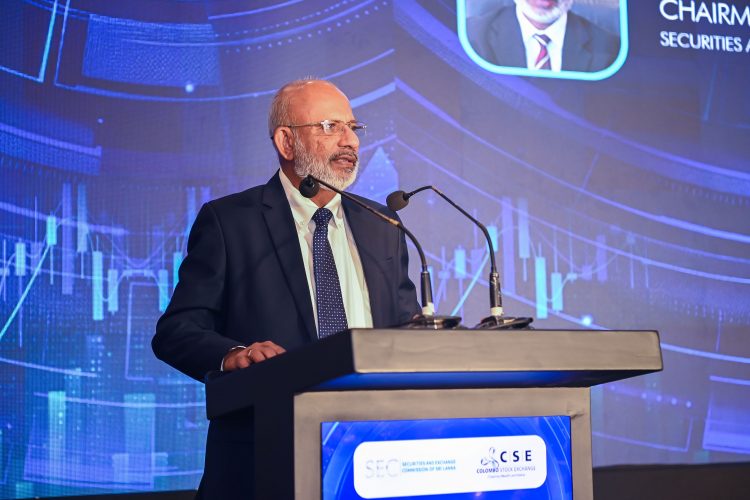
Senior Prof D.B.P.H. Dissabandara, Chairman – Securities and Exchange Commission of Sri Lanka
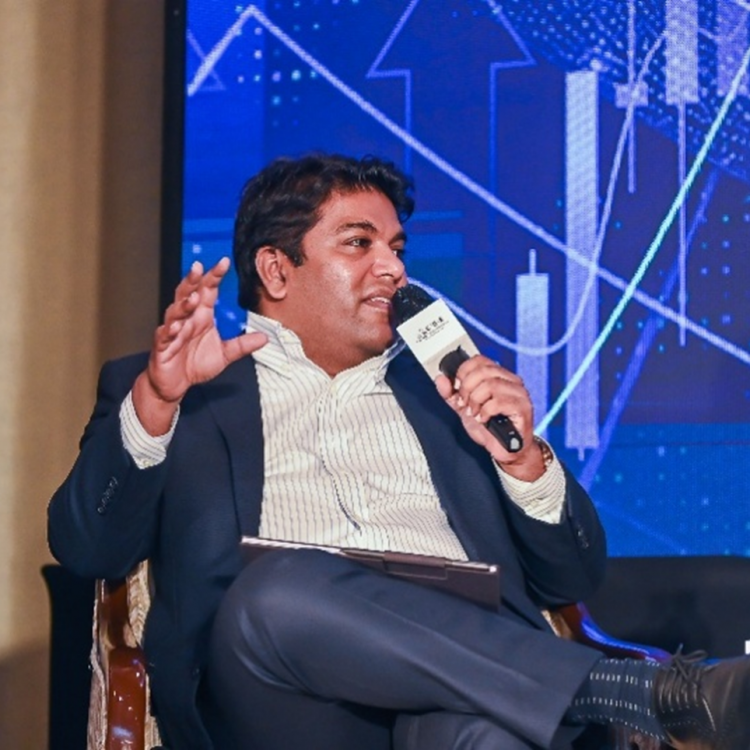
Mr. Jeevan Gnanam – Managing Director of St. Anthony's Industries Group
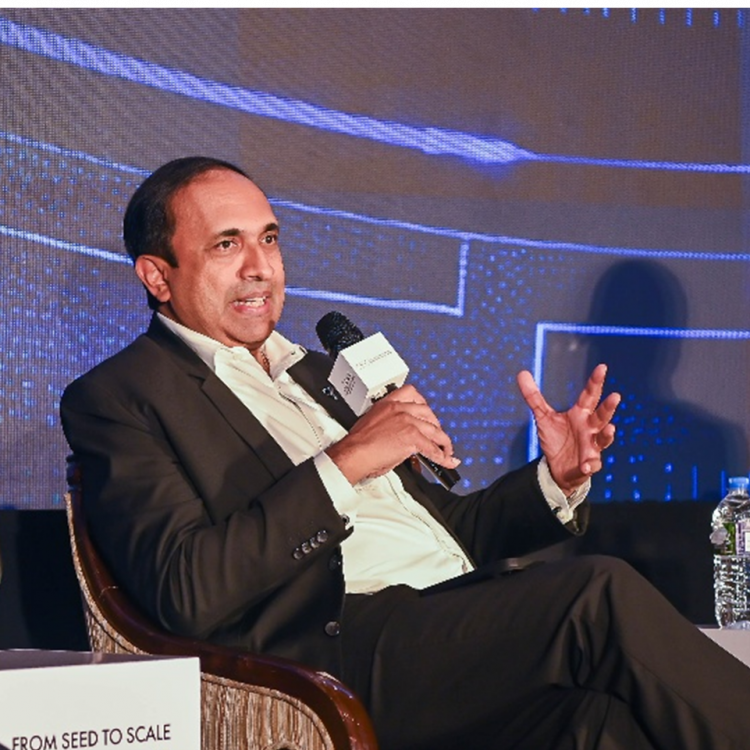
Mr. Rajeeva Bandaranaike – CEO of CSE
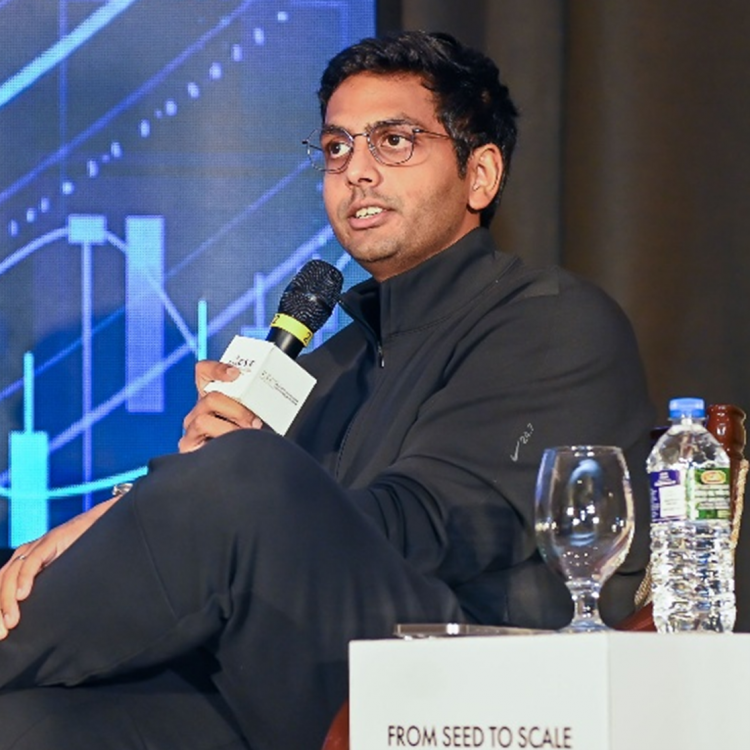
Mr. Bhanuka Harischandra – CEO & Founder of Surge Global
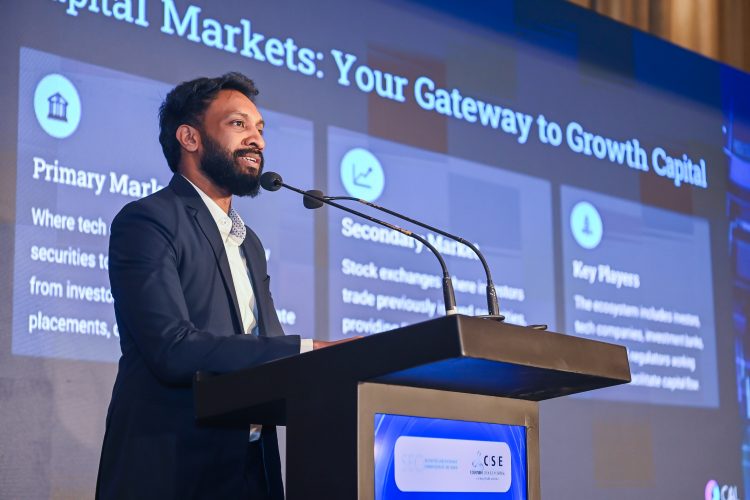
Mr. Ashvanth Vijayaram - Senior Vice President – Head of Equity Capital Markets, Capital Alliance Holdings Ltd
Video Story