

February, 20, 2026

Financial Performance
The Sampath Group achieved its highest financial performance in its history, recording a PBT of Rs 53.0 Bn and a PAT of Rs 32.6 Bn, reflecting year-on-year growth of 8% and 13%, respectively. Meanwhile, the Group’s total asset base surpassed Rs 2 Tn in 2025, reflecting a 12% growth compared to year-end 2024.
The Bank too recorded the highest profitability in its history during the financial year ending 31st December 2025, reporting a Profit Before Tax (PBT) of Rs 49.3 Bn and a Profit After Tax (PAT) of Rs 30.2 Bn, representing year-on-year growth of 5% and 11%, respectively. The PBT and PAT growth rates were even more impressive at 22%, when adjusted for the additional profit derived in 2024 for the restructuring of the Sri Lanka International Sovereign Bonds. The Bank achieved a significant milestone in 2025, with its gross loan book expanding by Rs 259 Bn to reach Rs 1.2 Tn by end-2025, compared to Rs 965 Bn in 2024, reflecting a strong year-on-year growth of 27%.
Key Financial Highlights for the Year Ended 31st December 2025
Gross Income
In 2025, the Bank’s gross income reached Rs 218.8 Bn, reflecting a year-on-year growth of 12%. This performance was supported by contributions from interest income, fee-based income and other income streams.
Fund Based Income
For the year ended 31st December 2025, the Bank reported total interest income of Rs 181.1 Bn, reflecting a decline of 1% compared to 2024. This was primarily attributable to a lower AWPLR and reduced interest rates on government securities. In response to the correction in market interest rates, the Bank strategically redirected funds previously invested in government securities into its robust lending portfolio.
Interest expenditure for the year increased marginally, driven by growth in the deposit and borrowing portfolios. Consequently, Net Interest Income (NII) reached Rs 77.8 Bn for the year, reflecting a 3% decrease compared to the previous year.
Meanwhile, the Net Interest Margin (NIM) contracted by 79 basis points, declining from 4.90% in 2024 to 4.11% in 2025. This contraction was primarily driven by lower yields on the investment portfolio and reduction in AWPLR reflecting the broader downward trend in market interest rates, as well as the benefits passed down to its customers.
Non-Fund Based Income
Net Fee and Commission Income
Net fee and commission income across all segments increased by 21% in 2025, reaching Rs 21.2 Bn, driven by credit growth, stronger economic activity, and greater card usage. Furthermore, process improvements driven by new strategic initiatives played a key role in the growth of this income category.
Net Gain on Derecognition of Financial Assets
A gain of Rs 4.0 Bn was recognised from the disposal of Financial Assets, mainly realized in the first quarter of 2025 from the sale of Treasury bills and bonds. In 2024, the Bank recorded Rs 7.2 Bn loss primarily from the restructuring of the Sri Lanka International Sovereign Bonds. Excluding this loss, the result for 2025 represents a growth of 250% compared to 2024.
Net Trading and Net Other Operating Income
The Bank reported a total gain of Rs 6.5 Bn under net trading and other operating income in 2025, compared to a loss of Rs 2.8 Bn in 2024. The gain was primarily driven by an exchange gain of Rs 5.3 Bn, following the LKR’s depreciation of Rs 16.63 against the USD. In contrast, in 2024, the LKR appreciated Rs 30.75 per USD, resulting in an exchange loss of Rs 4.2 Bn.
Impairment Reversal/Charge
The Bank recorded a total impairment reversal of Rs 0.6 Bn during the current year, representing a significant reduction of Rs 11.1 Bn compared to the previous year. Of the total reversal recognised in 2024, Rs 15.8 Bn arose from the restructuring of Sri Lanka International Sovereign Bonds (SLISBs). Excluding this one-off reversal, the Bank would have reported an impairment charge of Rs 4.1 Bn in 2024.
Impairment reversal/charge on loans and advances
In 2025, the Bank recorded an impairment reversal of Rs 1.0 Bn on loans and advances, compared with a charge of Rs 2.8 Bn in 2024.
Amid accelerated credit growth in the latter part of the year, the Bank recognised additional impairment provisions on newly granted loans and maintained higher provision coverage across all stages compared with 2024.
The Bank’s strengthened recovery efforts, together with improved customer repayment capacity, supported by lower interest rates and favourable economic conditions, led to a significant reduction in Stage 2 and Stage 3 loans. The reinstatement of the parate execution law further facilitated the recovery of long-outstanding Stage 3 loans. Provision reversals arising from enhanced recovery processes exceeded impairment charges on newly granted loans. Consequently, Stage 3 loans as a proportion of gross loans declined to 9.6% as at 31st December 2025 from 13.7% at the end of 2024, while Stage 2 loans decreased from 15.7% in 2024 to 7.6% by the end of 2025.
Large customers affected by Cyclone Ditwah were separately identified and assessed under the Individually Significant Customer Impairment process, with provisions determined based on the severity of the impact on their business cash flows. Customers requesting moratoriums who were classified under collective impairment were also identified, and an additional overlay allowance was recognised. The number of customers requesting moratoriums was considerably lower than in the COVID-19 related period.
Impairment charge on other financial instruments
The Bank recognised an impairment charge of Rs 1.4 Bn for the year ended 31st December 2025, primarily attributable to the purchase of short-tenor PDI bonds. In contrast, last year’s reversal was mainly driven by the release of the full provision made against SLISB following its restructuring.
Operating Expenses
Operating expenses increased by 19% year-on-year, primarily due to incremental costs related to executing strategic initiatives aimed at positioning the Bank for its next phase of growth. Personnel costs rose by 10%, driven by annual salary increments, the expansion of the staff cadre and the acquisition of new talent to support business growth. These costs, together with increased investment in technology, were aligned with the Bank’s future-focused strategic initiatives aimed at supporting long-term growth.
As a result, the Bank’s cost-to-income ratio (CIR) rose by 170 basis points to 42.7%, compared with a CIR of 41.0% in the previous year, after adjusting for the impact of the SLISB restructuring.
Taxation
The total tax charge increased to Rs 33.2 Bn in the current year, up from Rs 32.6 Bn in the previous year, driven by higher taxable income. Despite this, the Bank’s effective tax rate (ETR) marginally declined to 52.3% in 2025, compared with 54.4% in 2024. Total taxes paid to the Government of Sri Lanka during the year exceeded Rs 39.0 Bn, compared with Rs 33.8 Bn in the previous year.
Dividend
The Board of Directors has recommended a final cash dividend of Rs 10.30 per share for the financial year ended 31st December 2025, subject to shareholder approval at the 40th Annual General Meeting scheduled for 30th March 2026. The dividend payout ratio for the year stood at 39.98% (2024: 40.13%).
Key Ratios
The Bank achieved an improvement in profitability in 2025, with Return on Average Shareholders’ Equity (after tax) rising to 17.93% from 17.74% in 2024. Conversely, Return on Average Assets (before tax) declined to 2.60%, from 2.84% at the end of the previous year, primarily driven by accelerated credit growth in the latter part of the year, which resulted in the recognition of the full impairment provision in the absence of sufficient interest income to absorb it.
Capital and Liquidity
Despite reallocating funds from government securities to lending, the Bank maintained strong capital and liquidity ratios, comfortably exceeding the minimum regulatory requirements throughout 2025. As of 31st December 2025, the Bank’s Common Equity Tier 1 (CET1), Tier 1, and Total Capital ratios stood at 14.75%, 14.75%, and 17.65%, respectively, compared with 16.75%, 16.75%, and 19.38% at the end of 2024.
Liquidity levels remained robust, with the all-currency Liquidity Coverage Ratio (LCR) at 239.79% and the Net Stable Funding Ratio (NSFR) at 173% as of 31 December 2025, well above the minimum regulatory requirement of 100% in both cases.
Assets
Total assets grew by 11% to Rs 1.98 Tn as of 31st December 2025, supported by expansion of the loan portfolio. Gross loans rose by Rs 259.0 Bn, from Rs 964.6 Bn at end-2024 to Rs 1,223.6 Bn. Technology-driven enhancements and process improvements implemented through new strategic initiatives enabled higher lending volumes, shorter turnaround times, and the development of a robust SME and corporate loan book.
Additionally, funds previously invested in government securities were redirected to support loan growth, leading to a significant reduction in investments in Government Securities as the Bank adjusted its asset mix to levels approaching those seen before COVID-19.
Liabilities
The Bank’s total liabilities increased by 12% to Rs 1.80 Tn as of 31st December 2025, primarily driven by growth in the deposit portfolio, which rose by Rs 178.1 Bn, from Rs 1.47 Tn at the end of 2024 to Rs 1.65 Tn at year-end 2025.
Group Expansion
The Bank wholly owns four subsidiaries—Siyapatha Finance PLC, Sampath Securities (Pvt) Ltd (formerly SC Securities Pvt Limited), Sampath Information Technology Solutions Limited and Sampath Centre Limited. In January 2026, the Bank established a new wealth management company to better address the evolving needs of its customer segments and is currently awaiting regulatory approval.
Driving a Sustainable Future for Sri Lanka
Sampath Bank continues to lead in sustainability through its infrastructure rejuvenation project, “Wewata Jeewayak”, marked by the restoration of its 28th tank, providing a significant boost to the country’s agricultural and community development. This complements the Banks ongoing initiatives in coral restoration, turtle conservation, forest replantation, mangrove restoration and several other environmental and community projects.
Furthermore, the Bank has strengthened its position as a national ESG leader by integrating sustainability principles into its business strategy, decision-making and operations. This holistic approach enables the Bank to create long-term value while promoting meaningful environmental protection and community empowerment.
Sampath Bank also made notable progress in strengthening sustainable finance, climate governance and operational performance. The scope of ESG-linked credit screening was further expanded in line with the best global practices. A key highlight was the successful implementation of SLFRS S1 and S2 under the Bank’s Climate First Action Plan, marking a significant advancement in climate-related governance, strategy, risk management and metrics and targets.
As part of its contribution to green finance, Sampath Bank launched a Green Fixed Deposit supported by a comprehensive Green Deposit Framework, which obtained independent limited assurance at the pre-issuance stage, enhancing credibility and stakeholder confidence.
Beyond its environmental initiatives, Sampath Bank demonstrated strong social responsibility during periods of national crisis. In response to the devastation caused by the Ditwah Cyclone, the Bank donated Rs 100 Mn to the ‘Rebuilding Sri Lanka’ Fund to support economic recovery and business revival across the country. In addition, the Bank facilitated urgent humanitarian assistance by providing essential medical supplies to the Sri Lanka Red Cross and the Sri Lanka Air Force.
Photo Caption:
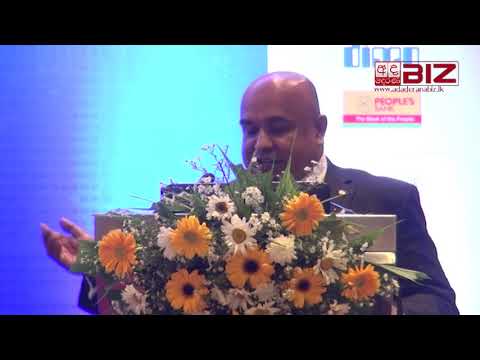
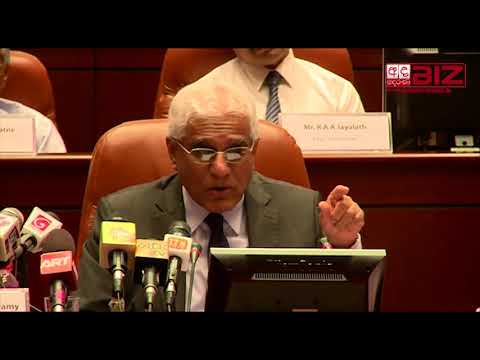
Image 1: Harsha Amarasekera, Chairman, Sampath Bank PLC
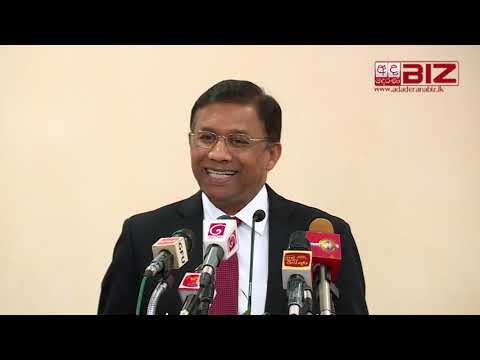
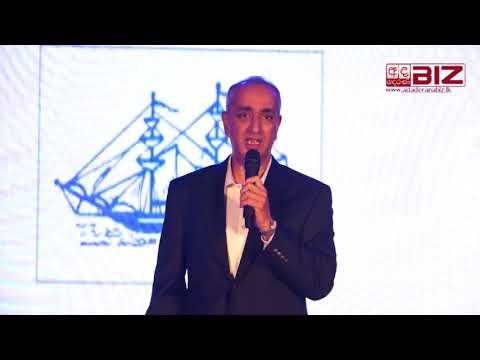
Image 2: Sanjaya Gunawardana, Managing Director/ Chief Executive Officer, Sampath Bank PLC
Video Story