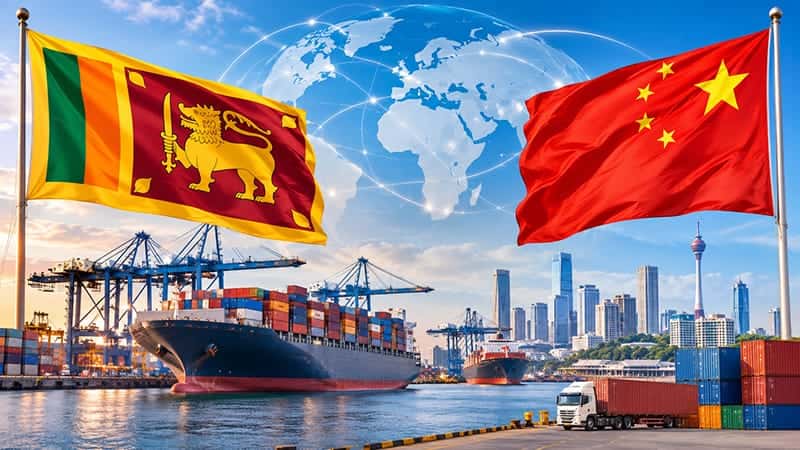



As part of a comprehensive strategy to connect the national economy to global trade networks, the Sri Lankan government has focused its attention on negotiating a new Free Trade Agreement (FTA) with China.
The initiative was highlighted by President and Minister of Finance, Planning and Economic Development Anura Kumara Dissanayake during the presentation of the 2027 Budget Speech in Parliament. The proposed trade agreement with Beijing forms a key component of Sri Lanka’s broader policy to update existing trade arrangements and establish new economic partnerships worldwide.
In addition to the proposed China agreement, an officials' committee appointed by the Cabinet of Ministers is actively working to expand Sri Lanka’s existing Free Trade Agreement with India. Simultaneously, the island nation has submitted a formal application to accede to the Regional Comprehensive Economic Partnership (RCEP) and plans to enter into Comprehensive Economic Partnership Agreements with the United Arab Emirates (UAE) and Oman.
To strengthen trade resilience and export capability, the government will implement the “Sri Lanka–European Union Sustainable Trade and Economic Integration Project” between 2027 and 2030. Funded by a Rs. 3,430 million grant from the European Union, the project is designed to drive export competitiveness, product diversification, and sustainable production practices. Further bilateral trade deals will be explored with other nations following formal feasibility studies.
This trade opening is aligned with Sri Lanka's strategic goal of accelerating a structural transformation toward a high-productivity, export-led economy. To streamline commercial operations, the government has allocated Rs. 1,990 million to introduce the National Single Window for Trade while digitalizing Sri Lanka Customs operations. These measures support ambitious long-term sector targets, including elevating plantation export revenues to USD 5 billion and doubling fisheries export earnings to USD 600 million by 2030.