



The COVID-19 pandemic has intensified traditional vulnerabilities amongst small and medium sized enterprises (SMEs) such as low levels of savings, assets, and inventories and consequently created a unique set of policy challenges associated with SMEs. These challenges are heightened as developing economies such as Sri Lanka attempt to manage the impact within a narrow fiscal space. Sri Lanka’s policy responses geared towards SMEs, therefore, need to contend with the immediate impacts of COVID-19 on the sector as well as broader issues that inhibit Sri Lanka’s growth trajectory, especially in terms of vulnerability to global disruptions.
Role of SMEs in the Economy
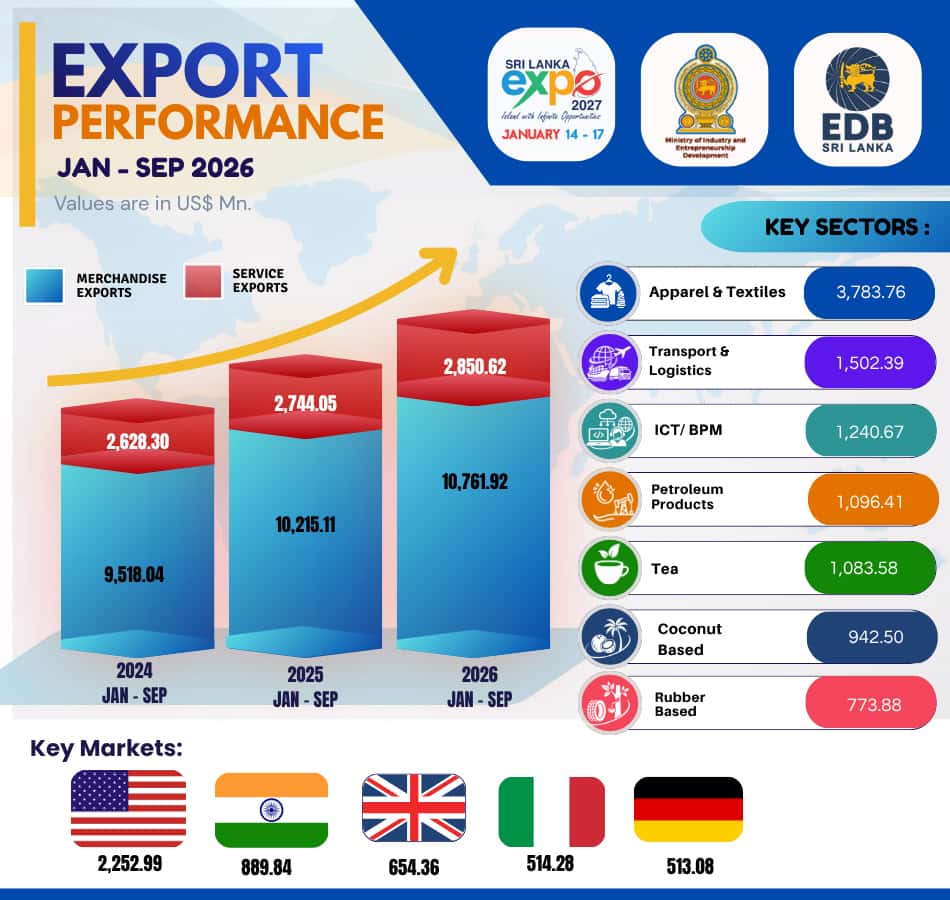
The SME sector in Sri Lanka accounts for 90% of all businesses in the country, provides 45% of employment, and contributes 52% to the nation’s GDP. Successive Sri Lankan governments have thus correctly identified the importance of the SME sector as one of the main drivers of growth and development. However, whilst SMEs make up the backbone of the Sri Lankan economy, they continue to be one of the most vulnerable sectors during times of local and global economic disruptions. The approximately one million SME establishments in Sri Lanka that employ around 2.25 million people are generally concentrated in producing labour-intensive intensive sectors such as retail, and small-scale manufacturing. Moreover, nearly 20% of agricultural sector establishments are made up of SMEs and over 90% of all establishments in non-agricultural sectors are micro enterprises. Meanwhile, close to half of those employed in these same sectors are engaged in micro enterprises as well. Notably, 45% of micro enterprises and 10% of small enterprises are not formally registered. Overall, micro enterprises account for 98% of total unregistered enterprises in Sri Lanka. Furthermore, Sri Lankan SMEs contribute less than 5% of total export revenues. Many of these characteristics of the SME sector in Sri Lanka are more akin to those in a low-middle income economy and at times, a low-income economy than that of an upper-middle income economy.
Opportunities
The severe disruption caused by COVID-19 on supply chains has required developed economies to reconfigure their supply chains and reduce its dependence on China through diversification. This could mean that companies in high-income nations that outsourced production in China may consider alternatives in other parts of Asia. A restructuring of global supply chains could thus create some opportunities for Sri Lanka to attract manufacturing plants that wish to relocate out of China. However, such shifts would require substantial domestic economic reforms that create a complementary economic ecosystem by reducing barriers to trade, improvements in domestic competitiveness, policy consistency, and security of investments. Attracting such investments into the country would be a major boon to Sri Lanka’s SMEs as well, as they will have more access to integrate into global supply chains.

Policy Solutions to Support SMEs
In addition to global and local supply chain disruptions, SMEs around the world are mostly affected by the stall in domestic economic activity as a result of lockdowns and curfews imposed by governments to curb the spread of COVID-19. Lockdowns have resulted in a near complete fall in consumer demand for SME-produced goods and services. Alongside the demand shocks, since SMEs tend to be more labour intensive, lockdowns have resulted in disruptions in access to labour. Moreover, firms may well be forced to layoff workers in order to cut costs and survive through the crisis, which will consequently affect livelihoods.
The combination of demand and supply shocks have resulted in SMEs facing a liquidity squeeze since traditionally, these firms have thin liquidity reserves and limited financial alternatives. In many in stances, SMEs lack assets that can be deposed of or that can be used as collateral to gain new lines of credit. The path towards growth for SMEs would depend on a range of factors, such as the degree to which demand will be delayed or foregone, whether the shocks are a spike or longer lasting, and the possible structural damage the current crisis may have caused due to severe disruptions. Policy solutions, therefore, need to be designed to address three inter-connected periods: the immediate, transitional, and postCOVID-19 recovery period.
One structural weakness is in the high concentration of informality among SMEs. Currently, many developing economy governments struggle to effectively broaden the coverage of policies due to information and institutional gaps to capture informal enterprises. As a result, during the implementation process, micro enterprises in particular, are falling through gaps and not accessing adequate relief measures. The policy response to addressing these information and institutional gaps, however, is not solely based on formalising the informal sector. There is no consensus on whether it is effective for governments to focus on formalising a large informal sector and there are many nations that have grown exponentially whilst hosting a large informal sector. However, even where formalisation is unnecessary or not viable, the government should create mechanisms to obtain better data on informal sector enterprises.
Furthermore, as the government looks towards a post-COVID-19 recovery in the SME sector, it should consider a holistic perspective where other structural issues restricting the growth of SMEs in Sri Lanka, such as access to finance and financial literacy deficits, regulatory inconsistencies, and a lack of technological absorption are given adequate attention. As discussed earlier, the adoption of technology and providing necessary facilities to integrate more technology into the operational processes of SMEs would help not only in terms of responding to shifting dynamics in supply chains, but also in demand preferences. Finally, recent developments also suggest that many nations will be inward looking when dealing with the economic impacts of COVID-19. This means that protectionist measures are likely to increase in the hopes of providing domestic firms a greater opportunity to recover. The rise in protectionism is particularly problematic for Sri Lankan SMEs that export, but is also concerning for SMEs that are involved in the supply chain of larger firms that export. A fall in demand for Sri Lankan exports, therefore, could have a knock-on effect on the SME sector. From a policy perspective, therefore, the government would be best served by proactively taking measures to assist the export sector find alternate markets in countries that are less protectionist, whilst at the same time developing stronger supply chains amongst the SMEs as well as between SMEs and large enterprises.
(This Policy Insight is based on the comprehensive chapter on “Protecting SMEs during Global Disruptions” in the ‘Sri Lanka: State of the Economy 2020’ report - the flagship publication of the Institute of Policy Studies of Sri Lanka (IPS). The complete report can be purchased from the Publications Unit of the IPS.)Protecting SMEs during global disruptions