

April, 20, 2026
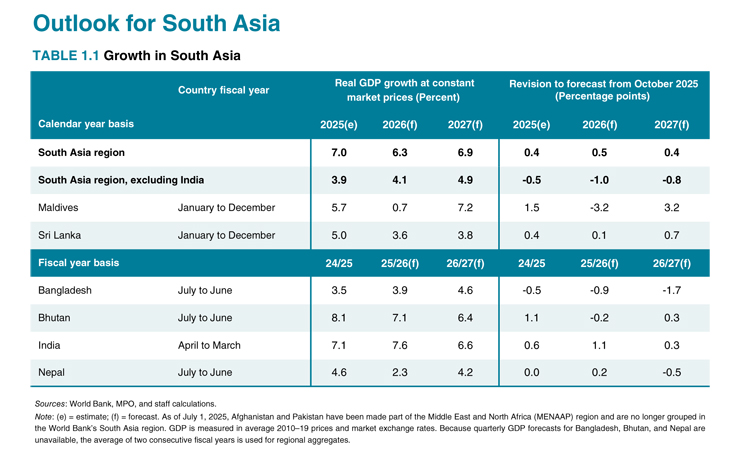
The World Bank has projected Sri Lanka’s economic growth to moderate to 3.6% in 2026, reflecting a slowdown from the stronger recovery momentum seen in 2025, according to its April 2026 - South Asia Economic Update report.
Despite the moderation, the global lender noted that the size of Sri Lanka’s economy is expected to recover to its 2018 level in 2026, marking a significant milestone in the country’s post-crisis recovery. Growth is forecast to edge up slightly to 3.8% in 2027.
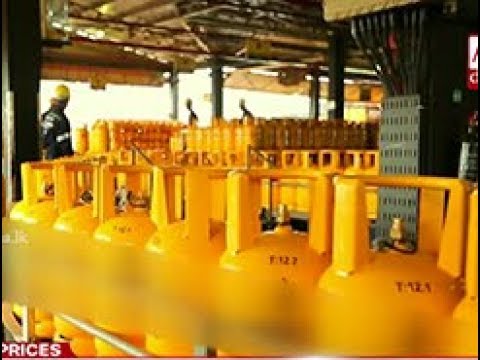
The deceleration in 2026 is primarily attributed to higher energy prices and a transition from a rebound phase to a more sustainable growth path aligned with the economy’s long-term potential.
Economic activity is expected to be driven largely by consumption and investment, with additional support from reconstruction efforts following recent cyclone-related damage. However, the report highlights that Sri Lanka continues to face lingering challenges from the economic crisis, including shortages of skilled labour—exacerbated by outward migration—and the continued under-execution of public capital expenditure.
The World Bank also pointed to disruptions to flights from the Middle East as a near-term headwind, particularly for tourism. Nevertheless, it expects the tourism sector to remain strong once these disruptions ease, alongside continued progress in structural reforms and improving credit conditions, which are seen as key drivers of medium-term growth.
On the external front, the report warned that risks to Sri Lanka and the broader South Asian region remain elevated. Persistently high energy prices could increase production costs, erode household incomes, and worsen external imbalances. In addition, global financial volatility could transmit shocks to the region, particularly in economies with domestic vulnerabilities such as high non-performing loans and elevated debt servicing burdens.
The report also flagged climate-related risks, noting that the impact of Cyclone Ditwah on Sri Lanka underscores the region’s exposure to extreme weather events.
Furthermore, while South Asia has benefited from strong growth in services exports, the World Bank cautioned that this could become a vulnerability if key sectors are disrupted by emerging technologies such as artificial intelligence or new trade restrictions.
The lender emphasised that sustained progress on structural reforms would be critical to unlocking higher growth, warning that delays or setbacks could lead to weaker-than-expected economic outcomes.
Video Story