

July, 31, 2026
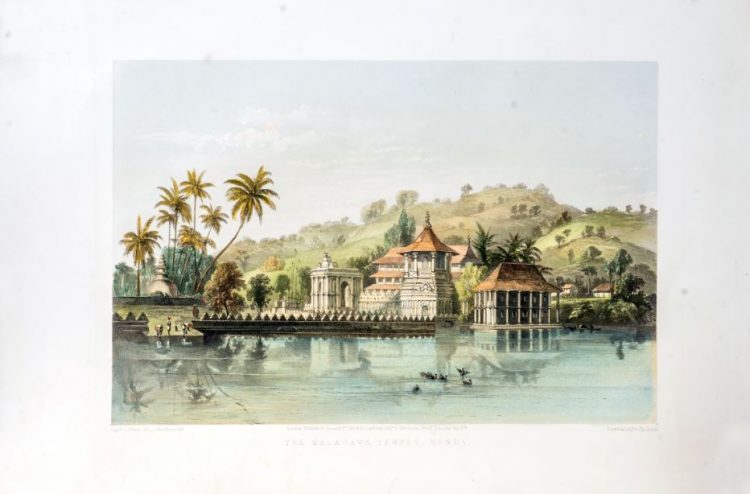
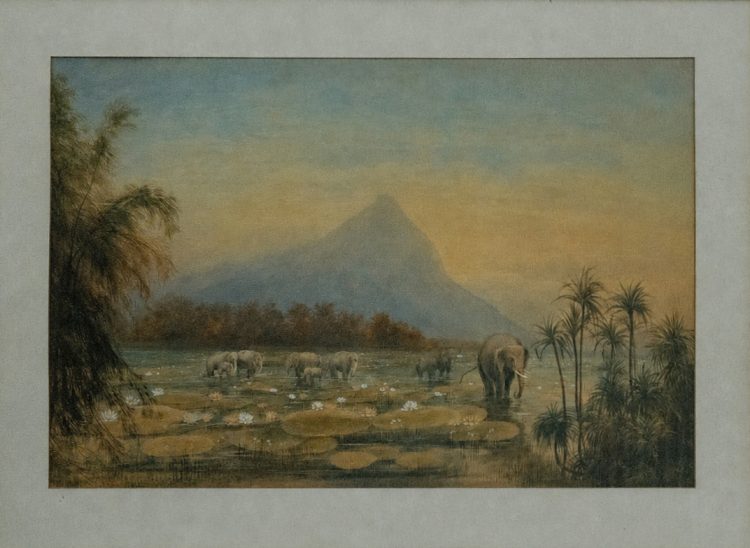
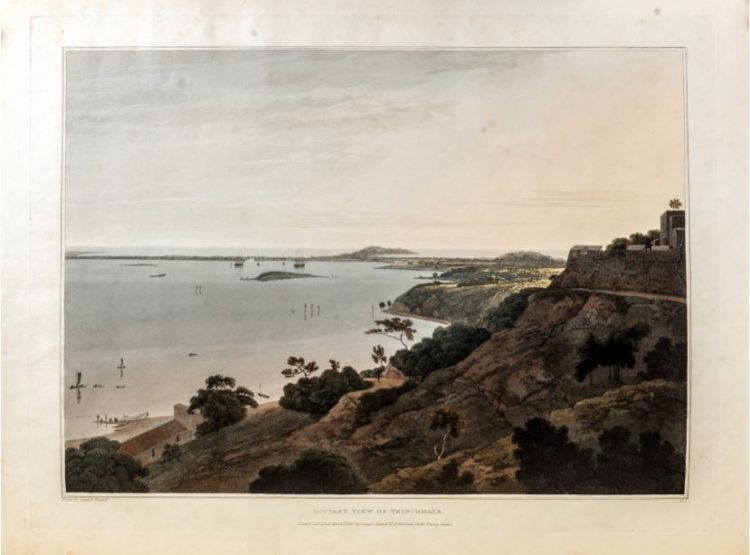
Bringing together rare oil, watercolours, aquatint lithographs, and 19th-century views of Ceylon, the exhibition traces how British artists depicted the island during the 19th century, from early topographical studies to later, more atmospheric interpretations. The George Keyt Foundation and the British High Commission, Colombo, are organising the exhibition. It will be held on 31st July and 1st August at Westminster House in Colombo.
19th Century Views of Ceylon is more than just an exhibition of landscapes. It offers a visual history that shows how the island was seen, studied, and shaped by British artists in the 19th century. The story begins with the artists themselves, starting with Henry Salt (1780–1827). He was among the earliest professionally trained British artists to produce drawings of Ceylon based on direct observation. In 1809, he published a single plate of Ceylon, showing Point de Galle, a rendering more confident and precise than any that had come before.
Soon after came Samuel Daniell (1775–1811), from the well-known Daniell family of topographical artists. As Ranger of the Woods and Forests, he had unique access to the island’s interior. His twelve plates, published in 1808, are regarded as significant examples of natural-history illustration from the Regency era and show Ceylon’s ecology in great detail.
As the British expanded inland, artists working within the colonial system began to document new areas. Lieutenant William Thomas Lyttleton (c.1786–1839) made drawings, later published as aquatints, that are among the first British views of Kandy and its surroundings. These include the now-lost Tombs of the Kandyan Kings, offering a rare look at a changing landscape during colonial expansion.
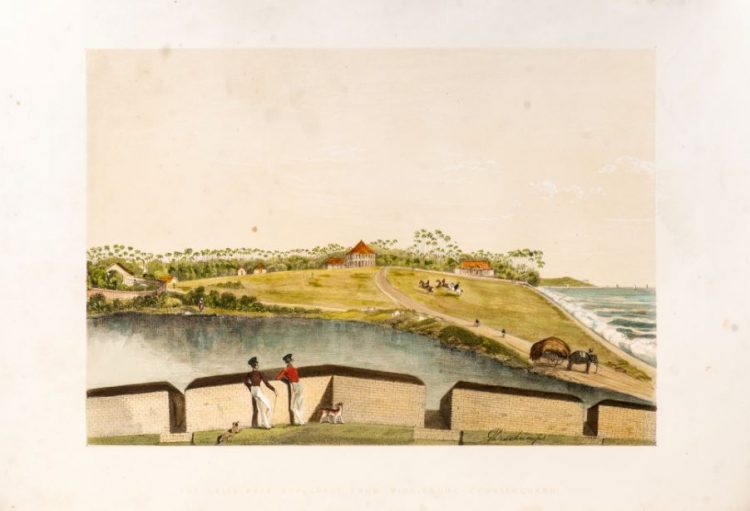
Captain John Deschamps (fl. 1828–1845) focused on the western coast. His 1845 work, Scenery and Reminiscences of Ceylon, features scenes from Colombo, Galle Face, Slave Island, and Bentota. His art is based on daily life and real experiences.
Captain Charles O’Brien (d. 1866), who was Assistant Surveyor General, created a series of views to accompany Sir J.E. Tennent's widely read book on Ceylon. Published in 1864, these works show the hill country, coffee plantations, and remote areas described in the book.
Some artists never visited Ceylon. James Stephanoff (c.1787–1874) did not travel to the island. Still, his aquatint The Supreme Court of Judicature in the Island of Ceylon (c.1820) became a notable visual representation of governance on the island. Marine painter James Miller Huggins (1807–1870) created the 1854 View in Ceylon with Soldiers and Natives on a Road; the title reflects language commonly used during that period, and shows that artists could still depict the island from a distance.
Thomas Fraser (1776–1823) was trained as an engineer and focused on the island’s structure and landscape. His 1817 aquatint, Method of Catching Wild Elephants by the Kraal, combines careful observation with dramatic composition.
By the mid to late 19th century, artists started to show Ceylon in new ways. Andrew Nicholl (1804–1886) introduced a broader and more decorative style. He came to Ceylon in 1846 as the first painting instructor at the Colombo Academy and travelled widely, creating over eighty engravings. His work also attracted attention in Britain, including from royal patrons.
Constance Frederica Gordon-Cumming (1837–1924) is the only woman in the exhibition. She was a prolific, mostly self-taught artist who arrived in 1873 and kept a strict daily sketching routine. Her works, often using bodycolour, are vivid, detailed, and very personal. In her later book, Two Happy Years in Ceylon (1892), she combines travel writing with personal reflection, showing both her fascination and the complex realities of empire.
Edward Lear (1812–1888) is perhaps the most famous artist in the exhibition. He is known for his literary nonsense and for popularising the limerick, but he was also a skilled landscape artist. During a short visit in 1874, he made over seventy drawings and watercolours, which remain among the most widely recognised visual depictions of the island from the period.
Thomas Hampson Jones (1854–1916) represents the end of the century. While travelling in the East in the 1890s, he painted The Rock Temple near Bandarawella. This watercolour shows the Dhowa Rock Temple under a dramatic cliff, capturing both the mood and the empire’s lasting interest in sacred and remote places.
Together, these artists provide a record of how the island was depicted during the 19th century. Their works document landscapes, buildings, plants, animals, and people, while also revealing the perspectives, assumptions, and priorities that shaped representations of Ceylon. 19th Century Views of Ceylon encourages today’s audience to think critically about this legacy. The artworks preserve visual records of places, people, and landscapes, while also reflecting the beliefs, power structures, and social attitudes of their time.
For art lovers and history enthusiasts eager to take a piece of the exhibition home, the George Keyt Foundation has released a special companion book, 19th Century Views of Ceylon by British Artists. This limited-edition, 200-page publication features nearly 100 illustrations that vividly celebrate the island’s rich heritage. The book is offered at a special rate of Rs. 6,000 for orders placed by midnight on August 1st. After which it will be available for Rs. 7,500, with islandwide delivery for an additional Rs. 500. To get your copy of the 19th Century Views of Ceylon by British Artists, please call or message 0772112792 to place an order and avail the discount.
Visiting the exhibition lets you see not just the island, but many different interpretations of it. By viewing these works today, you have the chance to see the island in new ways. Entry is free, but you need to register in advance at www.georgekeytfoundation.com.
Video Story