

April, 10, 2026
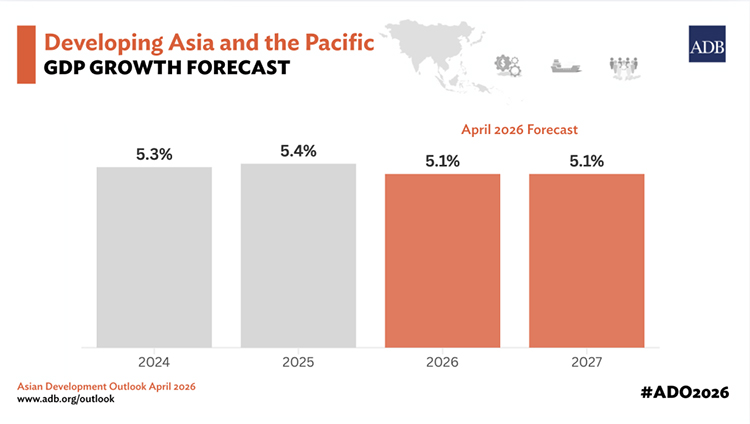
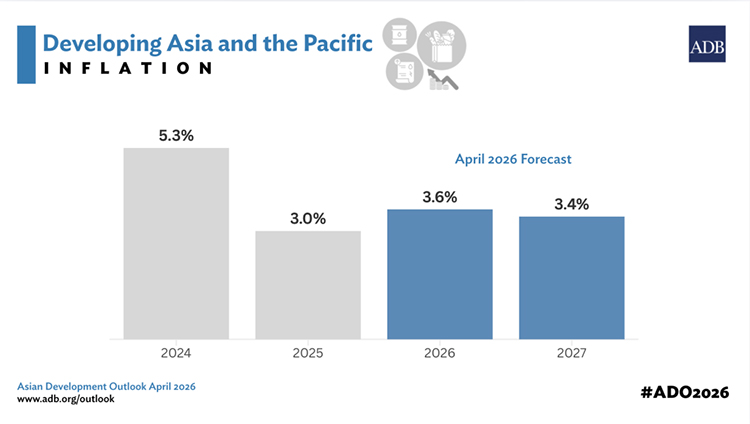
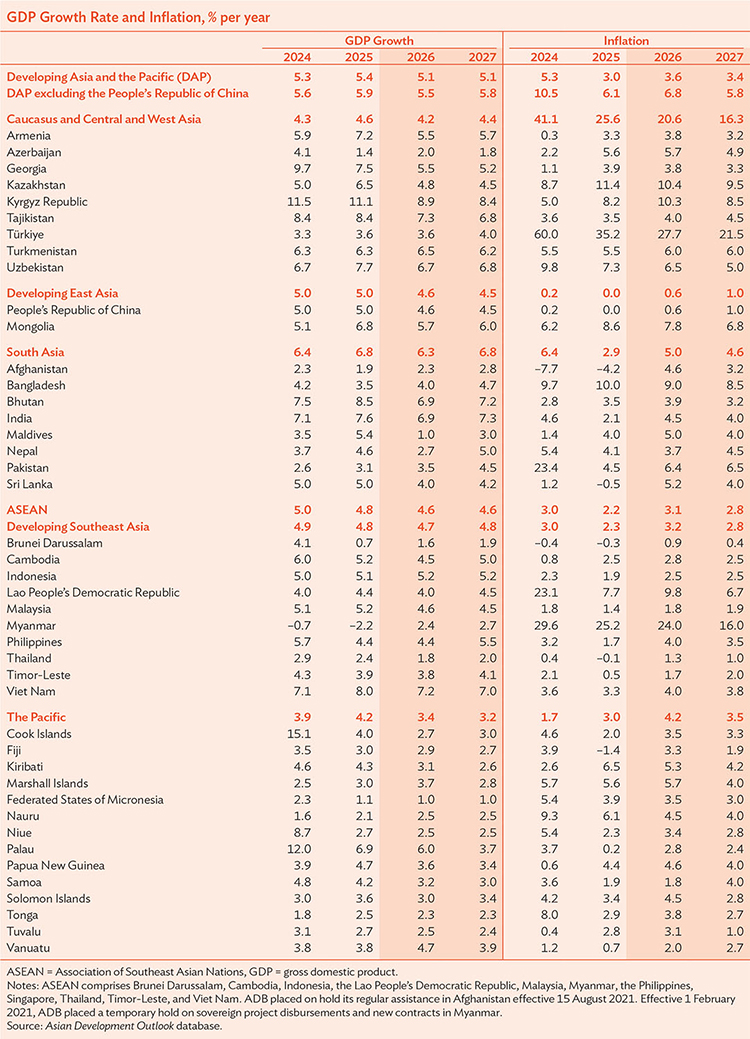
Economic growth in developing Asia and the Pacific is expected to slow to 5.1% in both 2026 and 2027, from 5.4% last year, weighed down by the conflict in the Middle East and continuing trade uncertainty, according to the latest forecasts by the Asian Development Bank (ADB). Regional inflation is projected to rise to 3.6% in 2026 and 3.4% in 2027, from 3.0% last year.
The forecasts are informed by assumptions finalized on 10 March under exceptionally high uncertainty, envisaging an early stabilization scenario for the conflict in the Middle East. Evidence since then points to a higher likelihood of more persistent disruptions.
The region enters this challenging and uncertain global environment from a position of strength, with robust domestic demand, steady labor markets, and higher public infrastructure spending underpinning resilience, according to Asian Development Outlook (ADO) April 2026, released today.
“A prolonged conflict in the Middle East is the single biggest risk to the region’s outlook, as it could lead to persistently high energy and food prices and tighter financial conditions,” said ADB Chief Economist Albert Park. “With renewed trade policy uncertainty posing additional risks, it is essential that governments implement sound macroeconomic policies to sustain growth and contain inflation, with targeted support measures to protect vulnerable households.”
ADO April 2026 includes a section that assesses the impact of the conflict on economies in the region under alternative scenarios. A prolonged and escalated conflict in the Middle East could affect economic activity via several channels, including heightened price pressures, shipping disruptions, and financial volatility.
Most economies in developing Asia and the Pacific will see their growth outlook worsen this year and in 2027, despite resilient private consumption and solid demand for artificial intelligence-related goods. Growth in the People’s Republic of China (PRC) is projected to decline to 4.6% this year and 4.5% next year, from 5% last year, with continued property market weakness and slower export expansion expected to weigh on activity. In India, growth is forecast to ease to 6.9% this year from 7.6% last year, before rising to 7.3% next year, underpinned by resilient domestic consumption. Economies in the Pacific are expected to experience the sharpest slowdown, from 4.2% growth in 2025 to 3.4% in 2026 and 3.2% in 2027.
Oil prices are projected to stay elevated in the near term but would gradually stabilize if geopolitical tensions eased. The recent surge in energy prices and potential disruptions to fertilizer markets linked to the conflict in the Middle East could lead to inflationary pressure on global food prices.
ADB is a leading multilateral development bank supporting sustainable, inclusive, and resilient growth across Asia and the Pacific. Working with its members and partners to solve complex challenges together, ADB harnesses innovative financial tools and strategic partnerships to transform lives, build quality infrastructure, and safeguard our planet. Founded in 1966, ADB is owned by 69 members—50 from the region.
Video Story