

August, 20, 2026
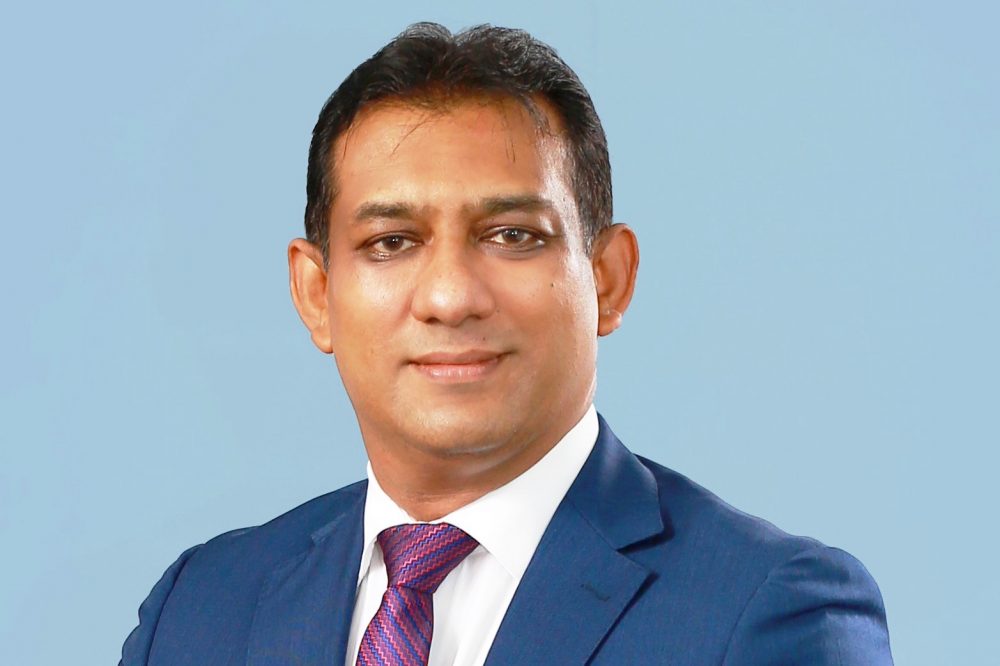
Fintech Forum Sri Lanka Vice Chairman and LOLC Finance PLC Director/CEO Conrad Dias says stronger industry collaboration, supportive regulation and international partnerships could help home-grown fintech companies tap markets of up to 200 million consumers
Sri Lanka’s fintech industry must look beyond its domestic market of just over 20 million people and build pathways into significantly larger regional markets if home-grown technology companies are to achieve meaningful scale, according to Fintech Forum Sri Lanka Vice Chairman and LOLC Finance PLC Director/CEO Conrad Dias.
Dias believes the next phase of Sri Lanka’s fintech journey should focus on helping local fintech companies expand internationally while strengthening collaboration between banks, finance companies, technology providers, regulators and policymakers.
“If our fintechs can operate in one of the countries in Africa, for example, they could access a market of around 200 million people. That is almost 10 times Sri Lanka,” Dias said, highlighting the scale of opportunity available beyond the domestic market.
While Sri Lanka provides a strong environment for developing, testing and validating innovative financial technology solutions, Dias said the relatively small domestic market eventually creates limitations for companies seeking sustained growth. Building international partnerships and creating practical market-entry opportunities have therefore become important priorities for the Fintech Forum.
The Forum has established relationships with fintech associations and ecosystems in Singapore, Taiwan and Africa, creating opportunities for knowledge exchange, business connections and potential market access. These partnerships are expected to help Sri Lankan fintech companies understand overseas regulatory environments, identify strategic partners and explore expansion opportunities that may otherwise be difficult to pursue independently.
Dias said one of the Forum’s most important achievements to date has been bringing together an industry that previously operated largely in separate silos.
“When the Forum was established, our priority was to bring an industry that worked in silos together. I believe our greatest achievement has been creating that platform. Today we have established a strong collaboration,” he said.
Nearly every bank in Sri Lanka now participates alongside fintech companies, LankaPay and other key stakeholders, while the Central Bank of Sri Lanka remains actively engaged with the ecosystem. Dias said this foundation allows the Forum to move towards its next phase of accelerating innovation, strengthening policy engagement and supporting regional expansion.
Last year’s Sri Lanka Fintech Summit represented an important milestone in bringing the industry together. Building on that momentum, the Forum plans to broaden engagement this year through an expanded Fintech Festival involving a wider cross-section of the financial and technology ecosystem.
Dias identified three interconnected priorities for building a sustainable domestic fintech environment: stronger collaboration among industry stakeholders, policy advocacy that encourages innovation while safeguarding financial stability, and ecosystem development through knowledge sharing, workshops, industry events and international partnerships.
A key area where such collaboration could deliver tangible economic benefits is improving access to finance for SMEs and micro-SMEs.
Traditional financial institutions can face relatively high costs in serving these segments due to regulatory, governance and operational requirements. Fintech companies, meanwhile, can use digital technology and innovative delivery models to reach customers more efficiently.
Dias said collaboration rather than competition between fintechs and established financial institutions could provide the most effective solution. Fintech companies can contribute innovation, technology and customer experience, while banks and finance companies provide trusted financial infrastructure, governance and regulatory expertise.
He cited buy-now-pay-later (BNPL) platforms operating in Sri Lanka as an early example of embedded finance. The larger opportunity, he said, is to integrate similar financial solutions seamlessly into e-commerce platforms, super apps, digital marketplaces and industry-specific ecosystems.
Dias expects embedded finance to develop substantially over the next three to five years as open banking matures, enabling financial services to become an increasingly integrated component of the digital platforms already used by businesses and consumers.
The rapid development of fintech will, however, require regulation to evolve alongside innovation, he said.
Digital lending is one area receiving increasing attention. While licensed banks and registered financial institutions operate within established regulatory frameworks, some online and fintech-led lending platforms operate outside those structures, potentially exposing consumers and SMEs to risks.
Dias said proportionate and clearly defined regulation could strengthen confidence without unnecessarily restricting innovation. The Forum is working closely with the Central Bank to encourage frameworks that facilitate technological development while strengthening consumer protection and maintaining financial-system stability.
Drawing on international markets including Singapore, Dias said clearer governance and regulatory structures could ultimately contribute to a stronger and more sustainable fintech industry.
On industry-wide data sharing and access to datasets such as CRIB, Dias noted that performance-data sharing already takes place within the LankaPay ecosystem. However, broader access to certain datasets would require deeper collaboration between financial institutions and fintech companies.
Banks, he said, continue to play a critical role by providing trusted financial rails, governance and institutional frameworks. As collaboration develops, the Forum aims to create an environment where fintech innovation can expand without compromising the safeguards required within the financial-services sector.
Dias sees fintech as an important enabler of Sri Lanka’s wider digital economy, with the potential to support entrepreneurship, expand financial inclusion, improve access to finance and create new technology-driven business models.
“The groundwork is done. Now it’s the acceleration and innovation stage that we are in,” he said.
For Sri Lankan fintech companies, that acceleration increasingly means looking beyond a domestic market of 20 million consumers and establishing the partnerships required to compete across much larger regional markets.
By connecting banks, fintech companies, technology providers, regulators and policymakers at home while developing international relationships across Asia and Africa, the Fintech Forum aims to help transform Sri Lankan fintech innovation into businesses capable of achieving regional relevance and sustainable international growth.
Video Story