

September, 26, 2014
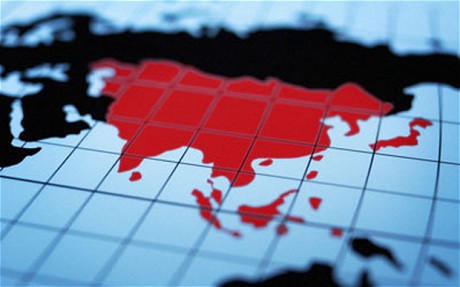
Developing Asia remains the fastest growing region globally despite slower-than-expected growth in major industrial countries as key economies in the region move ahead with structural reforms, says a new Asian Development Bank (ADB) report.
In an update of its flagship annual economic publication, Asian Development Outlook 2014 (ADO 2014), released today, ADB kept its forecasts for growth of gross domestic product (GDP) for the region at 6.2% in 2014 and 6.4% in 2015. The region grew 6.1% in 2013. Developing Asia comprises the 45 ADB developing member countries.
“Slowing external demand has hurt some economies in the region but as a whole Asia and the Pacific is on track for firm growth in 2014 and 2015,” said ADB Chief Economist Shang-Jin Wei in launching the report. “Moving forward structural reform processes in the [People’s Republic of] China, India, and Indonesia—the region’s three biggest economies—will be critical in shaping the growth outlook.”
Following severe winter weather in the United States in the first quarter, a value-added tax hike in Japan in the second quarter, and continuing weakness in the euro area, the world’s major industrial economies recorded virtually no growth in the first half of the year. They are now forecast to expand by 1.5% collectively in 2014, down 0.4 percentage points from the ADO 2014 forecast in April, before growth picks up to 2.1% in 2015.
Targeted measures to stabilize investment helped the PRC sustain its expansion. Following first quarter growth of 7.4%, steady consumption and improved external demand edged second quarter growth up to 7.5%. Authorities deployed targeted monetary easing and a mini fiscal stimulus to keep growth from decelerating further from the 7.7% recorded in 2013, while keeping credit growth in check. The PRC appears on track to meet ADO 2014 growth forecasts of 7.5% in 2014 and 7.4% in 2015.
India shows new promise of a turnaround. After a decisive election victory, the new government is well placed to pursue reforms to unlock the economy’s potential. Reforms to stimulate investment, award timely environmental clearances, and control inflation are expected to build on rising exports to boost economic growth. This update maintains the 5.5% growth forecast for 2014 but raises by 0.3 percentage points to 6.3% the forecast for 2015, when reforms can begin to bear fruit.
Stable growth for the region overall masks shifting fortunes across subregions:
fall sharply below the ADO 2014 forecast for 2014 and 2015 as foreign direct investment plummets and mining projects suffer delays. Inflation in East Asia will remain subdued at 2.4% in 2014 but likely creep up to 2.9% in 2015, mainly reflecting the trend in the PRC.
Weakening food prices and stable oil prices keep inflation in check. Consumer prices in the region are forecast to rise by 3.4% in 2014, the same pace as 2013, but pick up a bit to 3.7% in 2015. Most governments have maintained their policy rates in line with the low inflation environment.
ADB, based in Manila, is dedicated to reducing poverty in Asia and the Pacific through inclusive economic growth, environmentally sustainable growth, and regional integration. Established in 1966, it is owned by 67 members—48 from the region. In 2013, ADB assistance totaled $21.0 billion, including cofinancing of $6.6 billion.
Video Story