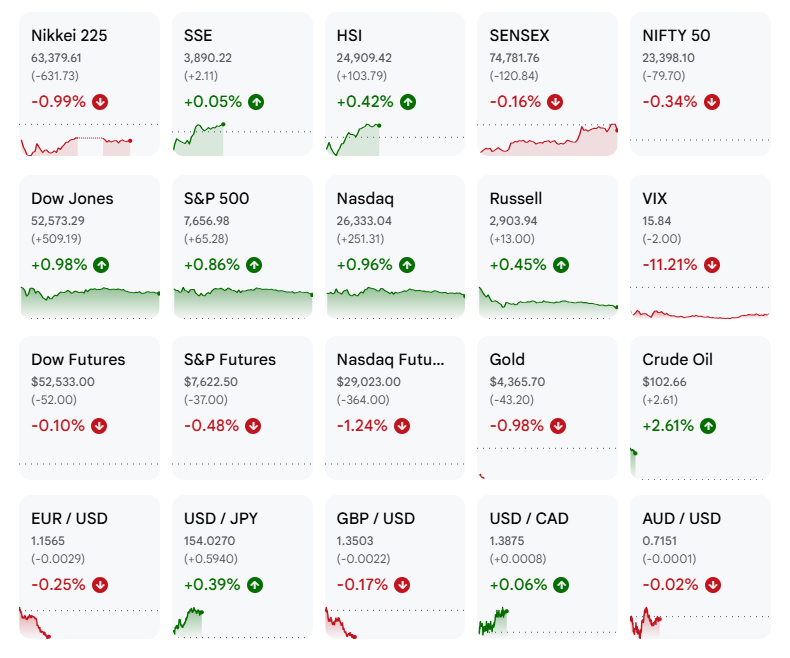
Reuters - AI-connected stocks fell sharply in early Asian trading on Monday after the CEOs of the companies developing the most advanced AI models warned the pace of development must slow to prevent threats to humanity.
Anthropic CEO Dario Amodei called on AI companies
to slow the rate at which they advance model capabilities amid mounting fears of misuse of artificial intelligence. Both Elon Musk, who runs xAI, and Sam Altman, CEO of OpenAI, said that they agree with Amodei.
Altman later said OpenAI would not proceed with an IPO this year, citing safety concerns.
Shares in OpenAI investor SoftBank
(9984.T), opens new tab tumbled as much as 13.2% as trading began in Japan alongside an initial 9.8% plunge for memory chipmaker Kioxia
(285A.T), opens new tab and a 3.7% decline for chip supply chain company Tokyo Electron
(8035.T), opens new tab.
In Taipei, Taiwan Semiconductor Manufacturing Company
(2330.TW), opens new tab slipped 1.2%, while in South Korea SK Hynix
(000660.KS), opens new tab slid 5.3% and Samsung Electronics
(005930.KS), opens new tab fell 3.7%.
"Selling pressure is likely to hit AI and semiconductor-related stocks in Tokyo following a series of weekend comments calling for a slowdown in the pace of AI development," Takayuki Miyajima, senior economist at Sony Financial Group, said in a note.
"Additionally, uncertainty surrounding the situation in the Middle East continues to weigh on sentiment."
In Shanghai, memory chipmaker CXMT
(688825.SS), opens new tab dropped 2.7%, while Semiconductor Manufacturing International Corporation fell 1.4%.
In Hong Kong, Zhongji Innolight shed 4.1%, while Minimax
(0100.HK), opens new tab fell 5.4%. Shares of Z.ai
(2513.HK), opens new tab, the developer of the GLM AI series, also tumbled as much as 10.5% after making a
discounted share placement.
San Francisco-based Anthropic released a
threat intelligence report on Thursday detailing how several actors had used its Claude AI models for activities ranging from weapons development and cyber operations to surveillance and fraud.
Alarm about the potential harm from AI grew this week when Anthropic researcher
Jacob Coxon resigned, opens new tab, stating that the "people building AI earnestly believe that it could kill us all by the end of the decade."
OpenAI's Altman said in an interview that risks of human extinction posed by AI were "
unacceptable".
And while several U.S. lawmakers have raised concern about AI's rapid progress and called for new rules, U.S. President Donald Trump on Sunday likened AI critics to "very negative forces" bringing up scenarios that will not happen, and said he wanted to make sure that the U.S.
remains the industry leader.
AI-related trades have powered much of the gains in global equities since OpenAI released ChatGPT in 2022, but more recently cyberattacks by rogue AI agents and public discontent with data centre construction have raised opposition to the development of the industry.
The U.S. and Chinese governments are expected to hold
AI safety talks as part of bilateral discussions taking place this month, according to two people briefed on the plans.