

May, 27, 2026
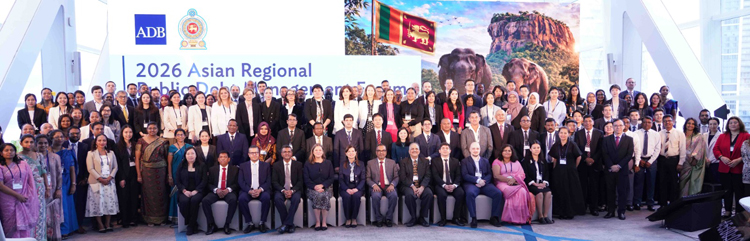
Against the backdrop of growing global economic uncertainty, rising debt vulnerabilities, and increasing climate-related risks, senior policymakers, public debt managers, economists, and representatives from leading international financial institutions gathered in Colombo yesterday for the 2026 Asian Regional Public Debt Management Forum, held under the theme “Climate Resilience and Debt Sustainability in Asia.” The high-level regional forum serves as an important platform for advancing dialogue, cooperation, and knowledge sharing on strengthening fiscal resilience and sustainable public debt management across the Asia-Pacific region.
The forum is jointly organized by the Public Debt Management Office (PDMO) of the Ministry of Finance, Planning and Economic Development and the Asian Development Bank (ADB), with the objective of strengthening regional cooperation and promoting policy dialogue on debt sustainability, fiscal resilience, and effective public debt management across the Asia-Pacific region.
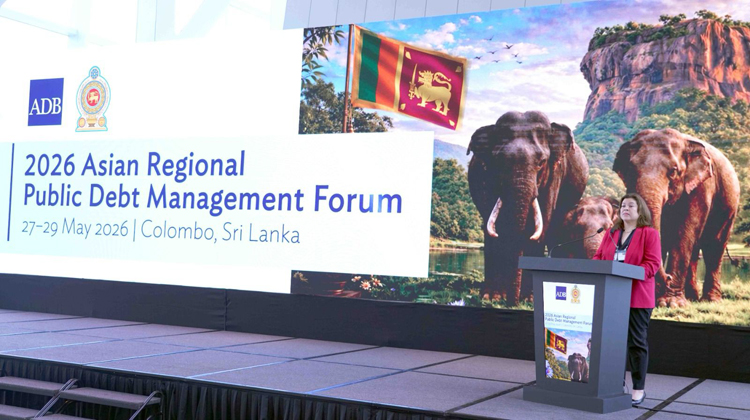
The event officially commenced with opening remarks by Dr. Anil Jayantha Fernando, Deputy Minister of Finance and Planning of Sri Lanka, and Ms. Roberta Casali, Vice President (Finance and Risk Management) of the Asian Development Bank. Addressing the gathering, Dr. Fernando emphasized the importance of strengthening public debt management frameworks and enhancing regional cooperation to support macroeconomic stability, fiscal resilience, and sustainable economic growth.
The forum was also attended by Dr. Harshana Suriyapperuma, Secretary to the Ministry of Finance, Planning and Economic Development, Dr. Chandranath Amarasekara, Deputy Governor of the Central Bank of Sri Lanka, senior government officials, and representatives from regional and international institutions.
The three-day forum provides a platform for participants to deliberate on a broad range of emerging issues relating to public debt management and fiscal sustainability. Discussions throughout the forum are expected to focus on the global and regional economic outlook, debt sustainability analysis, effective debt management under prevailing macroeconomic conditions, disaster risk financing, and the impact of high debt levels on monetary policy.
The forum will also explore key policy areas including green and sustainable financing, development of local currency debt markets, the growing role of artificial intelligence and technology in debt management operations, and emerging trends in public debt management practices. In addition, participants will exchange experiences on institutional reforms, governance improvements, and the challenges faced by small island nations in managing public debt and climate-related vulnerabilities.
A dedicated session on Sri Lanka’s experience in establishing the Public Debt Management Office will provide insights into the country’s recent institutional reforms and ongoing efforts to strengthen debt management capacity, governance, operational efficiency, and debt management practices in line with international best practices.
The forum further highlights the growing importance of effective public debt management in safeguarding macroeconomic stability, strengthening fiscal resilience, and promoting sustainable and inclusive economic development.
The event brings together experts and representatives from organizations including the Asian Development Bank, IMF, OECD, European Central Bank, Commonwealth Secretariat, UNCTAD, and S&P Global Ratings, together with finance ministries and public debt management offices from across Asia and the Pacific.
The forum is scheduled to conclude officially on 29 May 2026.
The event underscores the collective commitment of participating countries and institutions to advancing resilient, transparent, and sustainable public debt management frameworks capable of supporting long-term economic stability and inclusive growth across the region.

Video Story