

May, 7, 2026
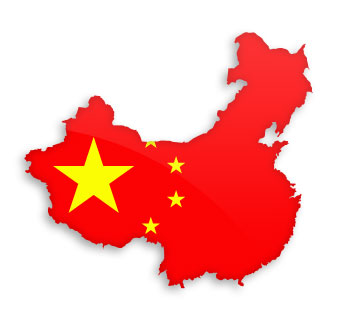
Reuters - China is remaking its Belt and Road for a more hostile world. Smaller projects, greater use of equity and an emphasis on compatible standards pushed deals linked to the initiative to a record $213 billion in 2025, according to research by Australia’s Griffith University and the Green Finance & Development Center (GFDC) in Shanghai. The revamp offers more durable support for Beijing’s export engine, going well beyond simple resilience to President Donald Trump’s renewed trade wars to mount a sustained challenge to a U.S.‑centric global order.
The Belt and Road Initiative (BRI) is China’s flagship overseas infrastructure programme. Unveiled by President Xi Jinping in 2013, it reflects decades of strategic thinking by planners and think tanks, bundling multiple objectives under one banner to boost trade, absorb overcapacity, secure supply chains and project influence. Over time, the initiative has expanded dramatically, with participation growing to more than 150 countries and international organisations.
That ambition almost ran aground. Covid‑19 froze construction, while criticism from Western governments mounted over alleged “debt‑trap diplomacy”, as sovereign borrowers from Sri Lanka to Zambia fell into default or lengthy restructurings. New overseas lending by China Development Bank and Export‑Import Bank of China slumped from an $87 billion peak in 2016 to just $3.7 billion in 2021, Boston University, opens new tab data show.
Beijing has since adjusted course in three key ways.
First, mega railways and ports are no longer the sole centrepiece of the pitch. Alongside big‑ticket projects, officials are now emphasising what Xi calls “small and beautiful” deals; these are lower‑cost, quicker‑to‑deliver schemes aimed at boosting local welfare. His administration is now planning up to 2,000 such projects across developing countries over the next five years, spanning healthcare, poverty alleviation and agricultural development.
Second, how deals are financed is shifting. As debt sustainability concerns mount in poorer partner countries and Beijing grows more cautious about the geopolitical risks of its overseas assets, Chinese firms are increasingly taking ownership positions in infrastructure and industrial projects rather than simply building them with sovereign loans.
According to data, opens new tab from the GFDC, Chinese entities with an equity stake accounted for some 31% of BRI activity by value in 2021, with construction contracts accounting for the bulk of them. By 2025, that had risen to 40%, driven by strategic investments, with private-sector companies like Longi Green Energy and ByteDance among the five largest players, per GFDC. Granted, that can muddy whether these are regular investments or intricately tied to the BRI.
Equity stakes allow Chinese entities to influence how assets are used long after construction ends. For instance, state-backed COSCO Shipping is the majority owner in the Port of Chancay in Peru after pumping in $3.5 billion; that gives China a Pacific Ocean gateway and could reduce reliance on the Panama Canal.
Third, beyond laying rail tracks and power lines, Beijing is also pursuing a less visible upgrade in what it calls “soft connectivity”, which involves aligning regulations and technical standards so partner economies mesh more closely with China’s own systems.
One example is railroads. After more than a decade of building major high‑speed railways at home, state giants such as China Railway Corporation are now turning to the Global South. One example is the 414‑kilometre, roughly $6 billion China–Laos railway, which links the landlocked neighbour to China’s vast rail network and, by extension, its seaports. Such projects often use Chinese firms’ proprietary monitoring systems and data formats for train scheduling and customs clearance.
That template is increasingly evident in ports, power grids, data centres and telecoms, where Chinese infrastructure comes bundled with software, operating rules and digital interfaces that shape how goods, energy and information move long after the last brick or track is laid. That means high-tech Chinese champions expanding abroad will have leverage to shape de facto global standards at scale; think electric-vehicle maker BYD, opens new tab and charging plugs, for example, or e-commerce giant Alibaba, opens new tab and digital payments.
That will build on the role the People’s Republic has already been playing. By 2023, Beijing had signed 108 bilateral and regional standards‑cooperation agreements with 65 national or institutional partners including the ASEAN bloc, more than double the number in place a decade earlier when Xi launched the BRI. The initiative has since provided a convenient umbrella for stitching together often sector‑specific cooperation. This has prompted European and U.S. think tanks to urge advanced economies to bolster their own standards diplomacy and deepen technical engagement with emerging markets where industrial and technical standards are often still being set.
So far, the concept of the Belt and Road Initiative as a grand masterplan to boost commerce has delivered. In the decade to 2025, China’s trade with BRI partners surged 240% to $3.4 trillion, far outpacing the 64% growth in China’s overall trade over the same period. Backed by a still‑humming export machine, the People’s Republic defied Trump’s tariff war to post a record $1.2 trillion trade surplus in 2025.
If anything, Washington’s protectionist push forced Chinese exporters to diversify markets, and the Belt and Road supplied ready‑made corridors to do that, reinforcing the intra-Asia trade routes that lenders such as HSBC (HSBA.L), opens new tab and Standard Chartered (STAN.L), opens new tab have long highlighted as the new engines of global commerce. Better still, the BRI also helps promote the yuan’s internationalisation. As of 2025, roughly 30% of China’s trade with BRI partners was settled in renminbi, up from low single‑digit levels in 2015, according to central‑bank data.
International criticism of the BRI has evolved, too. Accusations of debt‑trap diplomacy have softened as Beijing has retooled the Belt and Road’s image, while trade threats from Washington’s policies grab the headlines. The emergence of rival initiatives such as the EU’s Global Gateway and the G7’s Partnership for Global Infrastructure and Investment have vindicated the underlying logic of China’s strategy, and host countries can now treat the BRI as one option among many.
The ancient Silk Road, from which the Belt and Road takes its name, was never just about moving goods. It fused continents through the exchange of money, people, ideas, culture and, crucially, influence. That history still animates Beijing’s rhetoric today, wrapped in the slogan of a “community with a shared future for mankind”: in blunt terms, a more multipolar, less U.S.-dominated world.
Seen that way, the Belt and Road is not simply China’s largest infrastructure push, but its most consequential strategic gamble. It is unlikely to go away. This revival of connectivity looks engineered to reshape the global system, and to stick.
Video Story